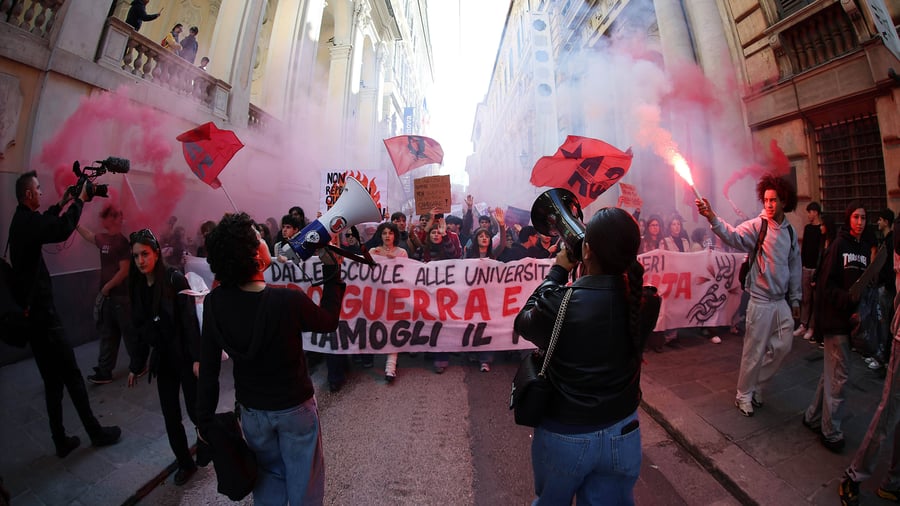
Jugendprotest: Diffuse Ziele, unklare Organisation, Sorge vor Gewalt – wie läuft die Gen-Z-Demo ab?
Am Samstag wollen Jugendliche in mehr als 30 deutschen Städten auf die Straße gehen. Die Polizei macht sich für Halloween auf viel Arbeit gefasst.
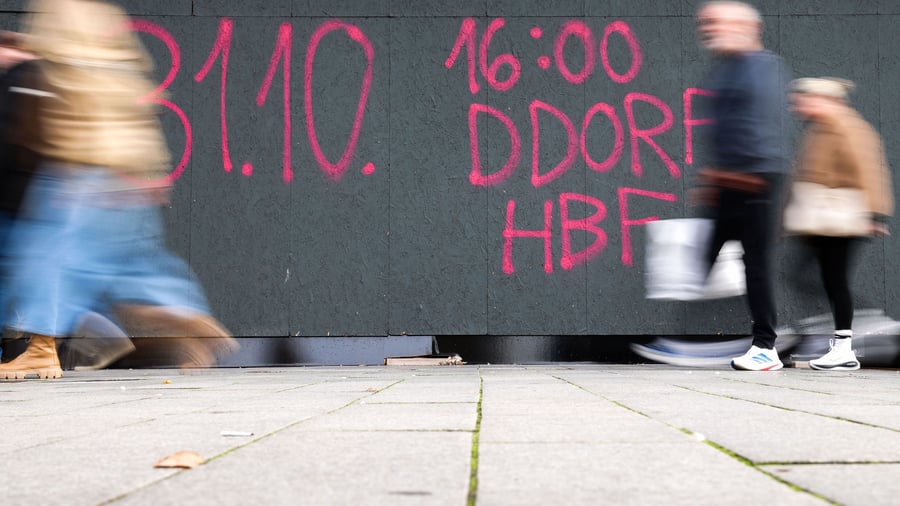
On October 31, young people across Germany plan to take to the streets to demonstrate for their concerns. There are fears that violent riots could occur, similar to recent incidents in France or Italy. Several groups, previously associated with the original organizers, have distanced themselves. Overview: What is planned and why are the youths protesting?
On Saturday, demonstrations are scheduled in more than 30 cities throughout Germany, with the largest expected in Cologne, where the police have registered an event with 15,000 participants. The protests lack a clear focus, addressing various issues currently concerning youths: damaged schools and budget cuts in education, rising living costs, an impending military conscription, or an unfair distribution of burdens between the old and young.
Who stands behind the protests? Demonstrations in Hamburg, Berlin, Cologne, Frankfurt, and Munich are organized by the initiative "Gen Z regelt". On its website, users can express interest in attending demonstrations in other cities, but other groupings are responsible for content and organization. In some cities, no demonstration permit has been obtained from the police until recently.
"Gen Z regelt" describes itself as an apolitical initiative of young people. The spokesman, Akram Selo, an 18-year-old abiturient and web designer from Bayern, explained that five or six youths from different cities had randomly met on Tiktok three weeks ago and spontaneously founded the initiative. As of Thursday, "Gen Z regelt" had already collected over 15,000 euros in donations on its website to fund posters, social media advertising, or equipment.
Since the initiative is not a registered association, it cannot issue donation receipts, but it guarantees that the money will be entirely used for political work. The website's postal address has changed multiple times, pointing to a Swiss digital agency. Has there been criticism of "Gen Z regelt"? Several individuals and groups have distanced themselves from the organizers.
The Bundesschülerkonferenz, for example, while supporting the principle of peaceful youth demonstrations for better education, distanced itself from the planned protests due to unclear organizational structures. The Bundesschülerkonferenz plans to organize its own protest event in Berlin on Saturday, joining forces with civil society organizations such as trade unions or Fridays for Future.
The school council of Lower Saxony has also distanced itself. It is unclear who is organizing the demonstration in Hanover and taking responsibility, despite numerous inquiries, said school spokesperson Otto Ellerbrock. Prominent spokesman Gianni Matheja, known as "Gianni studiert" on social media, with hundreds of thousands of followers, has also distanced himself.
The fear of riots stems from recent violent protests in France and Italy, which included severe riots and looting. The city of Düsseldorf's demonstration call, "Social cuts – solidarity with France," and a Stuttgart demonstration poster featuring a masked figure prompted police concerns, especially given Halloween on the 31st. Düsseldorf police have warned that destruction of property, unauthorized pyrotechnics, or arson could lead to police action and criminal prosecution.
Organizer Selo advised against masked participation in demonstrations, emphasizing the importance of peaceful protests and adherence to laws. However, there are concerns that violent extremists, including pro-Palestinian activists or left extremists, could hijack the protests. An internal security warning from the Central Council of Jews and a warning from the Verfassungsschutz (Federal Constitutional Office) also mention involvement from "foreign extremist scenes" and "foreign-related extremism".
Politically, Federal Interior Minister Alexander Dobrindt warned against the political exploitation of protests, noting the existence of extremist scenes in Germany, including foreign members. Security authorities are preparing accordingly but are committed to distinguishing between peaceful and violent demonstrations.
Written by urgent.news from Handelsblatt's reporting — not their text. Machine-written — may contain errors; check the original before relying on it.