How big and powerful is SpaceX's Starship rocket?
SpaceX's Starship has a big role to play in NASA's plans to land astronauts on the Moon. Here's how big this rocket is and how its two stages work together.
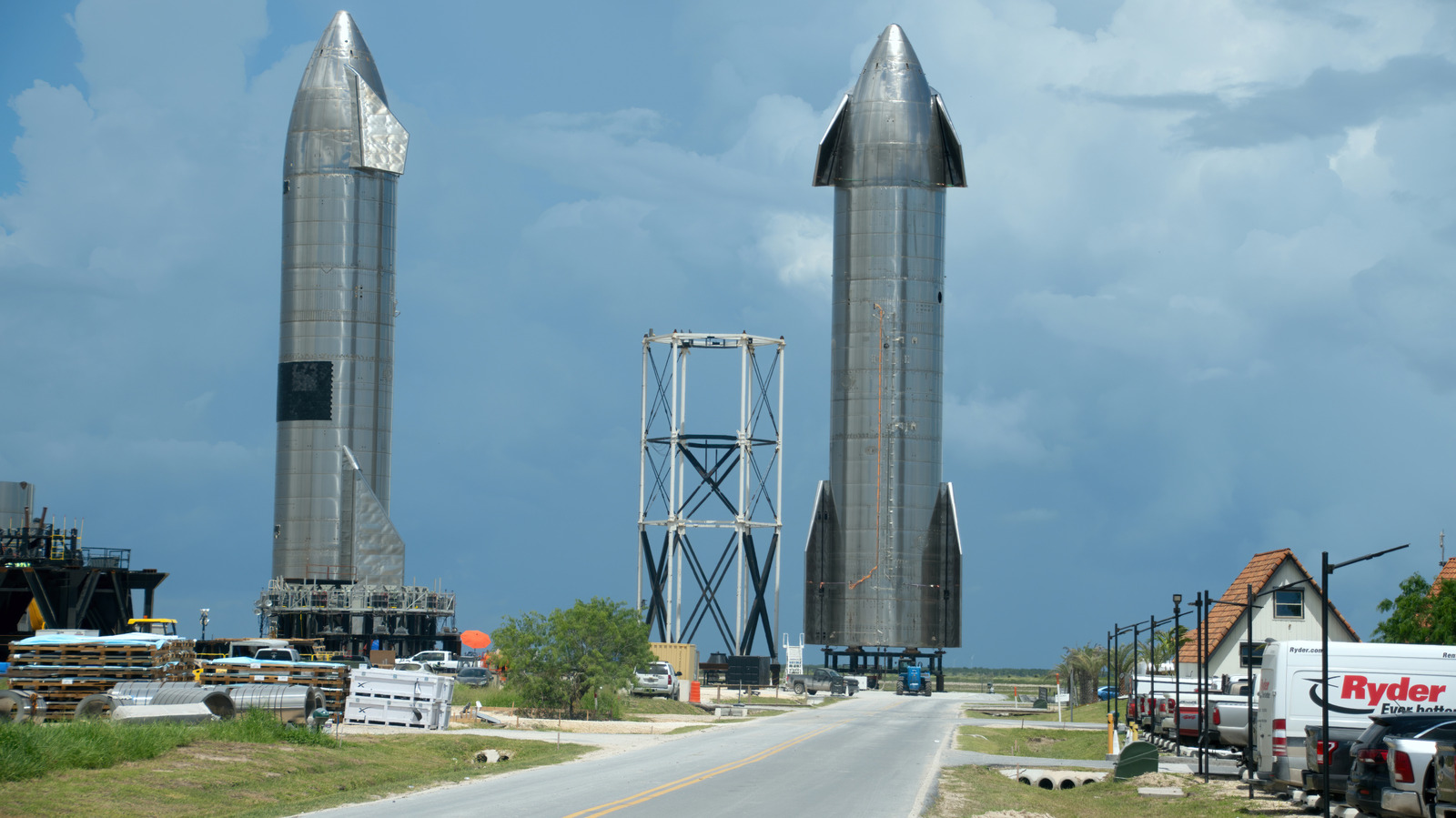
SpaceX's Starship rocket is an enormous and powerful space exploration vehicle. When both stages are stacked, the rocket reaches a staggering height of 407 feet, surpassing the height of the tallest known tree, Hyperion, and being one-third taller than the Statue of Liberty (including its pedestal). Standing as the tallest rocket ever flown and the most powerful, Starship generates an impressive 18.1 million pounds-force of thrust during liftoff.
During its first full-stack launch in April 2023, the booster's exhaust caused significant damage to the launch pad, digging into the earth beneath and scattering debris across 385 acres.
The rocket's impressive size and power are not merely for show but serve a crucial purpose in transporting large payloads and eventually carrying people and cargo beyond Earth orbit. SpaceX has designed the system to recover and reuse both stages of the rocket, ensuring a cost-effective approach to space exploration. The Super Heavy booster, which makes up the first stage, is equipped with 33 Raptor engines that burn liquid methane and liquid oxygen to generate the substantial 18.1 million pounds-force of thrust.
After separation, Starship takes over, powered by three regular Raptor engines and three Raptor Vacuum engines, designed to operate in space.
The rocket's immense power is primarily used to combat gravity and lift heavy payloads. With a listed propellant capacity of 3,650 metric tons for Super Heavy and an additional 1,600 metric tons for Starship, the total weight amounts to 5,250 metric tons. Despite today's technological advancements, Starship will still need to refuel in Earth orbit, particularly for NASA's planned lunar-landing missions.
According to SpaceX and NASA's plans, the rocket will undergo several stages, including refueling, before carrying a crew aboard NASA's Orion spacecraft for a lunar orbit rendezvous. The Starship lander, designed to carry two crew members to the Moon's surface and back, will rely on a complex support system, careful pre-launch planning, and careful handling of extremely cold propellants to ensure a successful mission.
Written by urgent.news from Engadget's reporting — not their text. Machine-written — may contain errors; check the original before relying on it.