Gulf security 'inseparable' from stability of Middle East, says Egypt's Foreign Minister
Egyptian Foreign Minister Badr Abdelatty has warned that any threat to Gulf security would reverberate across the wider Middle East, and called for a shift from crisis management to building a regional order capable of preventing conflict. Mr Abdelatty was speaking at the IISS Manama Dialogue annual security forum in Bahrain, where he stressed that instability in the region could have…
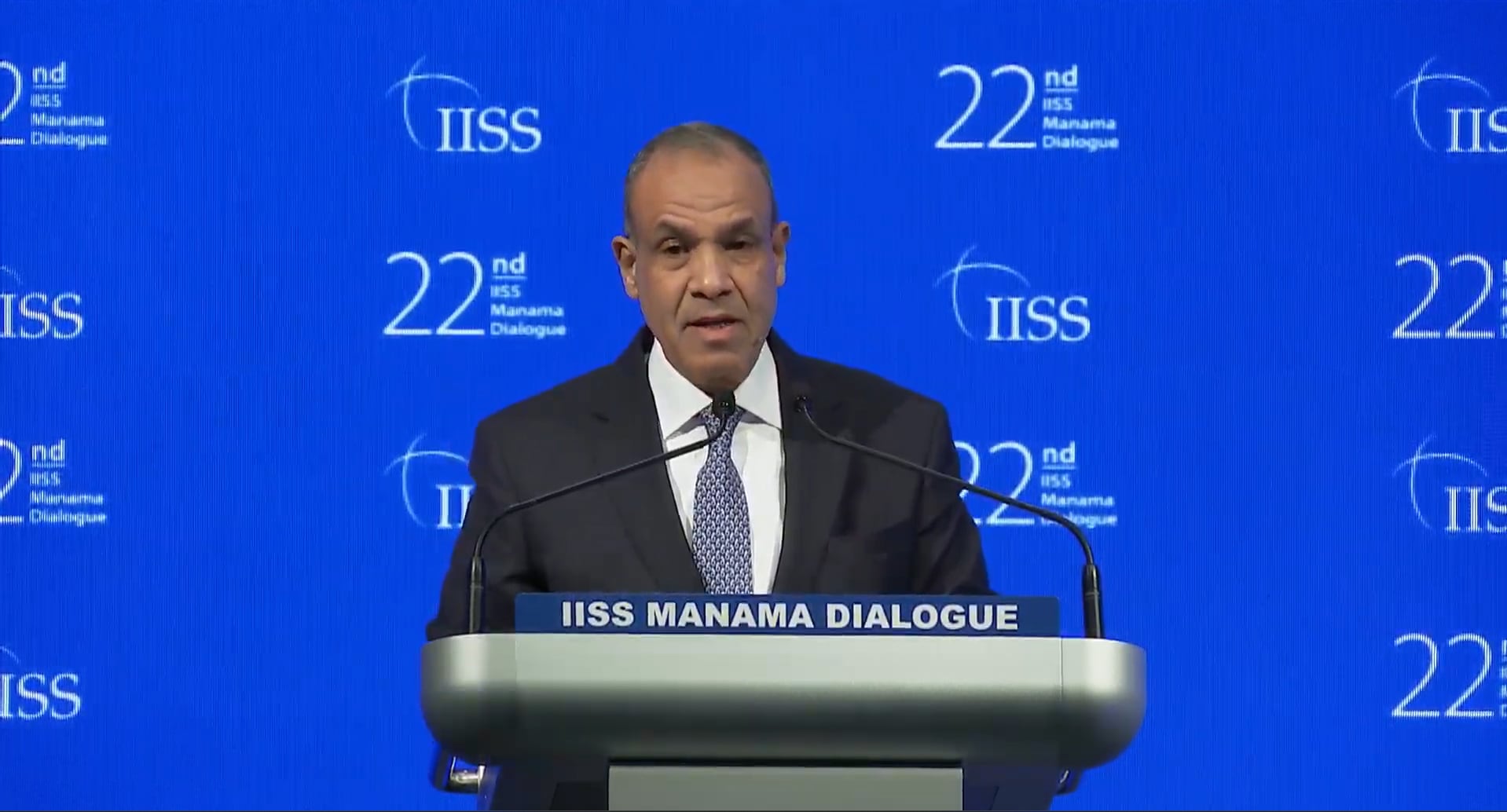
Egyptian Foreign Minister Badr Abdelatty has cautioned that any breach of Gulf security would spread throughout the broader Middle East, advocating for a transition from crisis management to establishing a regional order that can avert conflicts. Addressing the IISS Manama Dialogue annual security forum in Bahrain, Abdelatty emphasized that instability in the region could have global ramifications.
"It has become quite clear that security of the Gulf is inseparable from the security of the Middle East," he affirmed. "Any harm to the security of our region threatens the security and stability throughout the whole world," he added. Following the eruption of war in late February, all six Gulf states endured repeated Iranian missile and drone strikes.
In retaliation, Iran targeted nations with US military assets, energy infrastructure, and other strategic locations across the region. The Iran-aligned Houthi rebels in Yemen are exacerbating the situation by renewing attacks on Saudi Arabia and threatening to widen the conflict further, which includes targeting shipping through the Red Sea.
Despite a lull in direct US-Iran military confrontation, there are apprehensions that hostilities could resume, especially post the US midterm elections on Tuesday. Abdelatty expressed deep concern over the prospect of a more destructive and futile escalation in the war between the US and Iran. He underscored the critical importance of maritime security, highlighting that disruptions to shipping routes could impact global energy and food security, financial markets, supply chains, and international trade.
"These passages are not merely lines on a map. They are arteries of the global economy," Abdelatty remarked. He urged a more comprehensive approach to regional stability, urging nations to shift from crisis response to preventive measures. Saudi Deputy Foreign Minister Waleed Elkhereiji, speaking on the same panel, reported that Saudi Defense Minister Prince Khalid bin Salman's recent visit to Tehran aimed at easing regional tensions, promoting dialogue, and supporting mediation efforts by Qatar and Pakistan.
While the talks did not yield significant breakthroughs, the parties agreed to continue discussions. Representatives of Saudi Arabia, Pakistan, and Turkey requested Iran to urge the Houthis to cease their attacks on the kingdom. Iran, in response, proposed a regional truce. Elkhereiji described the US as a "major partner" of Saudi Arabia, providing intelligence, targeting assistance, and military advisers to support the kingdom's campaign against the Houthis, but refrained from direct military strikes.
Written by urgent.news from The National UAE's reporting — not their text. Machine-written — may contain errors; check the original before relying on it.
Also reported by 1 other outlet
- Prime Minister, Kuwait's Foreign Minister hold phone call thepeninsulaqatar.com