Ghostly statue of 'shrine maiden' discovered at 1,500-year-old burial mound in Japan
Archaeologists have unearthed a human-shaped funeral offering that may represent an ancient Japanese priestess.
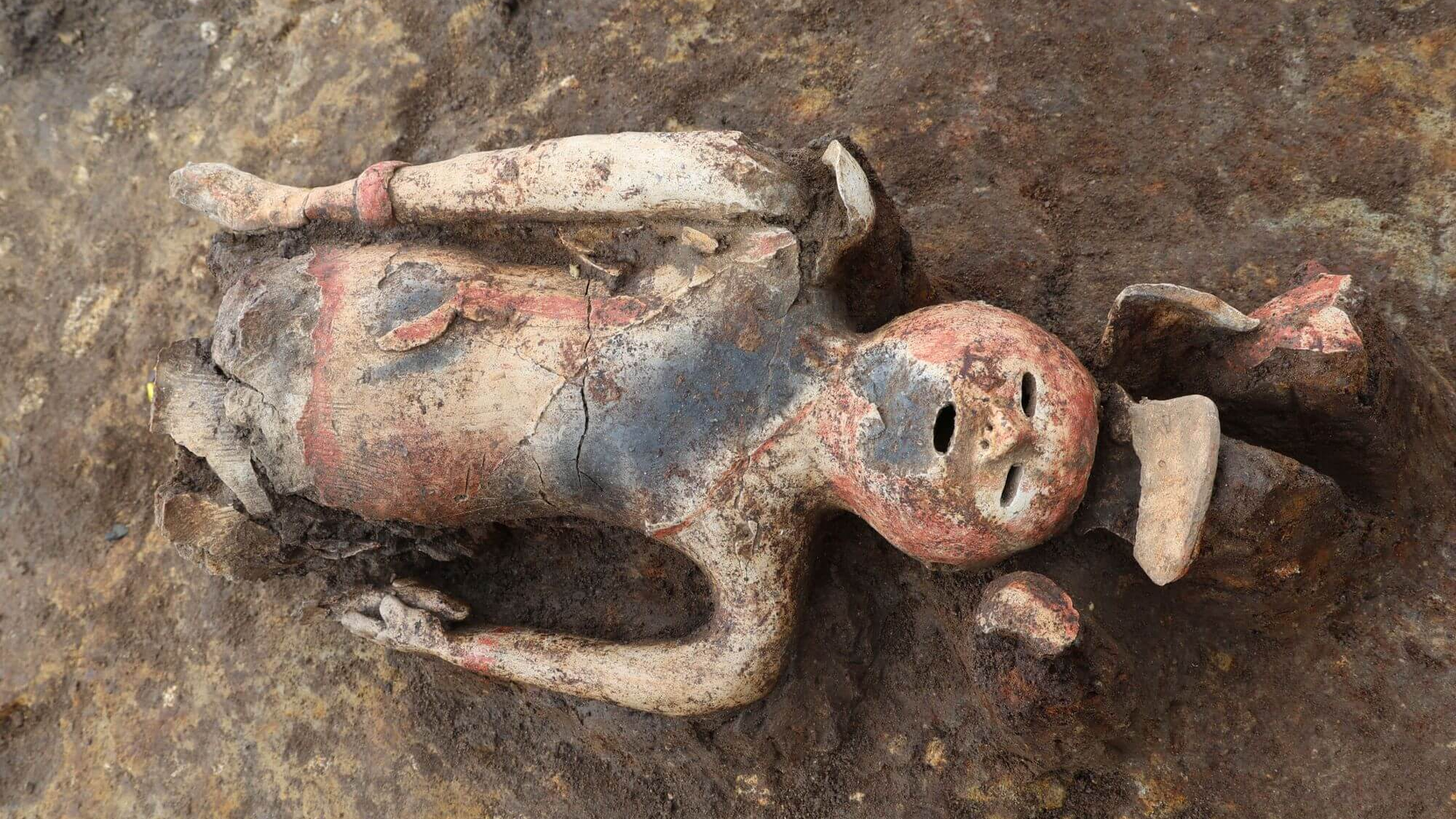
Archaeologists have unearthed a ghostly human-shaped artifact at a 1,500-year-old burial mound in Japan, near Tokyo. The clay figurine, resembling a female shaman, is believed to have guarded a tomb. The artifact was found at the Nishikaminomiya archaeological site, where nearly a dozen burial mounds, or 'kofun', from the fifth and sixth centuries were also discovered.
These periods in Japanese history are known as the Kofun period. Many tombs during this era featured cylindrical clay sculptures, called 'haniwa', used as offerings to the dead. The newly discovered haniwa stands about 16 inches (40 centimeters) tall, with only the head and torso remaining. Originally, it would have been much larger and placed near a boat-shaped sarcophagus.
Experts speculate that the haniwa represents a female shaman, known as a 'miko' or 'shrine maiden', who played a crucial role in Shinto religious ceremonies during the Kofun period. The haniwa features a traditional Japanese topknot hairstyle, bracelets made of clay and red pigment, and a red sash painted on its torso, indicating meticulous craftsmanship.
The figurine also holds a rod-shaped ritual implement in its left hand. The discovery was made during excavations at the main burial mound at Nishikaminomiya, which have been ongoing since 2020. The haniwa is currently on display at the Gunma Prefectural Archaeological Research Center's Excavation Information Museum in Shibukawa.
Written by urgent.news from Live Science's reporting — not their text. Machine-written — may contain errors; check the original before relying on it.