From gold rush to cosmic questions: a South Dakota mine and the search for the secrets of the universe
A mile beneath the Black Hills, scientists are building giant detectors to analyse neutrino particles – and possibly find the answer to existence For more than a century, the mining town of Lead, in the Black Hills of South Dakota, attracted workers with a taste for gold. Now, a flagship experiment being built in the old mine is drawing scientists in search of more intriguing riches: answers to…
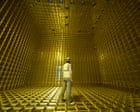
Deep beneath the Black Hills of South Dakota, scientists are constructing colossal detectors to investigate neutrino particles and potentially unravel the secrets of the universe. The Deep Underground Neutrino Experiment (Dune), set to begin construction this week, will involve engineers assembling four massive detectors within caverns located a mile underground, previously excavated from the Homestake mine.
Once operational, the detectors will quietly detect and analyze neutrinos entering from the sun, supernovae, and an intense beam generated by a laboratory near Chicago. These elusive particles, believed to be the most abundant matter particles in the universe, have intrigued scientists for decades due to their peculiar behavior and abundance.
Scientists are particularly interested in understanding why the universe is composed of matter and not antimatter. The Dune experiment, which will involve over 4,000 tonnes of steel and hold 70,000 tonnes of liquid argon, is a collaboration between the UK and the US, with over 4,000 tonnes of steel and liquid argon. The experiment aims to shed light on fundamental forces and explore the origins of the universe.
Written by urgent.news from Guardian Science's reporting — not their text. Machine-written — may contain errors; check the original before relying on it.