Calvin and Hobbes' Final Strip is Still the Perfect Goodbye
Back in 1995, catoonist Bill Watterson brought Calvin and Hobbes to a perfect conclusion
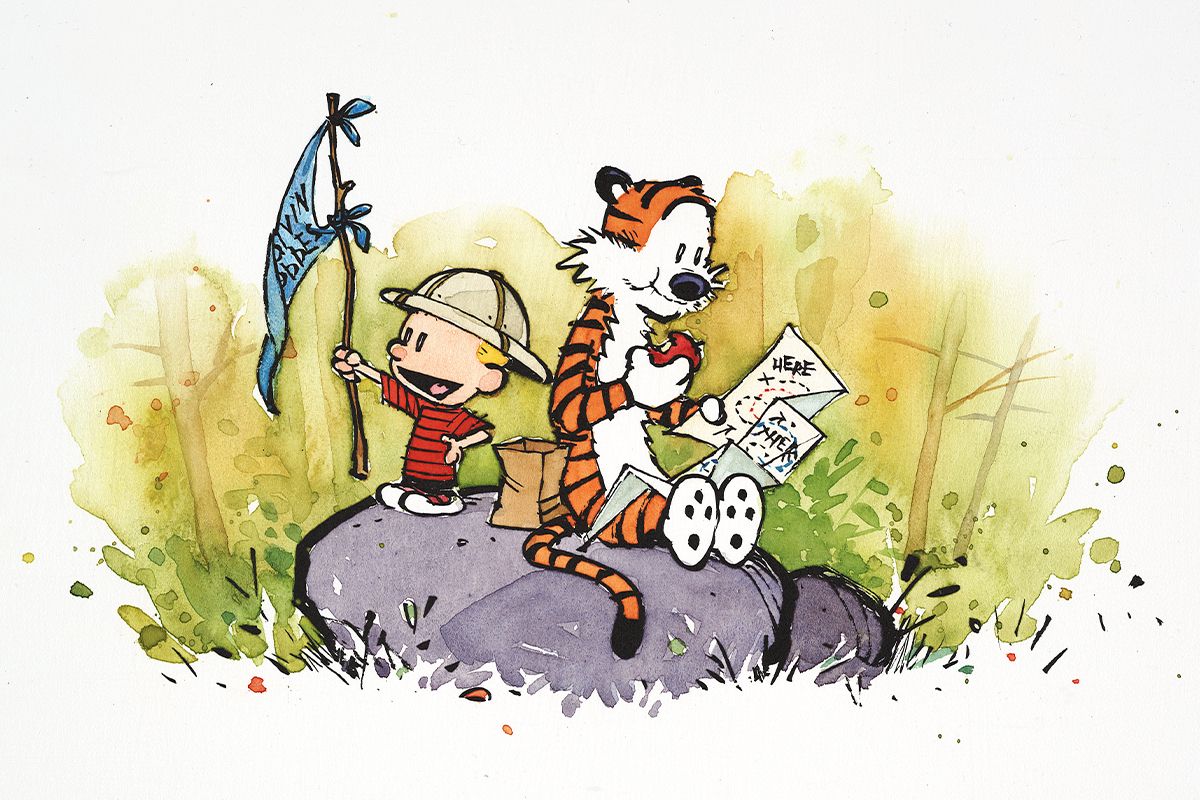
On November 18, 1985, the comic strip Calvin and Hobbes made its debut in newspapers. In the first panel, the young boy Calvin, clad in a safari helmet, wished his father a fond farewell as he set off to test his tiger trap, which he had rigged with a tuna fish sandwich that tigers could not resist. Hobbes, Calvin's stuffed tiger, made an appearance in the final panel, hanging upside down in a tree and enjoying the sandwich.
Created by artist Bill Watterson, the comic was initially featured in 35 newspapers but grew to over 250 within a year. Watterson's iconic creation ran for 10 years before he chose to conclude it in the most fitting way possible.
Watterson's decision to end the comic after a decade was uncommon, as many popular strips continued for decades. Even after its conclusion, Calvin and Hobbes continued to captivate readers, who frequently revisited the comic and newer generations discovered it. Watterson's final strip was particularly remarkable, as he left it open-ended, allowing readers to imagine that the adventures of Calvin and Hobbes continued in a fresh, white snow-covered world on New Year's Eve.
The comic concluded with Calvin exclaiming, "A day full of possibilities. It's a magical world, Hobbes, ol’ buddy… Let's go exploring!" This heartwarming, inspirational ending proved that the story was far from stale and resonated with fans for over three decades.
Written by urgent.news from Polygon's reporting — not their text. Machine-written — may contain errors; check the original before relying on it.
This story
This is one outlet's version. Read the fullest account.