Brazil Stocks Fall 0.75% as Dollar Surges | Brazil Market Report, Oct 30
Brazil’s Ibovespa fell 0.75% to 167,922 on 30 October, a fifth straight loss, as the real slid to 5.44 per US dollar. Causes, trend and key levels. The post Brazil Stocks Fall 0.75% as Dollar Surges | Brazil Market Report, Oct 30 appeared first on The Rio Times .
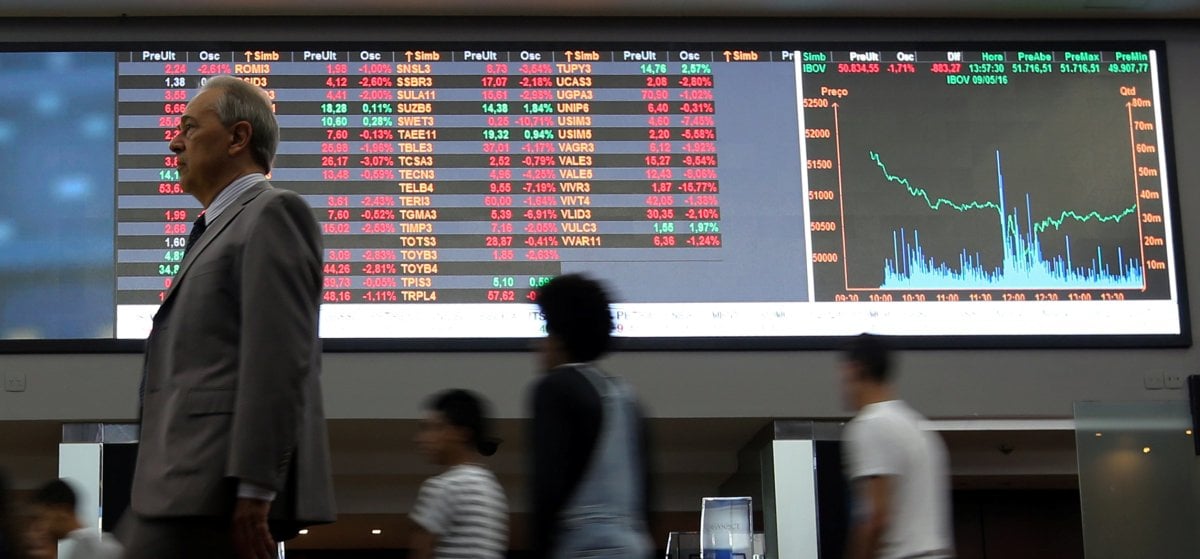
On Friday, October 30, Brazil's Ibovespa index declined 0.75% to 167,922 points, marking its fifth consecutive lower close. This brings the index to its lowest level since August 19, and it has fallen 18.12% since the close on October 23, the day prior to the presidential runoff. The Brazilian real weakened 1.12% to 5.44 per US dollar, its weakest level since December 2025.
The primary reason behind the decline is the market's revaluation of Brazil following President Luiz Inácio Lula da Silva's re-election on October 25. This result put an end to speculation about a change of government and tighter public spending.
The U.S. stock market also experienced a significant downturn on the same day, with the S&P 500 falling 1.82% and the Nasdaq slipping 2.86% after Intel and Amazon's earnings raised concerns about the cost of investing in artificial intelligence. Brazil's decline was less severe than that of the Nasdaq, as the country had already lost 17.5% over the previous four trading days.
For U.S. investors, Brazil's market performance is influenced by a combination of factors, including the government's fiscal policy and the central bank's interest rate decision on November 4. The Ibovespa ended the week 18.12% below its level on October 23, the worst performance since March 2020. Throughout October, the index dropped 9.88%, its poorest month since June 2022.
The dollar strengthened 9.31% against the real over the five sessions following the October 23 close. This weakening is primarily due to local risk factors rather than a global dollar rally, as the global dollar index only slipped 0.15% during the same period. The main causes of Brazil's decline are ranked as follows: a fiscal repricing following the election (high confidence), the sell-off in U.S. technology stocks (medium confidence), and foreign selling influenced by both the election result and the U.S. market.
Investors are now awaiting the central bank's rate decision on November 4 to gauge the government's stance on fiscal discipline. The real has dropped 1.12% on a day where the U.S. dollar index barely moved, indicating that the decline is primarily due to local risks rather than U.S. monetary policy. The U.S. 10-year Treasury yield remained near 4.93% during this period, so the market reaction was driven by share prices rather than higher yields.
The VIX, a measure of Wall Street's fear, surged 12.91% to 19.42, reflecting heightened market uncertainty.
Written by urgent.news from The Rio Times's reporting — not their text. Machine-written — may contain errors; check the original before relying on it.