Backup by Biolite Review: A Cool Idea
Backup by BioLite is designed to power your fridge when the grid goes down. It works, but protecting your ice cream doesn’t come cheap.
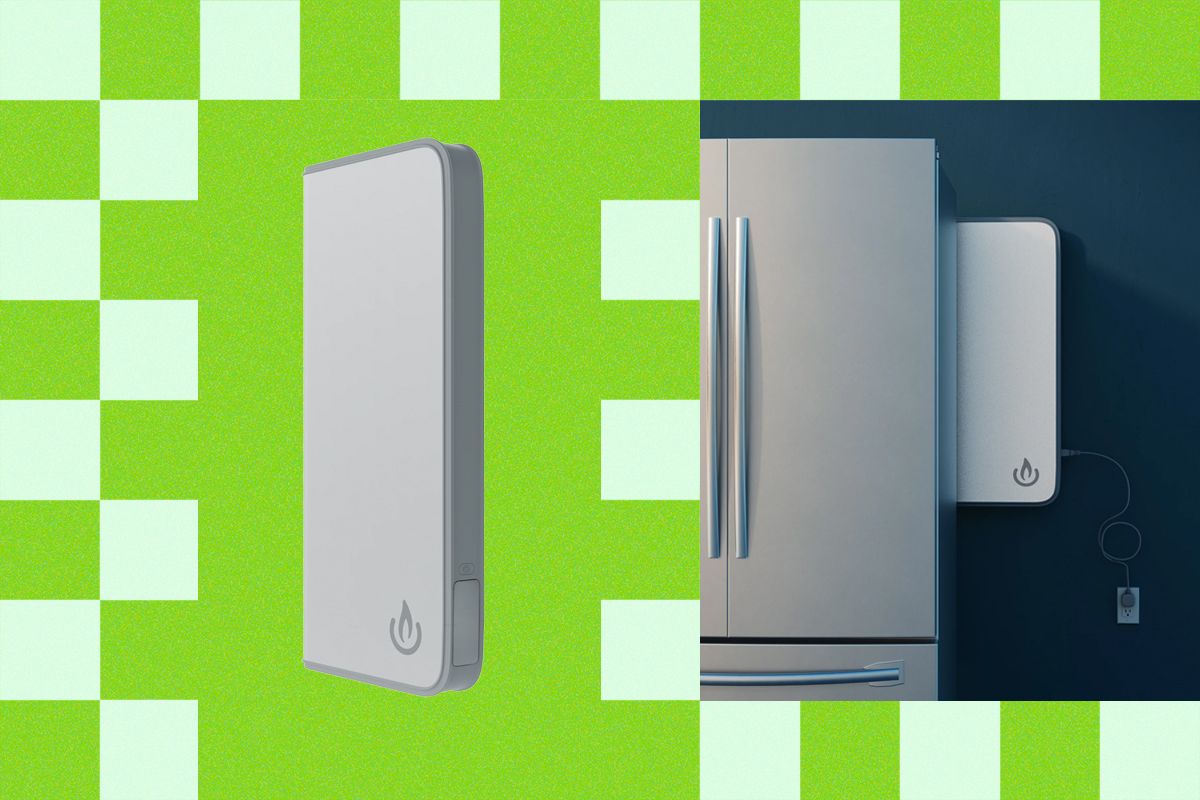
Every power outage brings a certain level of frustration, but losing power to your refrigerator is particularly irritating, as it can lead to spoiled food. Whole-house battery backup systems can prevent such inconveniences, but they can cost up to $15,000 after installation. BioLite, a company known for its portable power solutions, is about to launch an alternative, named Backup by BioLite.
This modular battery system is tailored for fridges, offering emergency power at a lower cost and can be installed by homeowners themselves.
The Backup by BioLite system features a large battery – capable of delivering 1526 watt-hours of power, with a 1800-watt rated output, and the ability to surge up to 3000 watts. The device is designed to mount on the wall behind the refrigerator or on top of it. It measures 29 inches high by 13 inches wide and weighs 40 pounds, requiring no special wiring.
You merely plug the Backup into a standard 120-volt outlet and connect your refrigerator to the Backup. Additional power can be added by daisy-chaining the Core unit with an Extend add-on device, doubling the power capacity to 3072 watt-hours. The full "Backup Complete" solution, with two cells, can provide up to 60 hours of running time if the grid fails.
Should that be insufficient, extra Extend devices can be added in series, with a maximum capacity of 10.5 KWh, though at that point, a whole-house solution might be more practical.
One of the main advantages of Backup by BioLite is its DIY installation. The device can be installed independently, without the need for an electrician, with a claimed 30-minute installation time. I tested the Backup Complete system, using two batteries side by side. While the installation process appeared straightforward, I encountered challenges due to the limited space around my refrigerator, located in an alcove.
BioLite recommends having an extra pair of hands to install the heavy battery packs, but I managed the installation on my own, albeit with some difficulties. The batteries are mounted to metal brackets, with a template provided by BioLite to ensure proper placement and level positioning. The batteries must be spaced a specific distance apart, with the connecting cable length being a critical factor.
After positioning the batteries correctly on the wall, I encountered an issue: the bracket design did not provide enough buffer space on the right side, causing the batteries to protrude beyond the bracket. I had to disassemble and reposition the brackets, resulting in a 90-minute installation process. While BioLite suggests mounting the batteries on top of the fridge for convenience and ease of movement, I found the wall-mounted setup to be secure and stable, though I would have preferred a larger template to accommodate the battery positioning better.
Written by urgent.news from Wired's reporting — not their text. Machine-written — may contain errors; check the original before relying on it.