Astronomers may have been wrong about what ended the 'Cosmic Dark Age'
How did the universe transition from an impenetrable fog of hydrogen into the bright and starlit cosmos we see today? Astronomers think they're onto the answer.
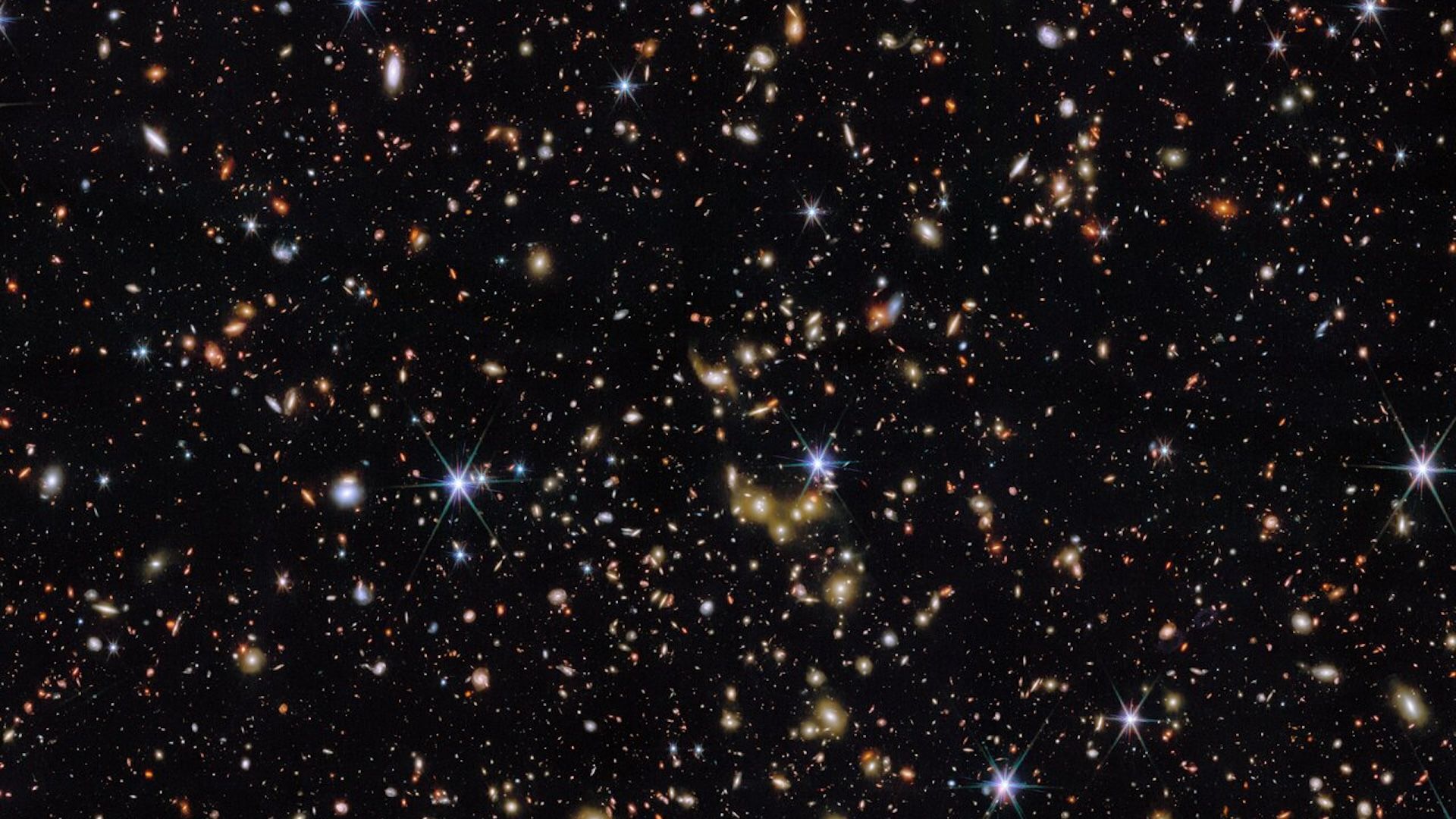
New research challenges the prevailing theory that supernovas ended the Cosmic Dark Age, suggesting that the fading of the cosmic fog may have been caused by stars themselves. Around 400,000 years after the Big Bang, the universe cooled enough for neutral hydrogen atoms to form, creating a fog that made the cosmos opaque to ultraviolet light.
When the first stars ignited and formed galaxies, their radiation ionized the neutral hydrogen, transforming the opaque fog into a transparent universe, or the Epoch of Reionization. While it was previously believed that supernovas played a crucial role in this process, a new study suggests otherwise. According to a research team led by astronomer Cody Carr from the University of Michigan, supernovas may have actually hindered the reionization process.
The study, published in the journal Nature Astronomy, found that the most intense sources of Lyman continuum (LyC) photons, which ionize the neutral hydrogen, did not exhibit the fast galactic winds typically associated with supernovas. Instead, the researchers observed six star-forming galaxies around 3.5 billion light-years away, using the Hubble Space Telescope to analyze their winds and the resulting effects on the LyC light.
The findings indicate a counterintuitive two-phase process: during the initial phase of star formation, massive stars' winds propelled LyC light out of the galaxies, allowing it to ionize the intergalactic gas and dust. However, as the massive stars lived fast and died young, their expelled stellar guts added to the galactic gas and dust, creating a trap for the LyC light.
This new evidence challenges the notion that supernovas were the primary drivers of the Epoch of Reionization, suggesting that the intense light of newborn stars may be the most viable source of reionization instead.
Written by urgent.news from Live Science's reporting — not their text. Machine-written — may contain errors; check the original before relying on it.