Animal testing in India: Why proposed new rules have sparked a fight over safeguards
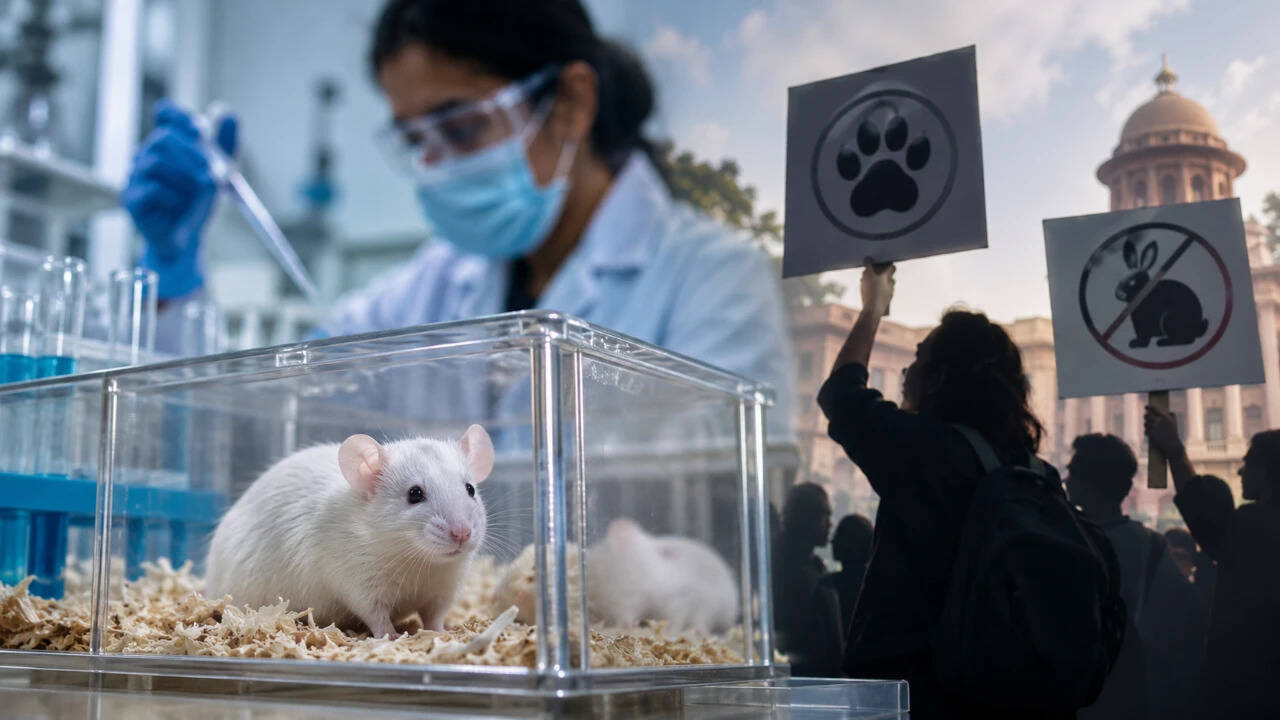
New Delhi: The Indian government's proposed overhaul of animal testing regulations has ignited a fierce debate over the delicate balance between advancing scientific research and upholding animal welfare. The draft Prevention of Cruelty to Animals (Control and Supervision of Experiment, Breeding and Trading of Laboratory Animals) Rules, 2026, introduced by the Committee for Control and Supervision of Experiments on Animals (CCSEA), outlines a new severity-based classification system for experiments, aims to decentralize approval processes, and emphasizes the Three Rs principle of Replacement, Reduction, and Refinement.
Animal testing plays a crucial role in various sectors, including pharmaceuticals, vaccine development, medical research, and environmental studies. Commonly used animals include mice, rats, rabbits, guinea pigs, fish, birds, and non-human primates. However, precise statistics on animal usage in India remain unavailable, as there is no comprehensive national database.
Animal welfare groups have expressed deep concerns over the proposed rules. They argue that the new system could weaken regulatory oversight, particularly in cases involving experiments with protected wild animals, wild-caught animals, or stray domestic animals. PETA India has specifically criticized provisions that permit such animal use, raising concerns about the potential distress caused to these animals and the lack of transparency in reporting health, genetic, and environmental histories.
The proposed framework introduces a range of requirements, including establishment registration, institutional ethics committee approvals, veterinary supervision, trained personnel, and animal-care facilities. Experiments can be conducted for various purposes, such as basic research, drug safety testing, disease research, and species conservation.
While the scientific community acknowledges the importance of animal testing, there is growing recognition of alternative methods, such as human cell-based studies, organoids, organ-on-chip technology, and computer modeling. These advances raise questions about whether India's regulatory framework is keeping pace with these developments.
Animal welfare organizations argue that the severity of an experiment, rather than the species or size of the animal, should determine the level of regulatory scrutiny. They advocate for a shift towards more humane and scientifically reliable methods, emphasizing that India should be moving towards modern, non-animal science rather than making animal experimentation easier.
Written by urgent.news from Times of India's reporting — not their text. Machine-written — may contain errors; check the original before relying on it.