AI in Colombia Helps Count Frailejones and Measure Carbon Without Cutting Down Trees
If paramos are said to be water factories, it could be argued that frailejones, native plants of these high-mountain ecosystems, are their regulators. It is known that this plant is found in Colombia, Venezuela, and Ecuador, and there are some estimates regarding the number of species that exist, although some academics maintain that this is […]
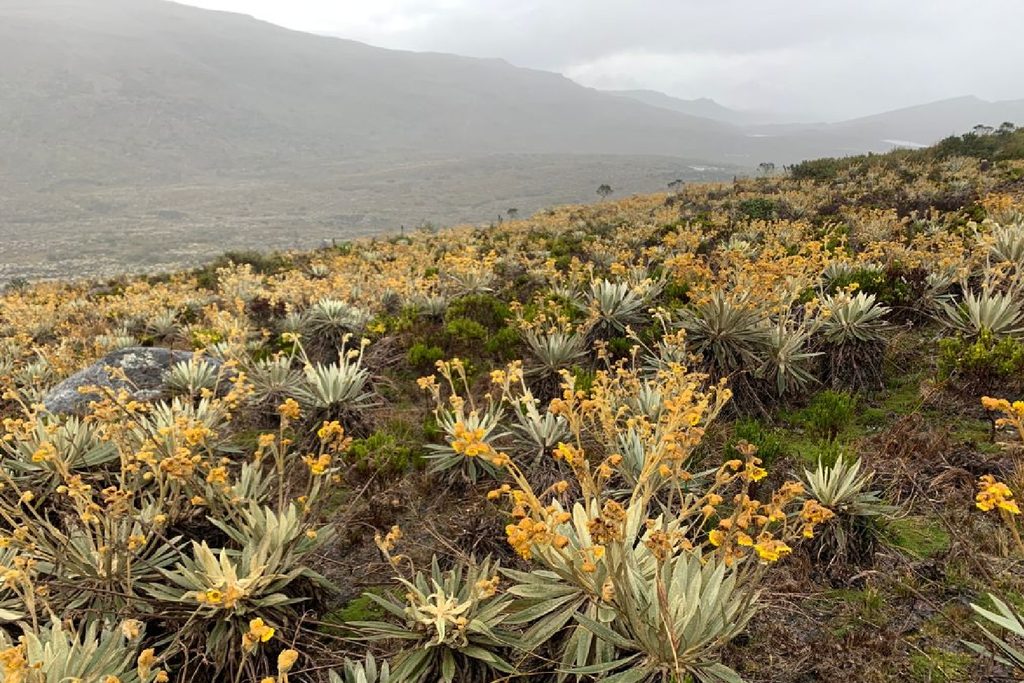
In Colombia's high-mountain ecosystems, frailejones, native plants also known as puya raimondii, play a crucial role in regulating water. While the exact number of frailejon species remains uncertain, Professor Francisco Gómez from the National University of Colombia (UNAL) believes further research is necessary to determine if the existing estimates are accurate. To identify specific species, his team is cultivating frailejones at an elevation of 3,400 meters and waiting for them to bloom.
Collaborating with local farmers, Gómez's group utilizes artificial intelligence to automatically extract plant traits from 3D scans, reducing the need for manual measurements. This partnership has led to the GeCoVIDA project, a German collaboration aimed at accelerating biodiversity discovery in Colombia through robotics and artificial intelligence. The project intends to expand to other UNAL campuses, starting with the Amazonia Campus in Leticia.
Additionally, UNAL has developed an AI tool to assess the risk of African swine fever entering the country, which would necessitate large-scale pig slaughtering. The tool translates these results into actionable information for decision-makers, demonstrating the practical applications of technological advancements in addressing critical issues.
In marine ecosystems, researcher Paula Cristina Sierra Correa from the Jose Benito Vives de Andréis Marine and Coastal Research Institute (Invemar) explains that traditional methods for measuring carbon stored in mangroves often involve tree cutting. To overcome this limitation, Invemar employs a laser scanner that captures data points about tree roots and trunks.
By employing artificial intelligence to process this data, Invemar can estimate biomass and subsequently calculate the carbon stored. Their mobile environmental DNA laboratory enables them to identify species present in a location based on traces of genetic material found in the water, forming the basis for the Beata marine protected area near La Guajira.
With technological progress, the team aims to map the entire planet's seabed before 2030, a goal that appears increasingly attainable.
Written by urgent.news from Colombia One's reporting — not their text. Machine-written — may contain errors; check the original before relying on it.