What Melaka knew about unity in diversity
The claim that non-Malay presence in the peninsula is a colonial residue does not stand before the facts of history.
On October 25, Malaysian Prime Minister Anwar Ibrahim called for an end to the politics of hatred based on race and religion, urging the nation to reject the notion that salvation could only come from the victory of a single race. He reminded Malaysians that, in the past, the Sultanate of Melaka thrived as a powerful empire while embracing unity and sound development strategies. History seems to confirm his words.
In recent decades, tensions over the idea of "ketuanan Melayu," or Malay supremacy, and the growing influence of non-Malay citizens have grown increasingly strong. This has led many non-Malay citizens to feel defensive and treated as enemies of Malay political power and a cosmopolitan society. However, the history of Melaka demonstrates that these two aspects could coexist peacefully and harmoniously.
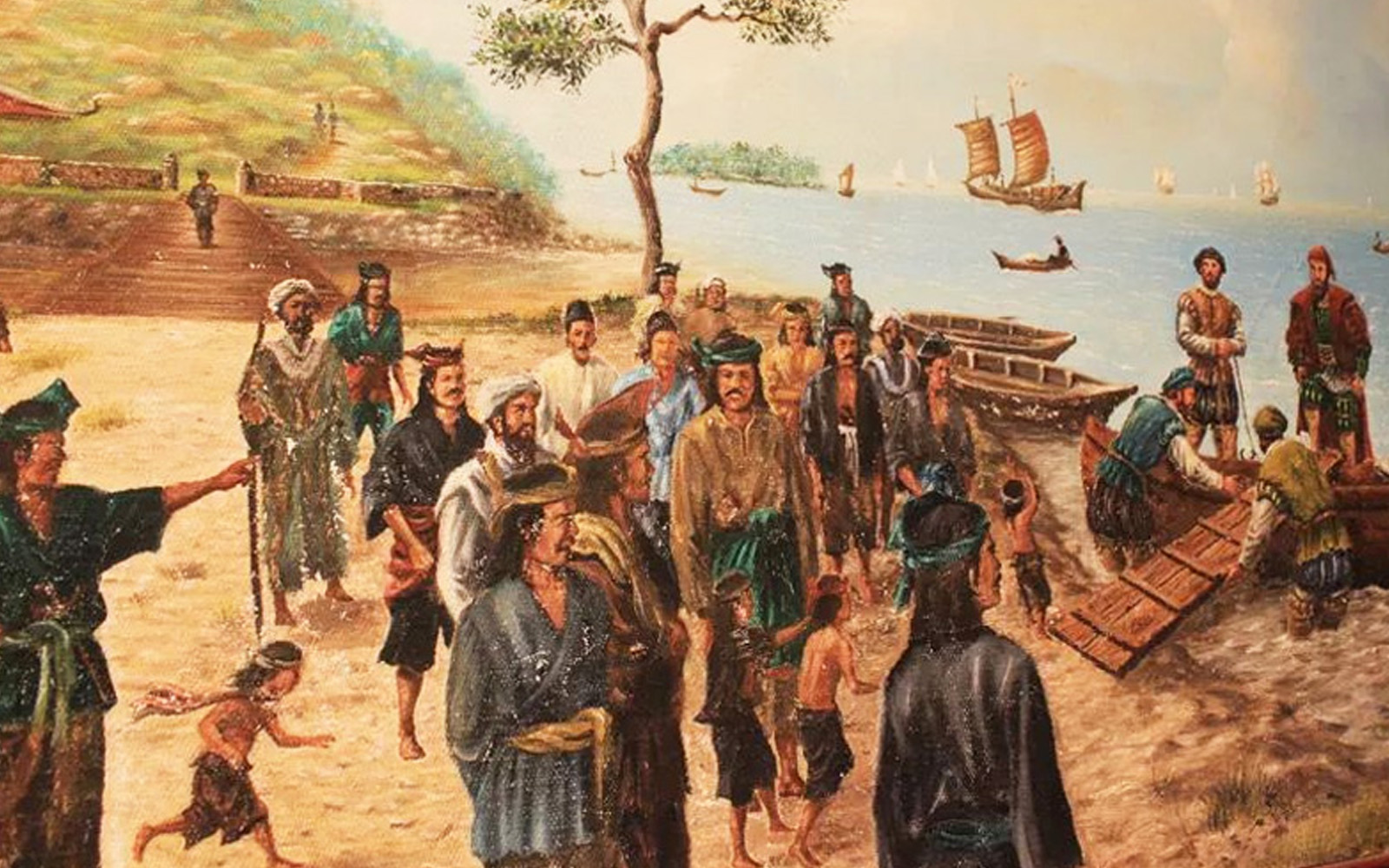
For nearly a century, Melaka was the most vital port in the Malay world and a diverse metropolis with an astonishing blend of people and cultures. Various traders, merchants, and artisans from countries such as India, China, Japan, Persia, and the Arabian Peninsula all flourished in the city. The Sultanate of Melaka was unmistakably Malay and Islamic, but it also hosted a remarkable diversity of people, languages, and customs. This diversity was not an afterthought but a cornerstone of the sultanate's success.
The wealth of the Melakan empire came from its position as a crucial link between the South China Sea and the Indian Ocean. The city thrived when traders and merchants from various backgrounds could navigate common languages, credit practices, and contractual systems. This cosmopolitanism was not just a value but the economic foundation of the Sultanate of Melaka.
The administration of the sultanate was based on administrative, rather than ideological, principles. The state appointed a Shahbandar, the chief port master, to oversee traders, revenue, and disputes. The Shahbandar managed distinct trading quarters and liaised with the government while allowing each community to maintain its customary autonomy in matters like marriage, inheritance, and religious practices.
The Bendahara handled internal Malay affairs, while the sultanate retained commercial, criminal, and appellate jurisdiction.
This unique system deserves attention as it bears a superficial resemblance to what colonial administrators later built and what Malaysian coalition politics have since imitated. However, the difference lies in structure, and this matters when discussing unity today. In contrast to the colonial approach of separating communities for the purpose of management, Melaka's system separated communities for the purpose of incorporation.
Each community was granted a space within the shared sovereign frame, shared commercial language, and shared legal horizon. Diversity was not relegated to the margins but was administered centrally. In this context, unity meant a shared sovereign frame, shared commercial language, and shared legal horizon—not shared blood, shared schooling, or shared culture.
Written by urgent.news from Free Malaysia Today's reporting — not their text. Machine-written — may contain errors; check the original before relying on it.
This story
This is one outlet's version. Read the fullest account.
- What Melaka knew about unity in diversity freemalaysiatoday.com