We used to say the future is Asian. Now the data is showing us that it's the present
For years, the rise of Asia and other developing economies was treated as a story about the future. Governments and businesses around the world acknowledged the trend while keeping their priorities much as they were. This month, the International Monetary Fund’s World Economic Outlook makes it harder to treat this as a future prospect. Its figures show that the shift is already visible in the…
For years, the rise of Asia and other developing economies was viewed as a future trend. Governments and businesses around the world acknowledged the shift while maintaining their focus. However, the International Monetary Fund's latest World Economic Outlook makes it clear that this shift is already a present reality. The figures show that the global economic balance has already begun to change.
Emerging and developing economies now account for 60.5% of global output when measured at purchasing power parity, surpassing the 28.4% held by the G7. China and India together make up 27.8% of the world's output, nearly equaling the G7's share. This is a significant increase in economic scale, challenging the traditional western-dominated view of the global economy.
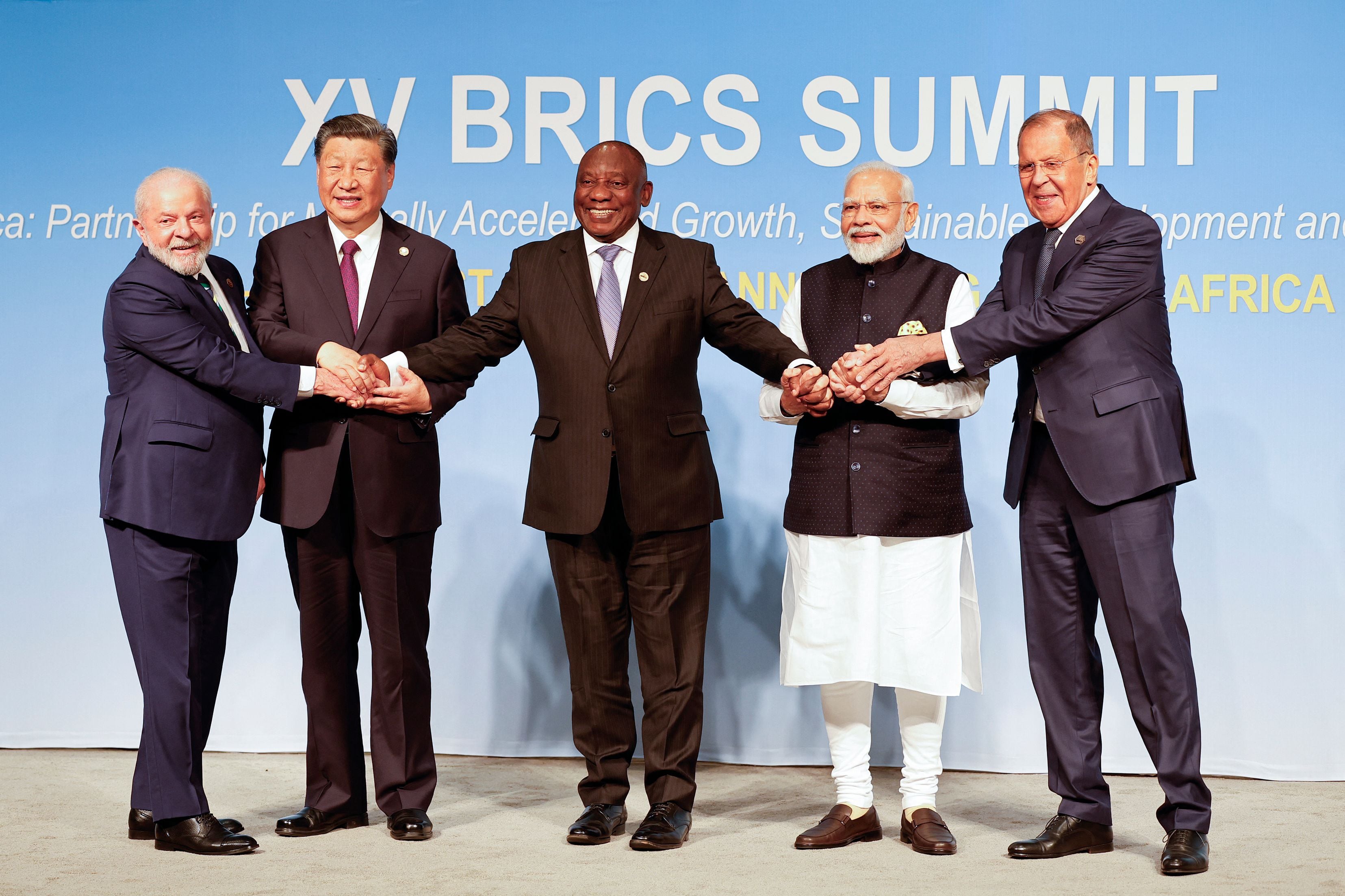
Jeffrey Sachs, a professor at Columbia University, noted that the US and Europe may be nearing the end of their 500-year period of dominance, signaling the arrival of a more multipolar world. However, this does not mean that Europe will lose its prosperity, but rather that prosperity is spreading across more of the globe, reducing any country's ability to dictate terms to others.
Despite the increased growth, it is not evenly distributed across all developing economies. Only 32 economies now account for 95% of global growth, up from 54 in the IMF's April outlook. This shows that growth is concentrated in countries that benefit from technology-related demand or are less exposed to energy shocks.
Asia's growth story is particularly noteworthy. India is projected to grow by 7% both this year and next, while Vietnam is forecast to expand by 8.4% this year, Indonesia by 5.1%, and China by 4.5%. Other parts of the world, such as the Sahel region, also show encouraging growth projections.
The Gulf Cooperation Council (GCC) outlook illustrates the varying impacts of growth shifts. Saudi Arabia's economy is expected to contract by 3.3% this year but grow by 7.9% next, while the UAE is projected to expand by 7.7% next year. These fluctuations can present opportunities for businesses, but it is essential to recognize that growth can be influenced by a lower base.
The world trade volume is also projected to increase by 4.6% this year and 4.7% next year, reflecting the growing demand in emerging markets. For businesses and investors, the key takeaway is to identify which markets and sectors are generating demand rather than treating emerging markets as a single opportunity.
The defining question of the next decade is whether emerging economies can continue to expand and share in the prosperity alongside the prosperous West. This will depend on various factors, including reliable power and connectivity, skills, competition, and sound rules. Companies must build local partnerships, adapt products to local demand, and develop the necessary infrastructure and services to serve these markets effectively.
The next decade could bring a historic expansion of prosperity through the rise of the rest alongside a prosperous West, providing billions more people with better jobs, services, and markets.
Written by urgent.news from The National Business's reporting — not their text. Machine-written — may contain errors; check the original before relying on it.