«Una svolta in Europa per salvare l’industria»
Un appello all’Europa, perché avvii una politica industriale di sostegno alla manifattura. E una richiesta al Governo, perché vari una legge di bilancio lungimirante, che non insegua il consenso immediato. ...
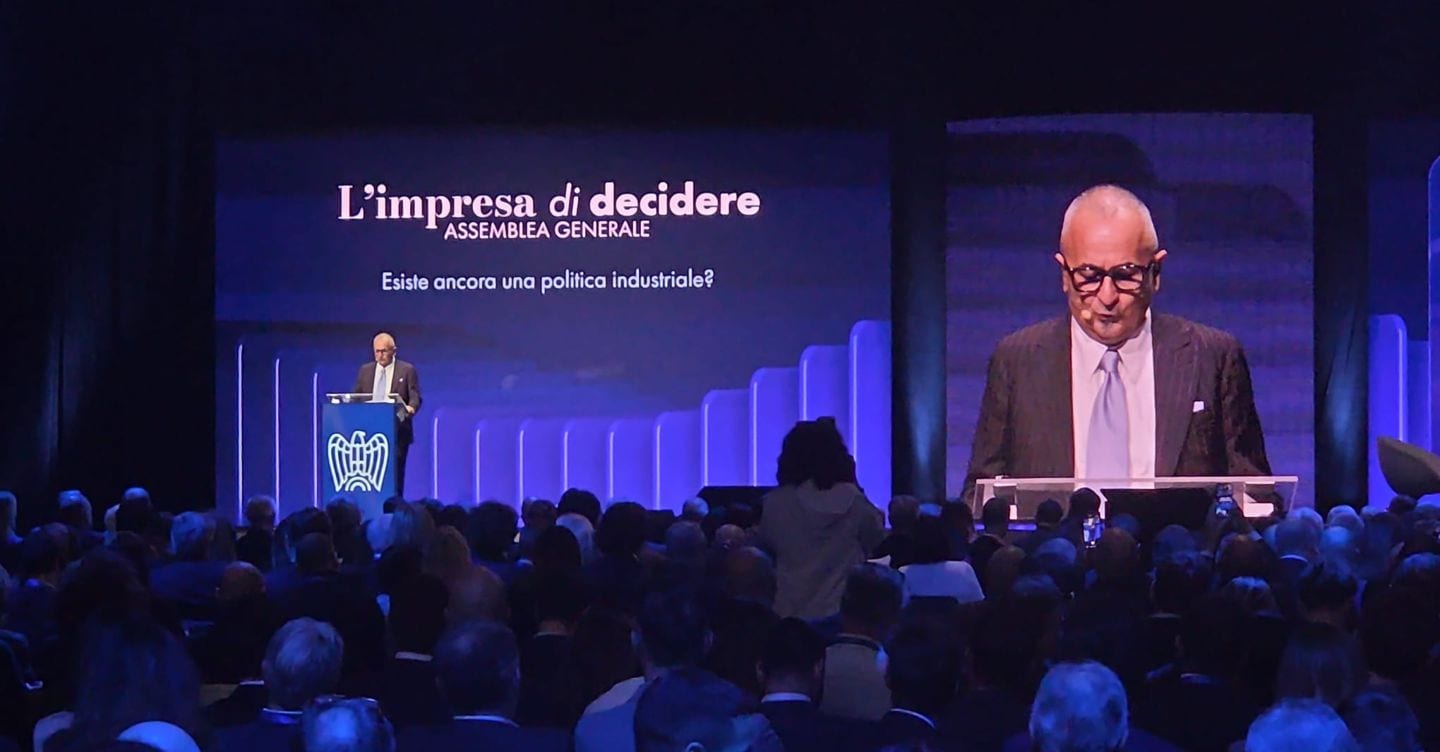
In a landmark moment for Europe's industry, the assembly of the Association of Cremona Industrialists called for a decisive shift in policy to support manufacturing. The president, Maurizio Ferraroni, urged Brussels to make significant changes and take swift action, acknowledging that "the time for analysis has passed." Europe, 70 years ago, saw industry as the starting point, but now risks crisis due to the two pillars it was founded on: manufacturing and energy.
Ferraroni advocated for revising rules on ETS and CBAM, as failing to do so would merely relocate emissions to countries with less stringent environmental standards. The fear is that the manufacturing fabric in Europe is being slowly eroded in a competitive race where many competitors are not subject to the same environmental burdens.
Brussels was urged to initiate a bold industrial policy, which has thus far remained more in intention than in action. The starting point for this should be energy, with a transition based on realistic goals and sustainable timelines, diversifying sources without excluding any a priori solution, and addressing the nuclear issue without prejudice.
The ultimate goal is to create a community market extending beyond national borders, ensuring competitive prices in the end. Ferraroni emphasized the necessity of coupling environmental sustainability with economic prosperity: "without this equilibrium, we condemn our continent to an inexorable decline." The budget in question, amounting to 2 trillion, was seen as inadequate, given the resources needed to match the ambitions and challenges of the current historical moment.
Ferraroni aligned with the hope expressed by many territorial Confindustria representatives, who worry about the potential for national centralization in managing cohesion funds. "The Regions must continue to have a decisive and direct role in defining the priorities of their territory," he explained, as only those familiar with local realities can make appropriate and timely decisions.
Regarding resource management, Ferraroni echoed the hope voiced by many Confindustria territorial representatives, who are concerned about the prospect of national centralization in managing cohesion funds. "The Regions must continue to have a leading role in defining the priorities of their territory, as only those who know the local realities best can make appropriate and timely decisions," he stressed.
In the context of Italy, looking at the rapid evolution of Artificial Intelligence, Ferraroni called for an acceleration in the field of technologies, planning public infrastructures digital and energy necessary to support a transformation revolutionizing production processes. Recent studies suggest that up to 27% of the hours currently worked in Europe could be automated, and the rapid adoption of new technologies could contribute to a productivity growth of up to 3% annually.
While companies need to prepare themselves by investing in technologies and prioritizing training as a strategic issue, the public sector is asked to create a favorable external context, regarding the necessary infrastructures. The hope is that the Budget Law will take this direction, a serious, balanced, and visionary Law that does not follow immediate consensus but has the courage to predict even unpopular decisions and navigate around the interests of individual categories.
After all, governing, as Ferraroni explained, means not thinking about the next elections but the next generations. The future does not wait, it is built. To build it, one must have the courage to decide and act immediately, for tomorrow is already too late.
Written by urgent.news from Il Sole 24 Ore's reporting — not their text. Machine-written — may contain errors; check the original before relying on it.