Too much code, too little shipped: Why AI needs a software factory
Can AI run the entire software show? At TechSparks 2026, ForgeCode CEO Tushar Mathur explained how AI agents can automate software development while engineers focus on quality and results.
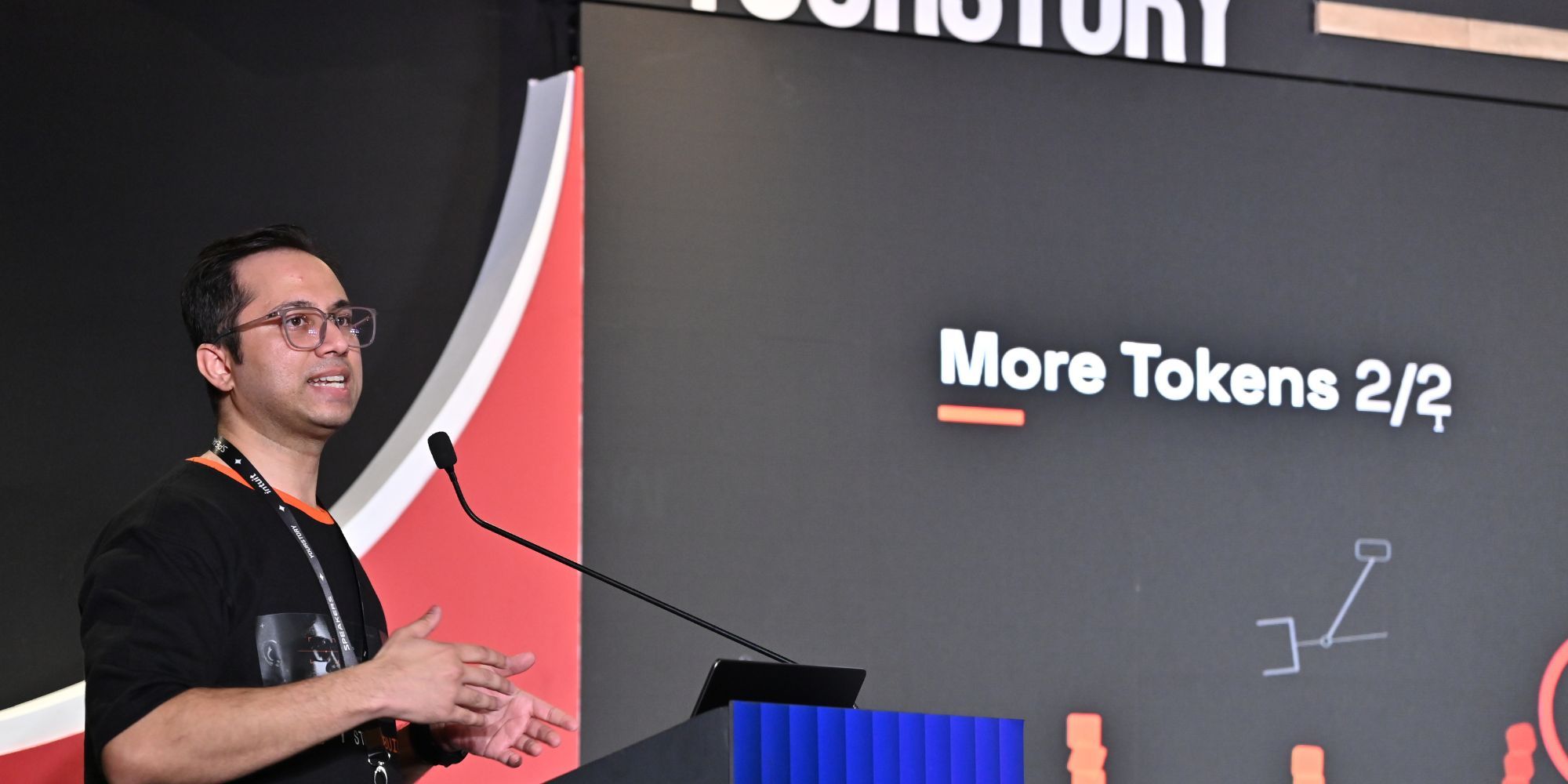
Artificial intelligence can generate code at an unprecedented pace, but the challenge lies in ensuring that software is thoroughly tested, reviewed, and deployed efficiently. Engineering teams are leveraging AI agents to accelerate coding, bug fixing, and feature development. However, the acceleration of code generation has led to a surge in review requests, slower testing, and more complex debugging processes.
At TechSparks 2026, Tushar Mathur, CEO of Forge Code, discussed this issue in his session, Anatomy of a software factory. He emphasized that simply automating coding tasks does not necessarily expedite the entire software development lifecycle (SDLC). "Just because code is becoming easy and faster to generate doesn't mean your overall SDLC becomes faster," Mathur highlighted.
Traditional software development processes heavily emphasized coding efficiency, with teams focusing on requirements, specifications, and architecture to reduce implementation effort. With AI's increasing role in coding, bottlenecks have shifted to other stages. Large volumes of pull requests awaiting review, extended testing cycles, and an influx of bugs have become prevalent issues.
Simply hiring more engineers or deploying more AI agents may not solve these problems. Coordination costs rise with additional personnel, while unsupervised AI agents can produce code that overwhelms the systems designed for review and testing. Mathur explained that effective software factories require structured feedback loops.
Forge Code, presented by Mathur, functions as such a factory, orchestrating AI agents throughout the development process. The workflow starts with triaging requests, designing specifications, and implementing features. Agents verify changes before deployment, with human engineers intervening when necessary. The system continuously monitors production, gathering insights to optimize future tasks.
Forge Code currently manages around 100 AI agents simultaneously, handling feature development, compatibility checks, and bug detection. Mathur outlined six key principles for an effective software factory: autonomy, scalability, cost efficiency, measurability, self-improvement, and alignment with business goals. The final principle is crucial.
Rather than treating every request as a mere coding task, the factory should aim for outcomes like enhancing customer retention or meeting compliance requirements. Teams should prioritize features based on their value, allowing engineers to focus on supervisory tasks such as monitoring outcomes, reviewing signals, and refining the system.
Business leaders can also submit requests and priorities directly, enabling the factory to convert organizational goals into a development backlog. While rapid code generation is beneficial, the true advantage lies in shipping superior software that delivers measurable business results.
Written by urgent.news from YourStory's reporting — not their text. Machine-written — may contain errors; check the original before relying on it.