Timothy Boomer Captures the Uncanny World of Insect Galls
Gall wasps produce some of the remarkable natural "nurseries." Do stories and artists like this matter to you? Become a Colossal Member today and support independent arts publishing for as little as $7 per month. The article Timothy Boomer Captures the Uncanny World of Insect Galls appeared first on Colossal .
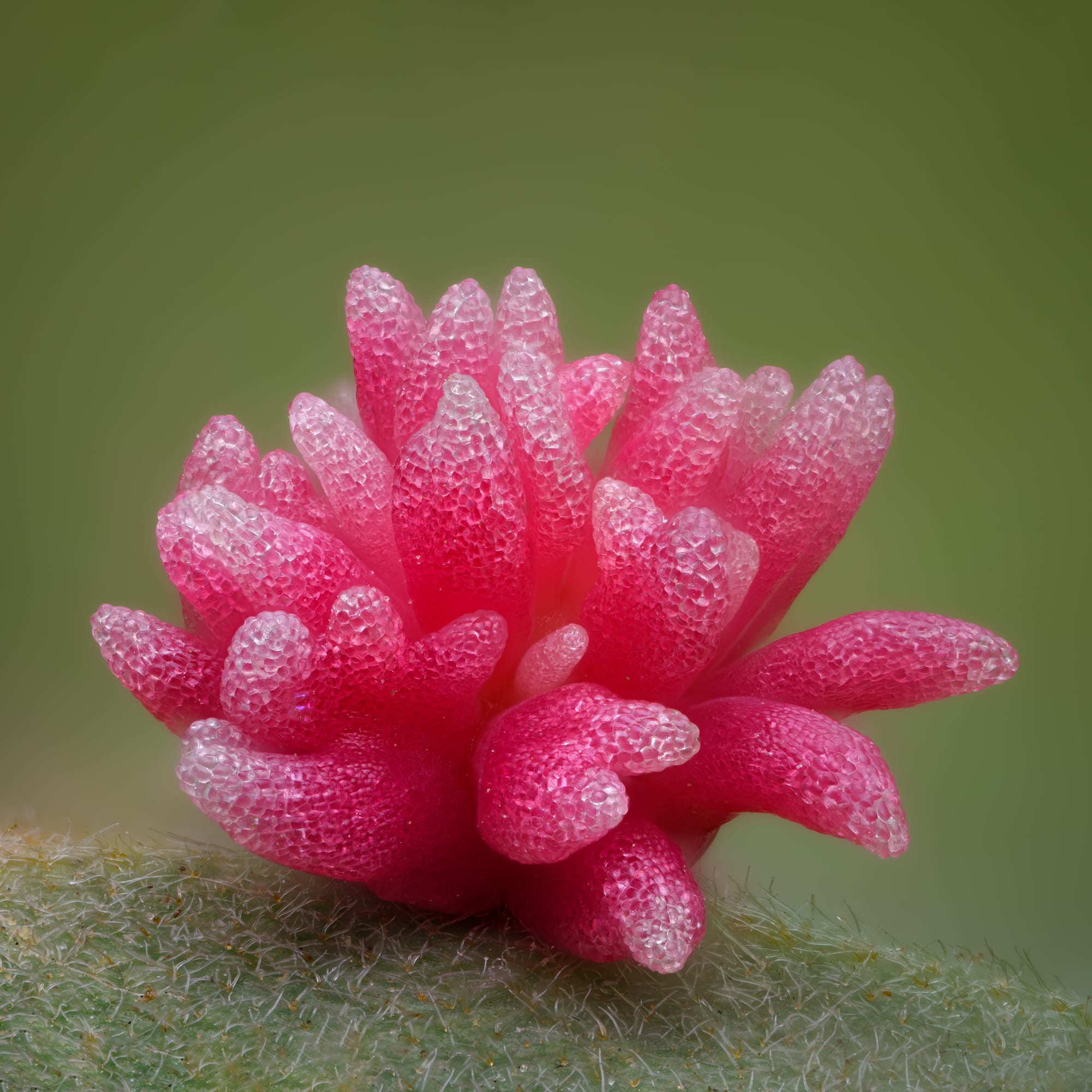
Gall wasps, also recognized as cynipids, cultivate a distinctive cooperative relationship with plants. The origin of their name is attributed to the formations they trigger on host plants to nourish their offspring, known as galls. These structures are produced by the larvae's insertion of chemicals into the plant, utilizing its resources.
The growths are typically minute, sometimes present in clusters, and can vary in color from a deep reddish-brown to bright pinks and yellows. Nature photographer Timothy Boomer is captivated by these structures. "Galls can be induced by a variety of organisms, but I usually concentrate on those triggered by cynipid wasps as they are the most visually captivating (at least to me)," Boomer explains to Colossal.
Volcano gall, induced by the cynipid wasp Feron atrimentum (previously Andricus atrimentus), located in Solano County, California. A gall performs both a protective function and serves as a food source for the insect within. Ideally, the larva remains immune to predators, receives adequate sustenance, and matures into an adult before emerging to sustain the cycle.
Different species of wasp result in distinct characteristics, often affecting particular areas of the plants. Scientists estimate there are at least 1,300 cynipids worldwide. Occasionally, environmental factors alter the appearance of the nodules. Boomer notes the spined turban gall, which typically exhibits a bubblegum-pink color with spines emerging from a relatively flat center.
He also photographed an atypical example, darker pink with blackened tips and spikes covering the surface. "In this case, normal development was disrupted by an external factor entering the gall at an early stage," Boomer states. "I'm not a scientist, so I won't claim to fully understand the complexities of what's happening, but I imagine it as a 'home invasion' that fundamentally changes the home."
Using a focus-stacking technique, where hundreds or even thousands of images are taken and digitally combined to make the tiny objects clear, Boomer captures these minuscule objects with shallow depth-of-field. He minimally edits his photographs in Photoshop to preserve the original scene's integrity and is committed to sharing only what occurs naturally.
"Nature doesn't require enhancement," he asserts. Explore Boomer's work on Instagram, where you can discover slime molds, flowers, and more.
Written by urgent.news from Colossal's reporting — not their text. Machine-written — may contain errors; check the original before relying on it.