Things That Go Beep in the Night: Agentic AI Joins the Search for Extraterrestrial Signals
While science fiction lore tells us that humans will meet extraterrestrial life in the form of little green men, the detail that should raise hairs this Halloween is this: the search for extraterrestrial intelligence took a major leap forward with AI, and it increasingly focuses on AI agents built by humans listening for AI agents […]
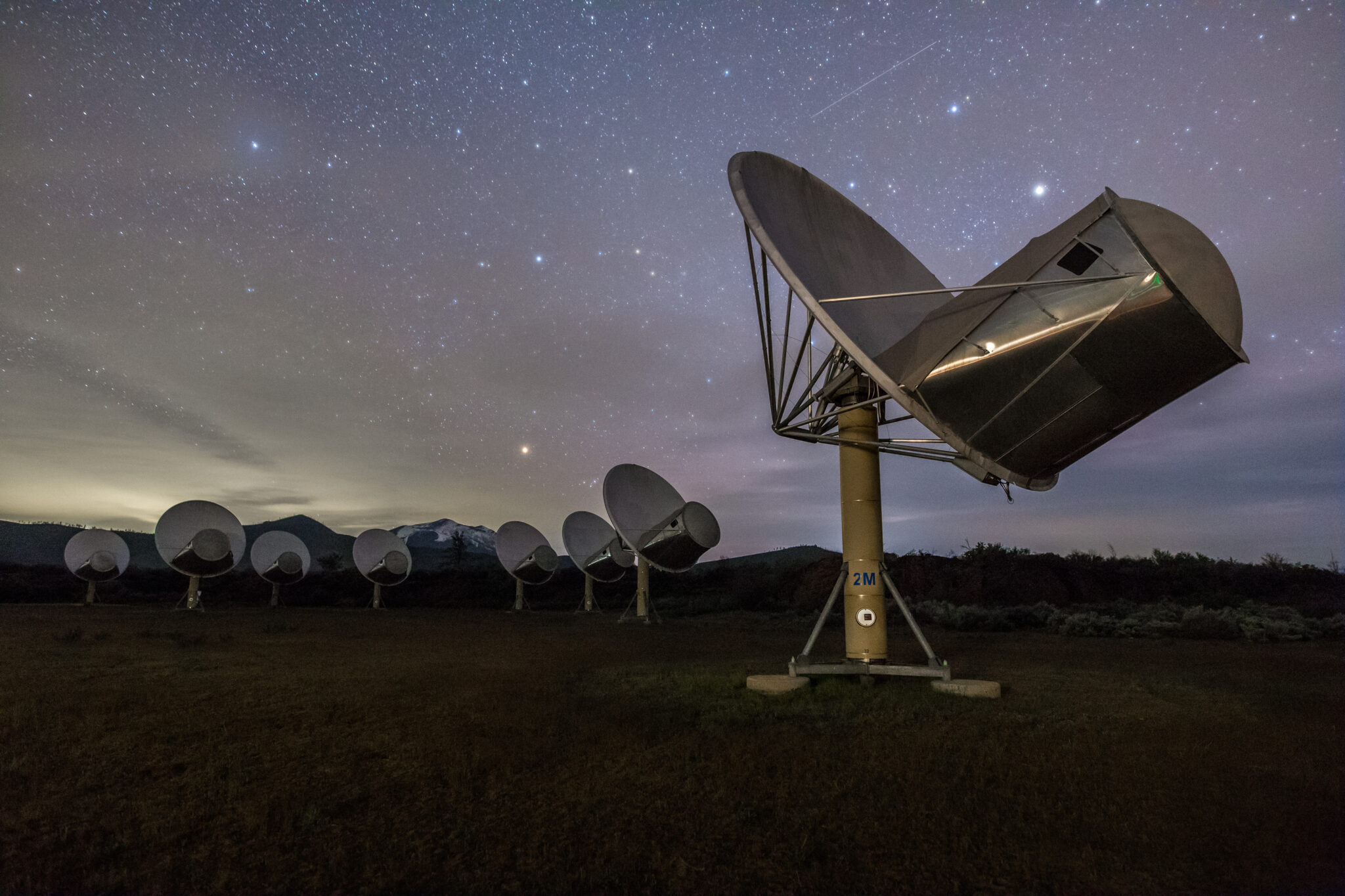
The search for extraterrestrial intelligence (SETI) has taken a significant leap forward with the integration of artificial intelligence (AI) and specifically, agentic AI. This development has been made possible through collaboration between Breakthrough Listen and the SETI Institute, and it involves harnessing AI agents to listen for signals from extraterrestrial sources.
These AI agents are capable of steering telescopes, enhancing and correcting incoming data, and applying AI models to the data stream, all in response to a single natural language request.
At the heart of this system is the NVIDIA Holoscan platform, which processes massive streams of sensor data, providing agents with live data to act upon. This results in a more efficient and adaptable search for potential signals from extraterrestrial civilizations. Andrew Siemion, the SETI Institute's Bernard M. Oliver chair for SETI, noted that the potential discoveries made by these new agentic observatories could more closely resemble the technologies of extraterrestrial civilizations rather than those of humans. This is not to be feared, but rather a breakthrough in translation.
To handle the vast amounts of data generated by radio telescopes, the Allen Telescope Array utilizes DAQIRI, a Holoscan platform library, which pushes terabits per second of sensor data directly into GPU memory, enabling real-time processing of observations. CyberEther, a signal-processing framework developed at the SETI Institute, utilizes NVIDIA CUDA-X libraries to perform complex calculations.
Nexus, a web-based observatory orchestrator, serves as the agent's central hub, providing researchers with a single source of truth for instrument state, compute resources, and pipelines. This system can process 2.4 terabits per second on NVIDIA RTX PRO 6000 Blackwell GPUs, with inference running on premises, alongside the instrument.
The system's capabilities have already been proven, with the first real-time AI detection of a pulsar in the Crab Nebula. Looking ahead, the team plans to evaluate open models such as NVIDIA Nemotron, specifically for scenarios where data locality and turnaround are critical, and for observatories that may operate offline on the far side of the moon. This represents a significant step forward in the search for extraterrestrial life and intelligence.
Written by urgent.news from NVIDIA Blog's reporting — not their text. Machine-written — may contain errors; check the original before relying on it.