The Largest Animal Genome Belongs to a Freshwater Fish at 91 Billion Base Pairs, but 90 Percent Is Repeat DNA
Learn why lungfish have genomes that are far larger than the human genome, and how their expanded genomes shed light on evolution.
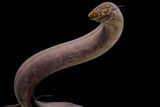
The South American lungfish holds the record for the largest animal genome, containing a staggering 91 billion base pairs, nearly 30 times larger than the human genome. However, this extensive genome doesn't necessarily equate to increased complexity. In fact, about 90 percent of the lungfish genome is made up of repetitive DNA sequences, often referred to as "junk DNA," which have multiplied uncontrollably over time.
This repetitive content is primarily due to transposons, or "jumping genes," which are DNA segments that can change their position within a genome. The South American lungfish genome has expanded dramatically in the past 100 million years, growing by the size of an entire human genome every 10 million years. While the abundance of transposons can sometimes destabilize a genome, researchers have found the South American lungfish genome to be surprisingly stable.
The lungfish's massive genome doesn't confer any significant evolutionary advantages, but it is linked to larger cell sizes and lower metabolic rates in some species, as observed in a 2019 study. This extensive genome size is the result of largely purposeless genetic fluff accumulating over millions of years, providing insight into the evolutionary trajectory of the Devonian lobe-finned fish that transitioned from water to land around 380 million to 360 million years ago.
Written by urgent.news from Discover Magazine's reporting — not their text. Machine-written — may contain errors; check the original before relying on it.