Supreme Court asks Centre to take measures against online misuse of court feeds
Solicitor General Tushar Mehta submits that suggestions from various High Courts and other stakeholders have been received and forwarded to the Ministry of Electronics and Information Technology
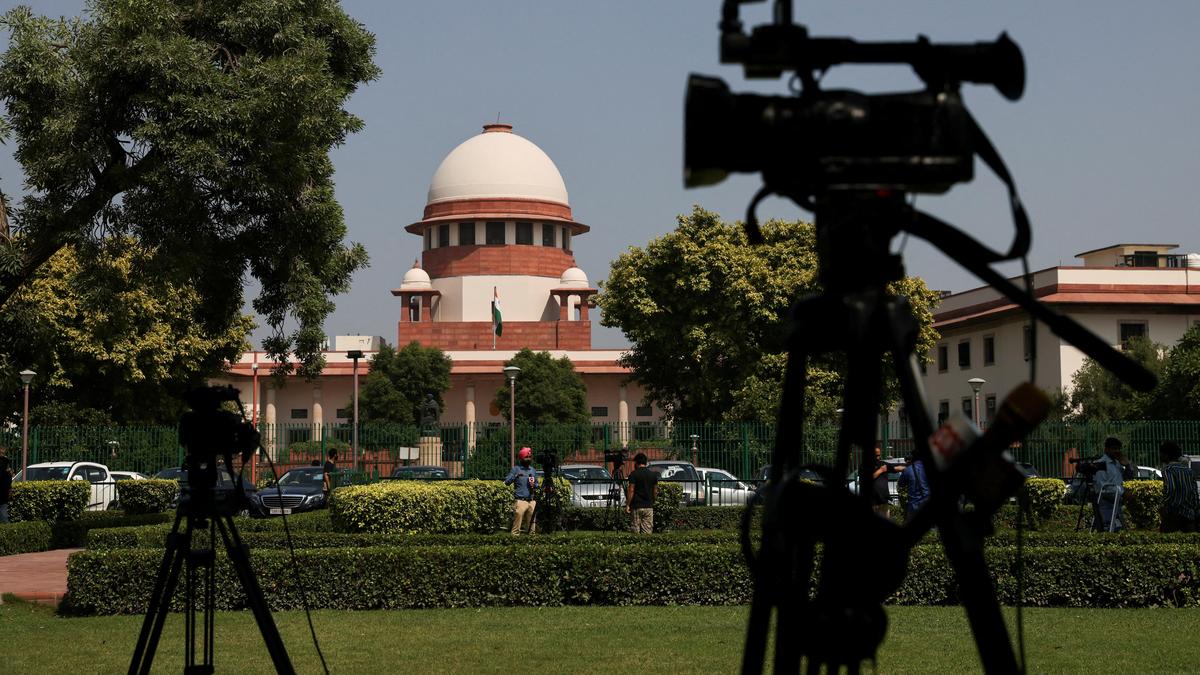
The Supreme Court of India ruled on October 30, 2026, that consensual sexual relationships cannot be retroactively redefined as rape. "We wish to note a worrying trend in recent years wherein consensual relationships that have come to an end are retrospectively combed with a fine tooth so as to identify what can post-facto be construed as violence and sexual assault," Justice B.V. Nagarathna stated in the judgment.
The court questioned the basis for suspecting offence in cases where there was a consensual relationship. "Where is the question of offence when there is consensual relationship? The Supreme Court asks," the judgment read.
The ruling specifically addressed a case from Kerala where a man was accused of repeated instances of rape during a seven-year relationship that ended. The complainant alleged she was unaware of the man's prior marriage and children from a previous relationship. Justice Nagarathna emphasized the need to draw a clear line between deception-induced lack of consent and regret over past consent after a relationship's end.
The court argued that regret over a consensual relationship does not transform past acts into rape. It noted the danger of treating consensual relationships as criminal offenses merely because they ended poorly. "Such an approach denudes the man of any agency entirely, as the mere factum of being in a consensual relationship at one point would bind him to it entirely for fear of being accused of rape at a subsequent point of time," the court observed.
The ruling dismissed the notion that physical intimacy during a relationship could be deemed rape later on due to the relationship's dissolution. "In fact, such an approach denudes the man of any agency entirely, as the mere factum of being in a consensual relationship at one point would bind him to it entirely for fear of being accused of rape at a subsequent point of time," the court stated.
Justice Nagarathna highlighted the court's previous observations about the alarming trend of converting failed relationships into criminal cases. "Rape, being a heinous offence, must be reserved for situations where there is real sexual violence, coercion, or manipulation of consent. When every consensual relationship which sours is converted into an accusation of rape, it not only dilutes the gravity of the offence alleged, it also subjects the accused to irreparable stigma, harassment and injustice," she pointed out.
However, the court cautioned that rape remains one of the most under-reported crimes, profoundly affecting a woman's bodily autonomy and dignity. "For every case where the provisions related to rape are misused, there are several cases that never see the light of day. We must emphasise that genuine cases must be pursued with vigour where the facts clearly show sexual assault and violence. But equally, the justice system must not be turned into a tool of vengeance when relationships fail," Justice Nagarathna observed.
Written by urgent.news from The Hindu's reporting — not their text. Machine-written — may contain errors; check the original before relying on it.
This story
This is one outlet's version. Read the fullest account.