Strange, catastrophic landslides are kicking off across the far north
When frozen ground known as permafrost degrades, it can fail catastrophically. That could spell serious trouble for the whole planet.
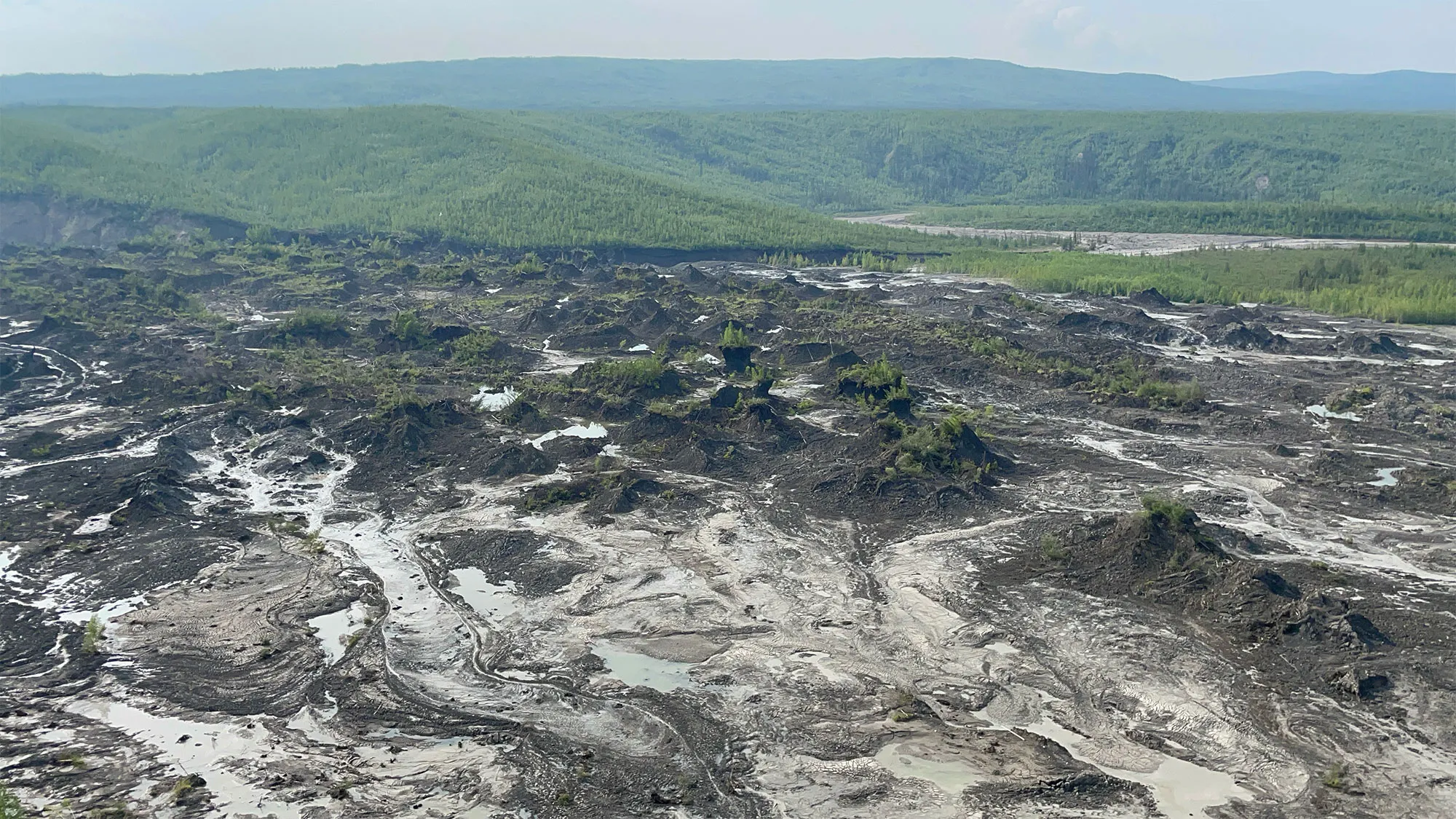
In the far north of Canada, particularly within the Northwest Territories, a series of unprecedented landslides have been occurring over the past few decades. These landslides, known as "permafrost detachment slides," have captured the attention of researchers due to their unusual nature and scale.
The first recorded permafrost detachment slide took place in 2017, following a wildfire that had previously affected the region. The slide, which stretched for three-quarters of a mile, moved approximately 30 million cubic yards of earth. Just three years later, another slide occurred near the Redstone River, covering a distance of two miles and moving an even larger volume of earth.
Dr. Joseph Young, a geoscientist and lead author of a recent study on these events, emphasized the dramatic impact these landslides have on the landscape. He noted that permafrost detachment slides are a relatively new phenomenon, only emerging within the last 10 to 15 years, marking a significant and abrupt change in the region's topography.
Permafrost, a frozen ground found predominantly in the Northern Hemisphere, is a crucial component of Earth's ecosystem. Its rapid thawing due to rising temperatures is contributing to the instability of the landscape. The slides result from the degradation of frozen soils, leading to a catastrophic collapse of land. The blocks of frozen material discovered within the slides, some up to 650 feet long, provide evidence that the permafrost failed from the base upwards.
The thawing process began in 1995 when a wildfire swept through the area, removing the vegetation that shaded the permafrost, causing it to warm and eventually degrade. This degradation, often starting from the base and spreading upwards, leads to the formation of pools of water and tension cracks, eventually resulting in the detachment slide. As the slides continue to occur, they not only alter the landscape but also contribute to the release of greenhouse gases, further exacerbating the global warming cycle.
The implications of these landslides extend beyond the immediate region, potentially triggering a feedback loop of warming and thawing that could have severe consequences for the planet. As the permafrost continues to melt, the release of stored carbon fuels further climate change, creating a dangerous cycle.
Written by urgent.news from Grist's reporting — not their text. Machine-written — may contain errors; check the original before relying on it.