Russia’s flag returns to the Olympics, but the battle over politics in sport is far from over
PARIS, Oct 31 — IOC president Kirsty Coventry’s desire is that “politics does not take over on the fie...
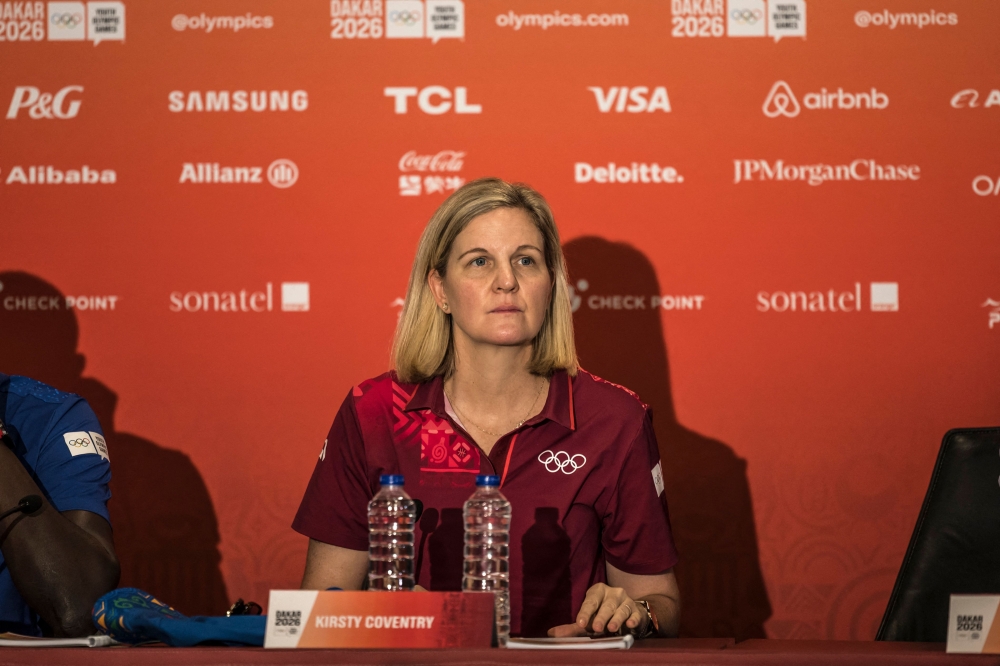
The International Olympic Committee (IOC) president, Kirsty Coventry, holds the belief that politics should not dominate within the realm of sports. However, Ukraine and former IOC executives have revealed to AFP that politics and sport are inextricably linked. The forthcoming Youth Olympics in Dakar, Senegal, will see Ukrainian and Russian athletes, two nations involved in a war initiated by Russian President Vladimir Putin in 2022, compete together.
For the first time since the 2020 Winter Youth Games in Lausanne, 13 Russian athletes will be able to display their national flag and hear their national anthem, signaling a return to traditional Olympic symbols. This development aligns with Coventry's stated stance on the matter during her speech at the EU Sporting Forum in Cyprus earlier this year.
She emphasized that "athletes can only inspire us if they are able to compete" and that "they can only do so if we keep sport strictly a neutral ground, if politics does not take over on the field of play." Ukrainian Sports Minister Matviy Bidnyi opposes this perspective, stating that any discussion about the return of Russian athletes to the international stage is only possible once the war concludes, a just peace is established, all abducted Ukrainian children are returned home, and international law is fully restored.
Bidnyi emphasized that isolation is not merely political but rather a matter of basic human decency. Former IOC marketing executive Terrence Burns remarked that worldwide, "sport has never been separate from politics." He argued that neutrality remains the fundamental principle, and the Olympic movement thrives only when it remains independent of governments.
While Ukraine has refrained from employing the political tactic of boycotting sporting events Russia partakes in, a strategy that was prevalent during the 1976 to 1984 Summer Olympics, the consequences of the boycott during the latter two instances were more detrimental to the IOC than the targeted nations. Burns and ex-IOC marketing chief Michael Payne concur that the African boycott of the 1976 Montreal Games was effective because it highlighted a multilateral campaign to isolate apartheid South Africa from global sports.
Payne believes that sport is once again susceptible to political interference, with politicians once again resorting to using it as a tool to sanction and dictate who can and cannot participate. The greatest threat to the future of sports, according to Payne, is the increasing political weaponization of sport. While Coventry has maintained a neutral stance, Fifa president Gianni Infantino has faced criticism for his close relationship with US President Donald Trump.
The awarding of the Fifa Peace Prize to Infantino was widely ridiculed as it lacked public criteria, jury, or process. Infantino has also extended a welcome mat to Russia, who are set to compete in this month's Under-15 football World Cup, and has stated that the ban on the country has not yielded any significant results. Bidnyi emphatically rejected this line of thinking, arguing that removing such bans would convey a terrifying signal to potential aggressors, indicating that they could invade a neighbor, commit atrocities, and still be received at global tournaments as if nothing had transpired.
Written by urgent.news from Malay Mail's reporting — not their text. Machine-written — may contain errors; check the original before relying on it.