Philippine village uses nature to defend against floods with bamboo, shells and husks
PAMARAWAN, Philippines — For years, residents of Pamarawan barangay, or village, in the City of Malolos, had to live with floodwater inundating their streets as the southwest monsoon, known locally as hagabat, brought strong waves into the fishing village. It got even worse during typhoons. “When there was a typhoon, the waves would go over […]
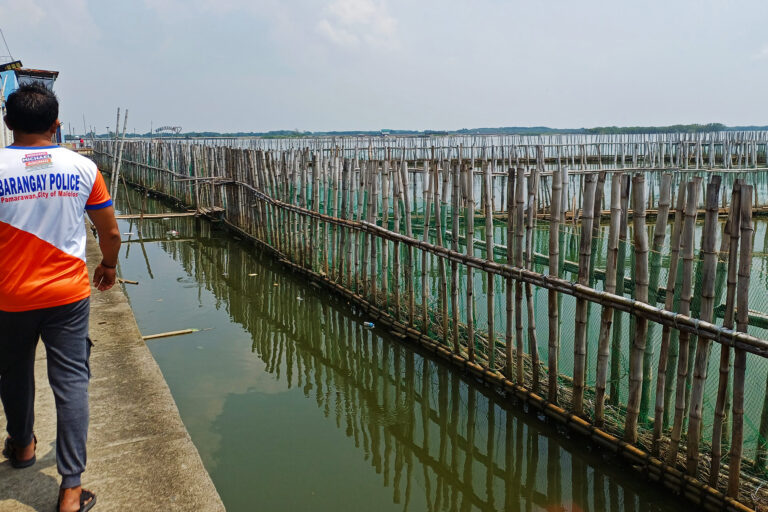
Pamarawan, a low-lying fishing village situated at North Manila Bay in the City of Malolos, Philippines, faced recurring flood issues caused by the southwest monsoon, locally known as hagabat. During typhoons, strong waves would even surpass the 3 to 4-meter-high concrete breakwater, directly impacting houses adjacent to the dike, as reported by Roldan Dayao, secretary of Pamarawan.
The village's situation improved following the implementation of a nature-based coastal defense and flood control project that utilized locally sourced materials such as bamboo poles, oyster shells, and coconut husks.
Interlocking, interconnected bamboo cribs now span 14 hectares (35 acres) offshore. These bamboo structures, coupled with discarded oyster shells placed within coconut husk nets, function as breakwaters that mitigate the energy of incoming waves. Additionally, the cribs collect drifting mud and sand, with accumulated sediment anticipated to gradually elevate the seabed to a height capable of effectively combating future flooding threats.
Written by urgent.news from Mongabay's reporting — not their text. Machine-written — may contain errors; check the original before relying on it.
This story
This is one outlet's version. Read the fullest account.
- Bamboo and oyster shells: Philippine island fights rising seas with nature, not concrete malaymail.com
- Philippine island fights rising seas with nature freemalaysiatoday.com