NASAs Voyager 1 gives mission control another moment of panic
NASA's Voyager 1 spacecraft suffers an inexplicable communication outage as it closes in on a historic distance milestone.
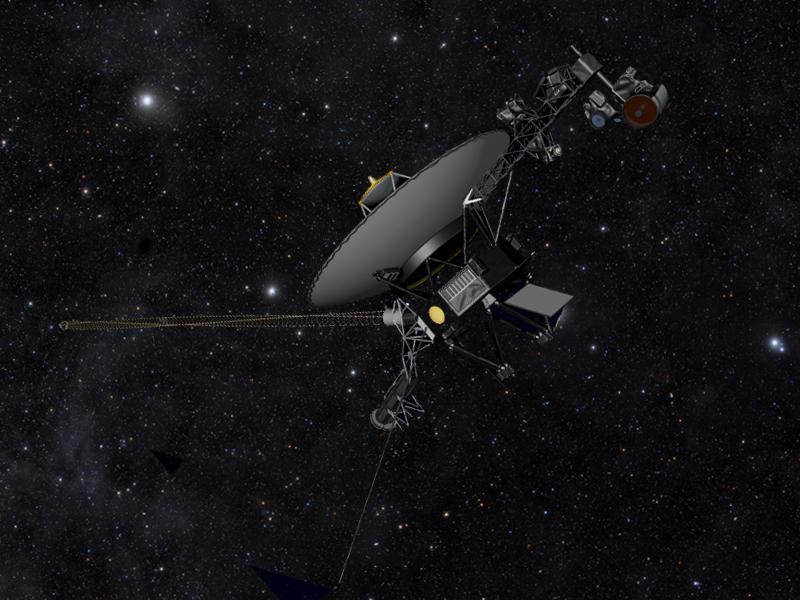
NASA's Voyager 1, the farthest spacecraft from Earth, caused mission control some anxiety when it unexpectedly stopped communicating for two days in mid-October. The Deep Space Network, responsible for receiving signals from Voyager 1, failed to pick up a response on October 18 and 19. However, the spacecraft suddenly sent a signal back on October 20, ending the period of silence.
Nevertheless, engineers were left puzzled as to what caused the communication gap. They discovered that one set of thrusters had shut down, prompting a backup set to take over. Thrusters are small engines that help point and stabilize the spacecraft, and Voyager 1's computers automatically switch to backup thrusters when they detect an issue with the active ones.
Voyager 1's mission manager, Kareem Badaruddin, expressed relief at the spacecraft's return to contact, emphasizing that they are now prepared for the mission's eventual conclusion. As NASA's longest-running mission, Voyager 1 is experiencing reduced power due to the gradual depletion of its plutonium fuel source, which loses about four watts every year.
Engineers have been forced to turn off two science instruments to conserve energy. On November 18, Voyager 1 will reach a milestone distance of one light-day from Earth, equivalent to approximately 16.09 billion miles. Launched in 1977 to explore the outer planets, Voyager 1 and its twin Voyager 2 have visited Jupiter, Saturn, Neptune, and Uranus, as well as numerous moons and planetary magnetic fields and rings.
In August 2012, Voyager 1 became the first human-made object to enter interstellar space, making it the only spacecraft to leave the solar system.
Written by urgent.news from Mashable's reporting — not their text. Machine-written — may contain errors; check the original before relying on it.