Künstliche Intelligenz: So verschaffen sich Führungskräfte im mittleren Management einen Wettbewerbsvorteil
Je höher der Posten, desto größer die Erwartung an KI-Kompetenz. Ein Top-Headhunter verrät exklusiv, mit welchen Fragen er sie prüft – und wann er Bewerber sofort aussortiert.

Artificial Intelligence (AI) and a challenging economy are not only leading to fewer job openings but also to job cuts. Even executives are not immune to the effects of AI. According to the Federal Employment Agency, there were 14.3% more unemployed executives in 2025 compared to the previous year. This is because AI can already handle certain executive tasks, such as resource planning, calculations, and cost control.
The "Job-Futuromat" from the Institute for Labor Market and Career Research (IAB) estimated that 67% of executive tasks could potentially be replaced by algorithms.
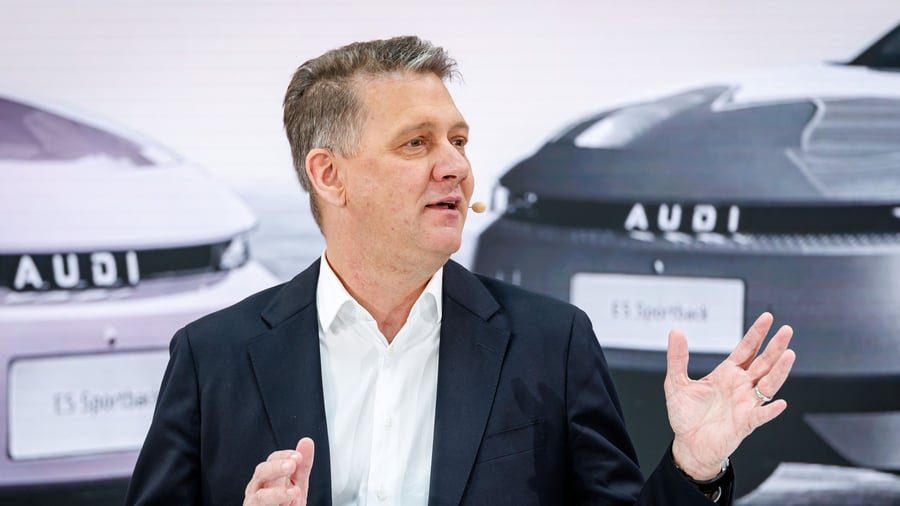
The middle management is particularly vulnerable. "Artificial intelligence not only transforms processes and business models, but it also changes the requirements for leadership," says Bernhard Stieger, a headhunter from Spencer Stuart. Spenser Stuart recently filled a top position at Biontech. When answering Spieger's questions, it is no longer sufficient to simply demonstrate technological understanding or experience with individual AI applications.
What matters is understanding how AI changes value creation, enables better decisions, and makes the organization future-proof.
Spieger and his team regularly use a questionnaire to verify whether someone truly has AI competence or merely claims to have it. Martina van Hettinga, co-chief of I-Potentials, a personal consultancy, confirmed that "competence will not become less important due to AI, it will become a decisive leadership competency." However, a questionnaire like this can only be part of a more comprehensive process that includes interviews, case studies, references, and assessments.
Spieger advises candidates not to invest solely in AI knowledge. As AI takes over more tasks, what remains crucial in leadership positions is the ability to lead. This can be demonstrated through making decisions and convincing others to follow. Spieger emphasizes that the most convincing leaders do not possess technical expertise, but strategic thinking, learning agility, and the responsibility to responsibly translate technology into leadership and business.
Written by urgent.news from Handelsblatt's reporting — not their text. Machine-written — may contain errors; check the original before relying on it.