Just Noting That Your Candy Corn Is Made of Bug Secretions
Sorry!
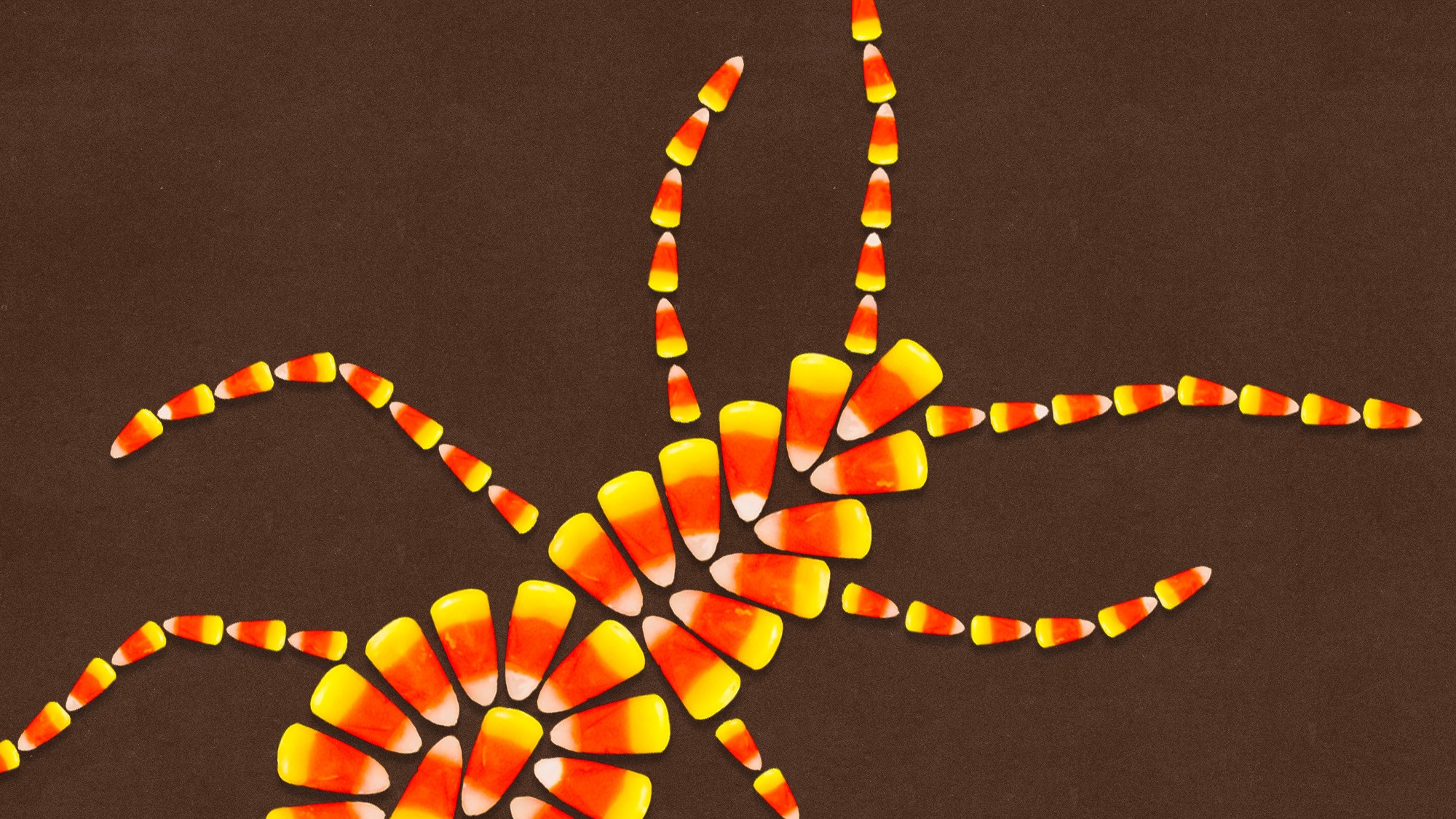
When trick-or-treaters gather to sample candy corn, it may surprise them to learn the confection contains bug secretions. Upon hearing this, some might find it unsettling, especially those who harbor a deep aversion to candy corn. However, it is essential to note that consuming many classic Halloween candies means engaging with bugs in some capacity.
Specifically, these candies often contain a by-product of bugs, listed on the package as "confectioner's glaze." This glaze is shellac, a resin created by lac bugs as they crawl on trees, producing a protective coating while forming a cocoon. Though the amount of resin produced per insect is minimal, the collective output of many insects is enough to coat candies like Jelly Beans, Milk Duds, Junior Mints, Whoppers, Lemonheads, and Sugar Babies.
The shellac process involves stripping resin from tree bark, purifying it, and then hardening it to form candy shells. Despite its origins, shellac is widely used for its unique properties, such as its glossy appearance and reddish hue. It is found in various products, including furniture polish, nail polish, and even hair spray.
However, the use of shellac in candies is not a reason to panic, as it is a natural ingredient with no harmful effects. As the author points out, similar practices are followed in other industries, such as meat consumption and the use of wool, silk, and leather. Insects, rodents, and other animal by-products are commonplace in food production, and the FDA allows for minor defects in popular foods.
Thus, while the thought of consuming bug secretions may be unsettling, it is a reality of modern food production, and there is little reason to avoid these candies altogether.
Written by urgent.news from The Atlantic's reporting — not their text. Machine-written — may contain errors; check the original before relying on it.