Israel’s Arab voters deserve a place at the table
Israel’s latest election may have led to a hung parliament, with no coalition able to secure a governing majority. But it has delivered a powerful message: a minority long marginalised in the country’s political life can no longer be ignored . The roughly 80 per cent turnout among Israel’s Arab citizens this week, and the resulting electoral gains of the Arab-majority parties, reflect growing…
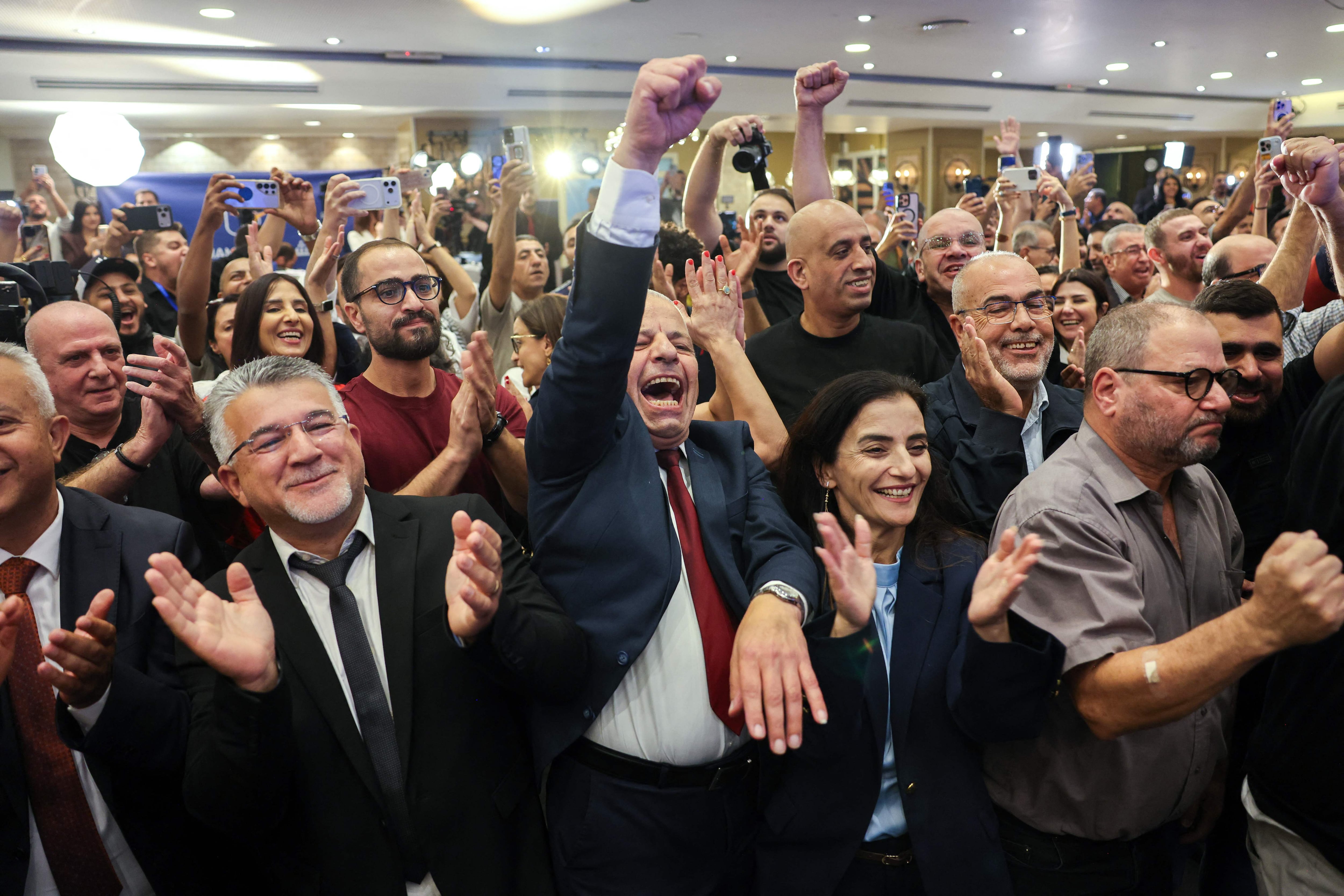
Israel’s latest election may have resulted in a hung parliament, with no coalition able to form a majority government. However, it has sent a strong message that the Arab minority, long marginalized in the country's political scene, can no longer be ignored. The approximately 80% voter turnout among Israel's Arab citizens during this week's election, along with the subsequent electoral gains of Arab-majority parties, highlights a growing dissatisfaction with domestic polarization and the violence inflicted on Palestinians in the occupied territories of Gaza, the West Bank, and East Jerusalem.
The question now is whether Israel's political leaders are ready to listen. The Joint List and Raam are projected to secure a record 19 seats in the 120-member Knesset, positioning them to potentially act as kingmakers. Their support could determine whether Prime Minister Benjamin Netanyahu remains in office or if an alternative government, led by opposition leader Gadi Eisenkot, emerges.
Neither of the two main blocs can achieve the 61-seat majority threshold without changing their alliances. It would be a mistake to view the Arab-majority parties as a homogenous group, as the Joint List is a coalition of left-wing, Arab nationalist, and anti-Zionist parties, while Raam is an Islamist party. Their ideologies and strategies vary, and their support bases extend beyond Arab vote banks.
Nevertheless, they share the common demand that Arab citizens be acknowledged as legitimate stakeholders in shaping Israel's future. This issue is crucial, as the marginalization of about two million Arabs, who constitute a fifth of the country's population, is neither just nor sustainable. Significant challenges remain. Netanyahu's coalition, comprising far-right and ultra-orthodox Jewish parties, has refused to form an alliance with the Arab-majority parties, even accusing them of employing deceitful tactics to influence the election.
In response, Arab-party leaders have pledged to help remove the Netanyahu government from power. Similarly, some members of Eisenkot's coalition have hesitated to rely on the Arab-majority parties due to fears of backlash from their constituents, though this overlooks the fact that a Jewish-Arab political partnership is not unprecedented.
Naftali Bennett, a member of Eisenkot's coalition, previously led a government with Raam's support, demonstrating that cross-community cooperation has occurred before. An inclusive government addressing these crises is urgently needed, as Israel faces economic instability, strained relationships with neighboring countries, and an unresolved Palestinian situation.
The military operations in the region and the destruction of Gaza have also exacerbated international isolation. Another inconclusive election would prolong political gridlock at a time when decisive action is required. While an inclusive government would not automatically resolve the Israel-Palestine conflict or Jewish-Arab relations, it could begin to mend the alienation felt by Israel's Arab citizens and address concerns over crime, housing, and underinvestment in their communities.
Israeli leaders must also adopt a broader perspective and acknowledge the country as it currently exists, rather than governing with an exclusionary vision of what it ought to be. The success of the Arab-majority parties in the election has provided a largely voiceless minority with an opportunity to be heard. The responsibility now lies with the main coalitions to engage in sincere negotiations and find a feasible solution.
Written by urgent.news from The National Business's reporting — not their text. Machine-written — may contain errors; check the original before relying on it.
Also reported by 1 other outlet
- Israel’s Arab voters deserve a place at the table thenationalnews.com