How a Sick Chicken Revolutionized Cancer Research
And the story of the man responsible The post How a Sick Chicken Revolutionized Cancer Research appeared first on Nautilus .
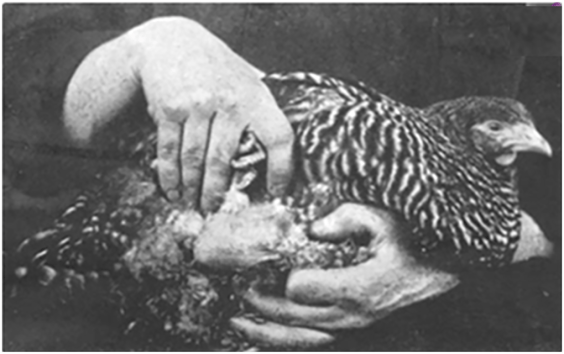
In 1909, a chicken farmer presented a hen with a large tumor to scientist Francis Peyton Rous at the Rockefeller Institute. Rous examined the tumor and discovered it was a spindle-cell sarcoma, originating from an aggressive connective tissue cancer. By transferring cells to other chickens, Rous showed the cancer could be transmitted, but only among closely related birds.
He also found that each transmission made the cancer more malignant. Intrigued by the transmissibility of the cancer, Rous ground up the tumor tissue, extracted the fluid components, and injected the cell-free solution into healthy birds. Curiously, these birds also developed tumors. At the time, cancer was believed to result from abnormal cells, but Rous proposed the infectious agent was a "minute parasitic organism."
Viruses were not well understood at the time, and the discovery went largely unrecognized. It wasn't until advances in virology and cell culture techniques in the 1950s that the transformational properties of the Rous-sarcoma virus were revealed. This led to the identification of the Rous sarcoma virus as a proto-oncogene that can turn into an oncogene, causing uncontrolled cell growth.
Rous received the Nobel Prize in Physiology or Medicine in 1966 for his groundbreaking work. Since then, numerous viruses linked to human cancer have been identified, including human papilloma virus, Epstein–Barr virus, and hepatitis B.
Written by urgent.news from Nautilus's reporting — not their text. Machine-written — may contain errors; check the original before relying on it.