Ghana’s economy grows to GH¢1.4 trillion but fails to create decent jobs – GSS
Ghana’s economy grew by six per cent in 2025, reaching GH¢1.4 trillion, but the expansion has not translated into the creation of enough decent jobs, the Ghana Statistical Service (GSS) said in a report launched in Accra on Thursday. The post Ghana’s economy grows to GH¢1.4 trillion but fails to create decent jobs – GSS appeared first on Ghana Business News .
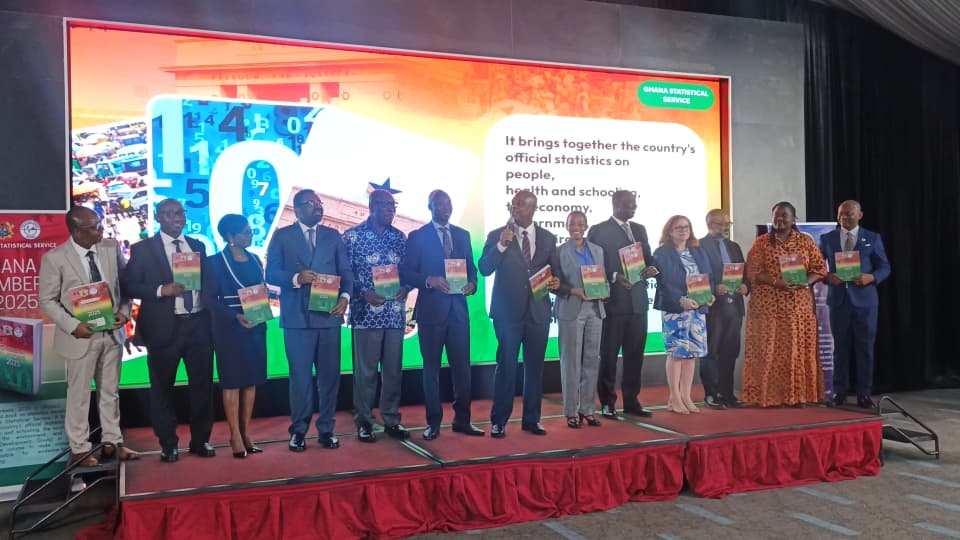
Ghana’s economy grew by six percent in 2025, reaching a value of GH¢1.4 trillion, but the expansion has not resulted in enough job creation, according to the Ghana Statistical Service (GSS). The maiden Ghana in Numbers report revealed strong macroeconomic performance in 2025, including a reduction in inflation, a decreased fiscal deficit, and enhanced international reserves.
The services sector contributed 45.9 percent of GDP growth, followed by industry at 31.3 percent and agriculture at 22.8 percent. Inflation dropped significantly from 23.8 percent in December 2024 to 5.4 percent in December 2025, with international reserves reaching $13.8 billion, covering five and a half months of imports. The head of the Ghana Statistical Service, Dr Alhassan Iddrisu, presented the report, noting that 2.64 million businesses existed in 2024, with enterprises operating in open spaces and mobile businesses.
He observed that the number of business establishments in buildings nearly tripled between 2014 and 2024, while employment only doubled. This indicated that business formation was growing faster than job opportunities, as 90 percent of establishments employed between one and five people, with only 4,874 having 100 or more employees.
Dr Iddrisu highlighted the disparity between economic growth and job creation, pointing out that labor force participation increased from 67.1 percent in 2022 to 74.5 percent in 2025, while the unemployment rate averaged 12.8 percent during the first three quarters of 2025. Nearly two million young people were not working, studying, or training, with women comprising more than 60 percent of this group.
To tackle the issue, Dr Iddrisu suggested policymakers focus more on the informal sector and young people not in employment, education, or training. He urged the government to implement policies and programs that would make economic growth more job-intensive, including initiatives to formalize the 92 percent of businesses operating informally and targeted interventions for the NEET category.
Dr Iddrisu also advocated for increased access to affordable private-sector credit, currently standing at 7.4 percent of GDP, and region-specific employment policies. The Deputy Minister of Finance, Mr Thomas Nyarko Ampem, acknowledged the challenge of economic growth not generating sufficient jobs for the working population. He emphasized the urgent need to address unemployment and announced that the government would focus on supporting job creators, including through the GH¢10 billion New Economy policy targeted at nine productive sectors with significant job-creation potential as the country transitions from stability to accelerated growth.
Mr Ampem pledged collaboration with the Ghana Statistical Service to increase domestic funding for statistical activities and enhance coordination across the national statistical system.
Written by urgent.news from Ghana Business News's reporting — not their text. Machine-written — may contain errors; check the original before relying on it.