From workshops to the catwalk - why mended clothes are going mainstream
A new generation is embracing eye-catching patching and visible mends.
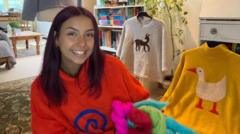
Alice Brown, a 27-year-old forest ranger from Lincolnshire, embraces the trend of visible mending – repairing clothes with eye-catching repairs. She transforms holes and stains into art by needle-felting cute animals and insects onto the garments. This unique style has garnered her a large online following.
The concept of visible mending has gained significant traction in recent years, moving beyond hobby crafters and community workshops to reach fast-fashion brands and even designer catwalks. Jayne Eagle, a workshop instructor in Brighton, teaches students traditional Japanese mending techniques such as Boro and Sashiko, incorporating colorful geometric patterns into the repairs.
For many, mended clothing is a proud statement of their individuality. Nicola, a student in one of Jayne's classes, has used her repair skills to make a bold statement on a T-shirt, turning sunscreen marks into decorative features. Lisa, another student, has even made a deliberate choice to showcase mending on a second-hand jacket she purchased online.
While visible mending initially emerged as a way to save money and extend the life of garments, it has evolved into a celebration of personal style and creativity. The trend has resonated with consumers, as retailers such as Ralph Lauren, Shein, Uniqlo, Primark, and Finisterre incorporate stitched and patched garments into their offerings.
These brands recognize that visible mending appeals to younger consumers who value sustainability and self-expression. Levi's, for instance, is introducing workshop programs to teach Gen Z customers traditional mending skills, encouraging them to view repairs as a demonstration of humanity rather than simply accepting imperfect garments. As Paul Dillinger, Levi's head of global design innovation, puts it, "Mending is a demonstration of humanity: it's not a mustard stain, it's a memory of a great day in the ballpark."
Written by urgent.news from BBC Science's reporting — not their text. Machine-written — may contain errors; check the original before relying on it.
This story
This is one outlet's version. Read the fullest account.