Artificial Intelligence is a Horror Story
Imagine your body—flesh and blood, muscle and bone—cast aside as mere refuse, and your brain “immersed in a liquid of the nature of cerebro-spinal fluid” inside a cylinder. Thus goes the dark prophecy of Irish physicist John Desmond Bernal nearly
In a not-so-distant future, our bodies—fleshy, fragile, and mortal—may be swapped for something else entirely. This grim vision was first proposed over a century ago by Irish physicist John Desmond Bernal. He imagined a new existence, one that is "more plastic, more directly controllable and at the same time more variable and more permanent than that produced by the triumphant opportunism of nature."
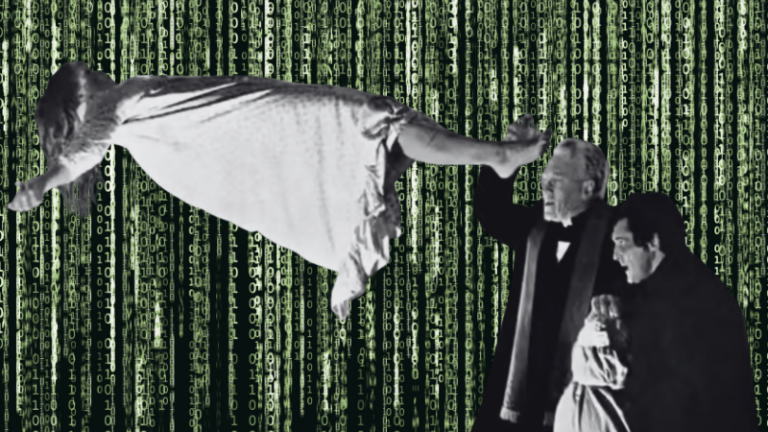
As we increasingly rely on generative AI, we find ourselves increasingly vulnerable to this ominous prediction. It is a horror story that is both physical and mental, with AI acting as both creator and destroyer. Just as the demon in The Exorcist spreads chaos and despair within a family, AI has permeated our daily lives, subtly but surely altering our cognitive rhythms.
We passively ingest AI-generated content, from search engine results to customer service bots, often without realizing the harm it inflicts upon us. Indeed, AI may be the devil's greatest trick: convincing us that it is our friend when, in fact, it is our foe. To combat this digital demon, we must resist its allure and reclaim our humanity.
By resisting the temptation to embrace AI as a panacea, we can continue to create and innovate in our own unique ways. So, this Halloween, let us embrace the spirit of resistance and stand against the end of our bodies, our minds, and our souls.
Written by urgent.news from Literary Hub's reporting — not their text. Machine-written — may contain errors; check the original before relying on it.