APOD: 2026 October 30 – Haunting the Cepheus Flare
APOD Science APOD APOD: 2026 October 30 –… Today’s APOD Archive Submissions Index Search Calendar RSS Education About Discuss APOD Astronomy Picture of the Day Discover the cosmos! Each day a different image or photograph of our fascinating universe is featured, along with a brief explanation written by a professional astronomer. Haunting the Cepheus […]
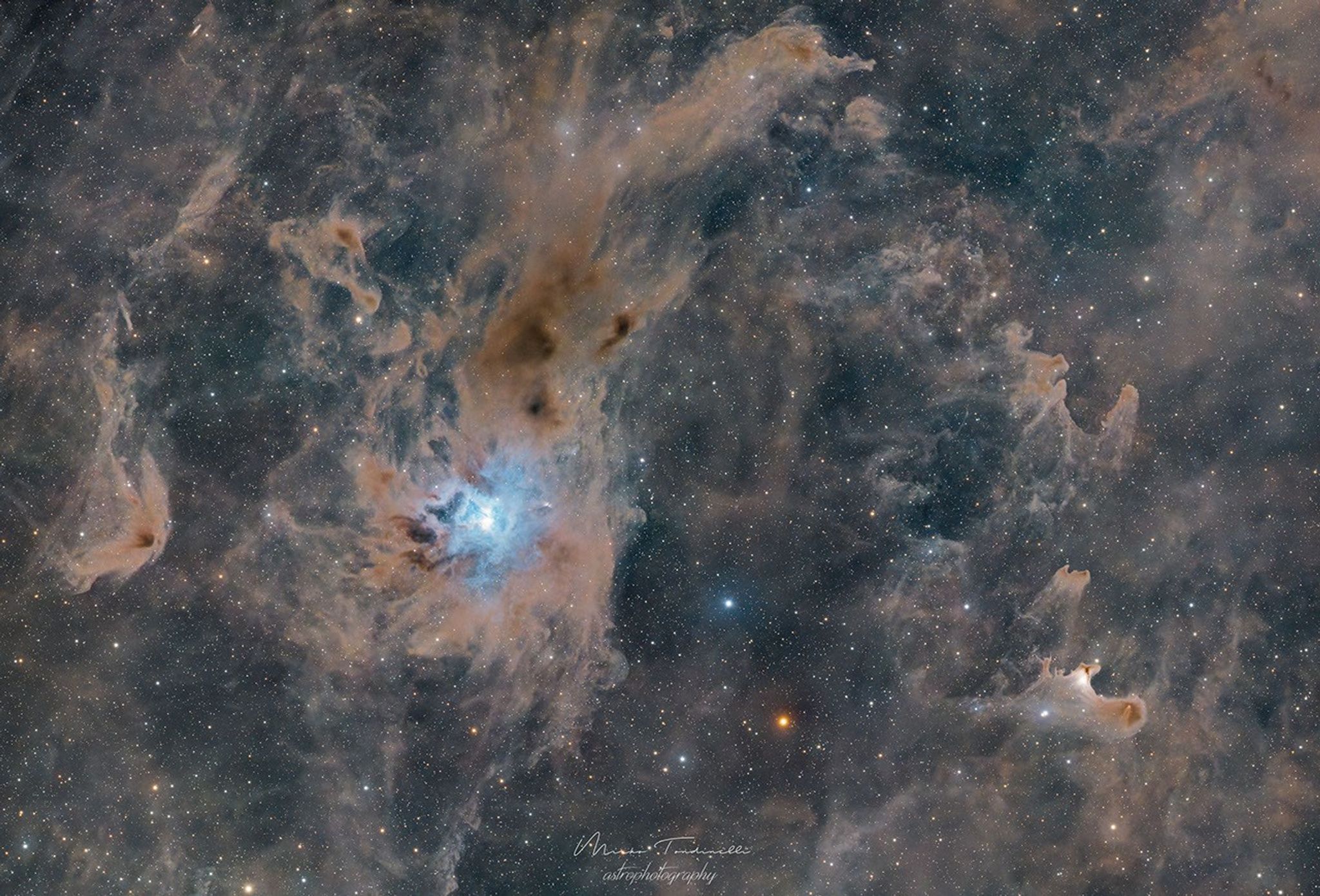
On October 30, 2026, the Astronomy Picture of the Day showcased an ethereal dust expanse drifting through the starlit night in the royal constellation Cepheus. The haunting shapes were, in fact, cosmic dust clouds, visible in their dimly reflected starlight. Located at the edge of the Cepheus Flare molecular cloud complex, 1,200 light-years from our own neighborhood, the dusty expanse was over 2 light-years across and illuminated by the young stars of NGC 7023, known as the Iris Nebula.
Embedded within the Ghost Nebula (vdB 141 or Sh2-136) were reddish hints of dense cores, in the early stages of star formation. Spanning nearly six full moons across the sky, these interstellar dust fields were captured in a broad telescopic frame.
Written by urgent.news from NASA Science's reporting — not their text. Machine-written — may contain errors; check the original before relying on it.
This story
This is one outlet's version. Read the fullest account.
- APOD: 2026 October 30 – Haunting the Cepheus Flare science.nasa.gov