Ancient Martian Meteorite Found in the Sahara Desert May Have Formed More Than 4.1 Billion Years Ago
Learn about Teghaza 001, a meteorite from Mars over 4.1 billion years old that contains many minerals that could shed light on the planet's crust.
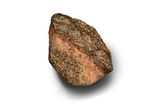
In September 2022, eight meteorite fragments were discovered in the Sahara Desert, believed to have originated from Mars. These fragments, named Teghaza 001, are the oldest Martian meteorites identified on Earth, potentially dating back more than 4.1 billion years. A recent study has revealed that Teghaza 001 contains a unique combination of igneous minerals, which could provide significant insights into Mars' ancient history, particularly the formation of its crust from cooling magma before being affected by subsurface water.
The meteorite's age was confirmed using a method called in-situ rubidium-strontium age-dating. Only two other Martian meteorites are this ancient, with the third being 4.48 billion years old. Teghaza 001's unique mineral composition may be a Rosetta Stone for understanding Mars' early history, as it records interactions of water and rock and potentially an imprint of the Martian atmosphere as it was losing water.
Written by urgent.news from Discover Magazine's reporting — not their text. Machine-written — may contain errors; check the original before relying on it.