AI-Assisted Reconciliation of Enterprise Data: Detecting and Explaining Cross-Platform Discrepancies
Learn how deterministic checks and AI work together to detect data discrepancies, explain their causes, and simplify financial reconciliation.
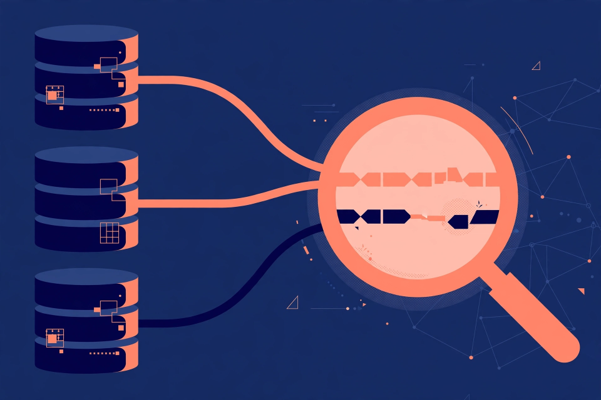
Deterministic checks identify discrepancies between enterprise data systems, while artificial intelligence assists in understanding and explaining these differences. Last quarter's revenue varied between $14.6 million, $14.2 million, and $14.1 million, depending on the source. The same metric can live in multiple systems, each with its own refresh schedule, transformations, and quirks, causing the numbers to drift apart.
Reconciliation involves finding where the metrics disagree and deciding which one, if any, to trust. Deterministic checks establish the facts, such as row counts, sums, and join-key coverage. Artificial intelligence handles triage and explanation by learning which differences are normal and ranking the ones that are not. The checks provide the truth, while the AI makes it understandable for human action.
For optimal results, establish reconciliation points for every metric, write deterministic checks first, and maintain a structured resolution log to train the AI layer for variance baselines, prioritization, and plain-language explanations.
Rewritten by urgent.news; may contain errors — check the original.
Source: hackernoon.com