A City Doesn’t Grow at One Speed
Using decades of Landsat and Sentinel-2 images, researchers discover the Urban Pulse to help track the cycles and rhythms of how neighborhoods within cities change. The post A City Doesn’t Grow at One Speed appeared first on NASA Science .
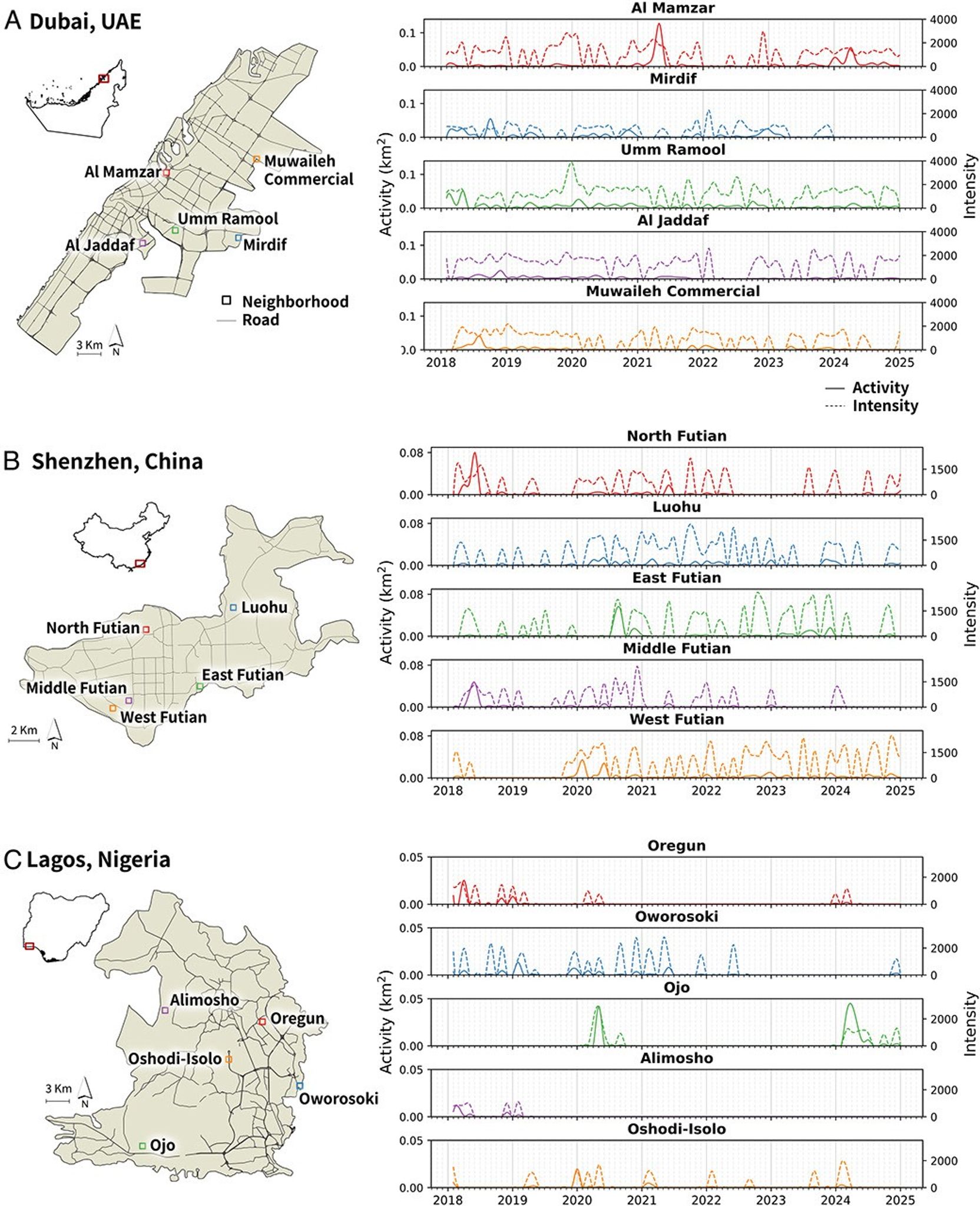
Urbanization is often thought of as cities expanding outward into suburban or rural areas, depicted as simple before-and-after snapshots. However, a new study reveals that cities actually undergo a cyclical, episodic urban "pulse" that can be observed and analyzed from space using satellite data. Researchers led by Zhe Zhu and Karen Seto developed a method called Classify Areas with Potential and then Exclude the Stable (CAPES) to track construction activity over time using Harmonized Landsat and Sentinel-2 (HLS) imagery.
By analyzing the "urban pulse" of six cities - Dubai, Lagos, Mexico City, Mumbai, Seattle, and Shenzhen, the study found that urbanization is not continuous but rather occurs in spurts and cycles at the neighborhood level. Each neighborhood exhibits its own unique pattern of peaks, valleys, and cycles in construction and other physical changes.
For example, the Al Mamzar neighborhood in Dubai shows concentrated periods of change separated by quieter intervals, with spikes of activity that do not necessarily coincide with the same timing in nearby neighborhoods. This episodic nature of urban growth means that cities change in an asynchronous, staggered fashion, with different parts of the city developing independently.
The urban pulse provides a fine-grained, neighborhood-level view of urbanization that can reveal when and how change is occurring, allowing planners to detect early signs of potential issues like infrastructure strain, economic stagnation, or environmental vulnerability. By tracking construction and other physical changes at a detailed level, the Urban Pulse framework could help officials identify where to target interventions and respond to changing urban dynamics.
Written by urgent.news from NASA Science's reporting — not their text. Machine-written — may contain errors; check the original before relying on it.