Why container rates are climbing despite cooling demand
Container freight rates climb on major Asia-Europe and trans-Pacific routes despite signs of cooling demand. The post Why container rates are climbing despite cooling demand appeared first on FreightWaves .
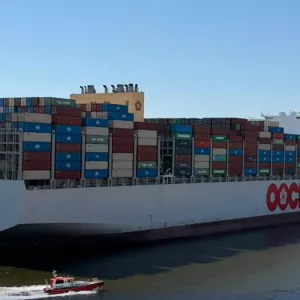
Container freight rates have been increasing on major Asia-Europe and trans-Pacific routes, even as demand appears to be cooling. This rise is attributed to congestion and canceled sailings, which have kept prices high. Carriers have been returning to the Red Sea route, which has reshaped shipping schedules, according to analyst and data contributor Freightos.
Additionally, there is a potential strike at Los Angeles-Long Beach port, adding more uncertainty for cargo owners. Nearly two-thirds of the capacity deployed between Asia and Europe now uses the Red Sea route, according to Alphaliner's survey of the 10 largest carrier networks. The share of direct services using this passage has risen to 63% on Mediterranean routes and 58% on North Europe services.
Israeli carrier Zim recently announced a return to the Red Sea for its Asia-U.S. East Coast service with Mediterranean Shipping Co., despite Yemen-based Houthi rebels declaring the Bab el-Mandeb Strait closed to Israel-linked vessels. Typhoon Champi caused disruption in East Asia, closing Taiwanese container ports, but East China ports are still recovering from earlier summer storms.
The shift to the Red Sea route may also be complicating recovery efforts, as ships arriving ahead of schedule can bunch together at destination ports and add pressure to already backed-up terminals. Asia-Europe freight prices have risen since mid-October due to congestion and carriers' efforts to restrict capacity through blank sailings.
Carriers are also planning further rate increases in November. However, forwarders have reported discounted offers and questioned whether the higher prices will hold. The Freightos Baltic Index put last week's Asia-North Europe rate at $3,551 per FEU, up 3%, while prices to the Mediterranean rose 8% to $4,252 per FEU. U.S. trade policy could also impact shipping costs, as the White House extended its trade truce with China until early January.
However, U.S. port fees on China-linked vessels are scheduled to resume on November 10, and there is a possibility of further delays if the U.S. Trade Representative requests comments on postponing them until January.
Written by urgent.news from FreightWaves's reporting — not their text. Machine-written — may contain errors; check the original before relying on it.