Tencent targets Southeast Asia as launch pad for AI agent WorkBuddy amid tough local market
Chinese tech giant Tencent Holdings is using Southeast Asia as a launch pad to take its “cost-effective” artificial intelligence tools global, fronted by its workplace assistant WorkBuddy, amid cutthroat competition at home. The company was targeting existing regional customers of its cloud computing and big data services, particularly in markets such as Indonesia, according to Dowson Tong, CEO…
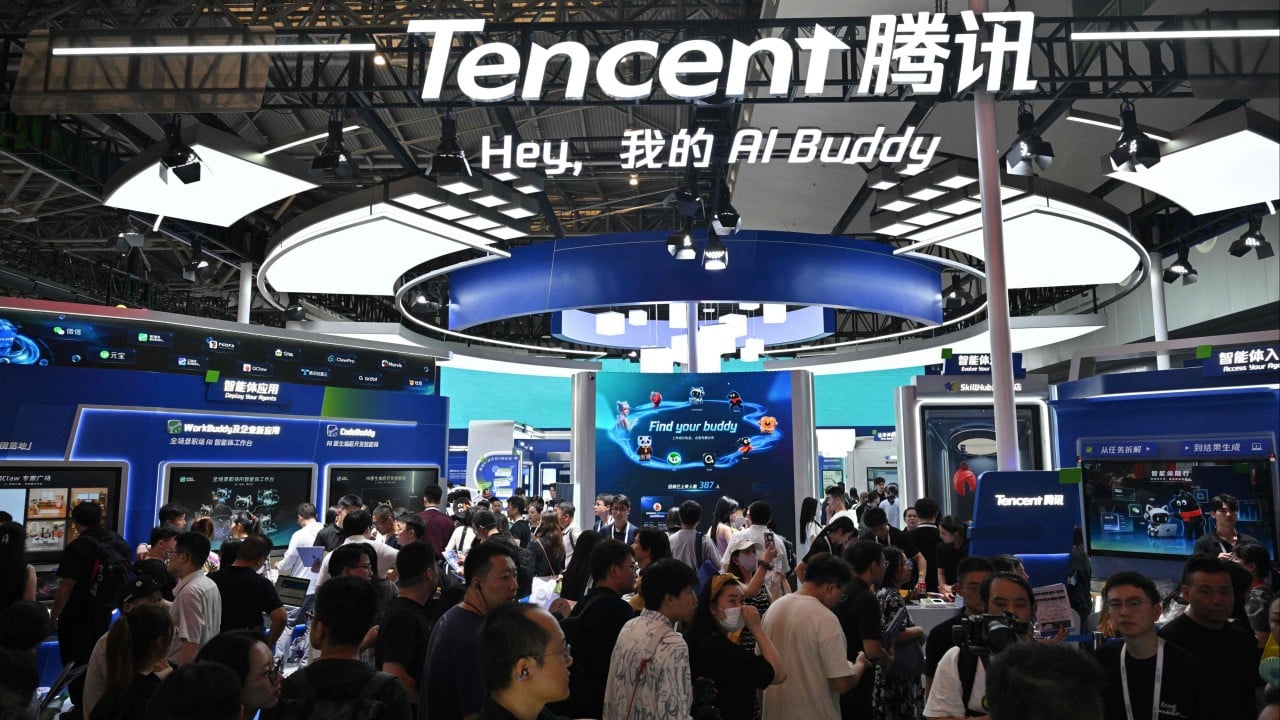
Chinese tech giant Tencent is leveraging Southeast Asia as a launchpad for its AI workplace assistant, WorkBuddy, as it seeks to expand globally amidst intense competition at home. Tencent's CEO, Dowson Tong, announced that the company is targeting existing customers in markets like Indonesia for its cloud computing and big data services.
The push for overseas expansion coincided with a triple-digit growth in overseas demand for Tencent's AI services over the past year, with global businesses showing high interest in Chinese AI offerings.
To meet this demand, Tencent has accelerated its overseas infrastructure expansion, adding or expanding data center capacity in Germany, Malaysia, Mexico, Japan, and Saudi Arabia. This has strengthened Tencent Cloud's footprint to serve clients from over 150 countries and regions. Tong emphasized that Tencent is seizing AI application opportunities to bolster its global delivery capabilities.
The international rollout of WorkBuddy began in early July across 21 markets, including Hong Kong, Macau, and Singapore. The company is also accelerating the release of other AI products, such as design tools and AI-assisted coding solutions. Jade Ding, head of overseas business growth for WorkBuddy, noted that AI agent penetration rates remain low in the international market, presenting a significant opportunity.
In mainland China, WorkBuddy is the most popular desktop workplace AI agent, with nearly 21 million users as of June, according to domestic research firm Analysys. Tencent has acknowledged that its overseas AI drive is still in an investment phase, aimed at driving early user adoption rather than immediate commercial returns.
However, challenges remain, as computing power constraints continue to impact the scale of China's AI expansion. Despite increasing capital expenditure on data center infrastructure, Tencent is still supply-constrained in bringing AI agent capabilities to the public. Demand for AI agents is being stretched not only by internal workloads but also by corporate clients, including carmakers, autonomous driving developers, and humanoid robot firms, training proprietary models on Tencent's infrastructure.
Written by urgent.news from SCMP Tech's reporting — not their text. Machine-written — may contain errors; check the original before relying on it.
This story
This is one outlet's version. Read the fullest account.