Schienenverkehr: „Mangelnde Investitionen, schlechte Planung“: Zugunglück setzt Spaniens Regierung unter Druck
Der Unfall bei Toledo bringt Ministerpräsident Pedro Sánchez in Erklärungsnot. Experten kritisieren mangelnde Investitionen in die Instandhaltung der Infrastruktur.
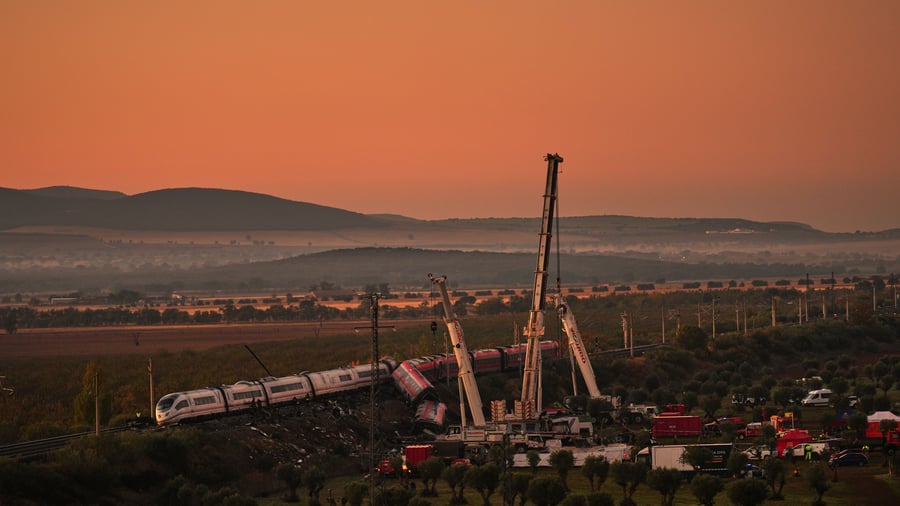
A devastating train crash near Toledo has resulted in 69 fatalities, sparking outrage and placing pressure on Spain's government. Investigations point to insufficient investment in infrastructure maintenance as a contributing factor. Raymond Torres, a president at Funcas, expressed shock, stating that high-speed trains have long been Spain's pride.
However, multiple major accidents occurring back-to-back suggest a structural issue. Salvador García-Ayllón, a professor at UPCT, emphasized the lack of investments, poor planning, and mismanagement in the system over several years. The crash has prompted Premier Pedro Sánchez to call for early elections, as he denounced the occurrence of two high-speed train accidents in a single year as unacceptable.
Train drivers from state-owned operator Renfe staged a strike earlier due to safety concerns. On Thursday, the country is in mourning. At the crash site, Pedro Sánchez highlighted the inacceptability of such incidents for a country like Spain. Since January, 46 people lost their lives on the same Madrid to Seville route when an Italian high-speed train collided with a Spanish AVE train.
This time, the LZB (Line Train Control) system malfunctioned, allowing six trains to continue despite the potential danger. The system, considered safe in Germany, is being phased out in Spain and replaced with a newer model. Sánchez announced a government commission to investigate the cause, focusing on possible maintenance and human oversight failures.
Despite being one of the best railways globally a few years ago, the Spanish network now faces increasing congestion and failures. Passenger numbers have doubled since 2019 due to network expansion and liberalization, leading to more delays and cancellations. A Funcas study suggests that liberalization has exacerbated existing operational and financial problems.
Spain spends significantly less on infrastructure maintenance compared to other EU countries, with Madrid's annual expenditure of 95,860 euros per kilometer, compared to the EU average of nearly twice that amount.
Written by urgent.news from Handelsblatt's reporting — not their text. Machine-written — may contain errors; check the original before relying on it.