Roland Berger expert outlines ways to mobilise capital for growth
On the afternoon of October 28 at an in depth discussion session as part of the a href https vir com vn search enginer html p search amp q Autumn 20Economic 20Forum 202026 Autumn Economic Forum 2026 a Denis Depoux global managing director of Roland Berger analysed shifts in global supply chains and the implications for Vietnam s financial markets
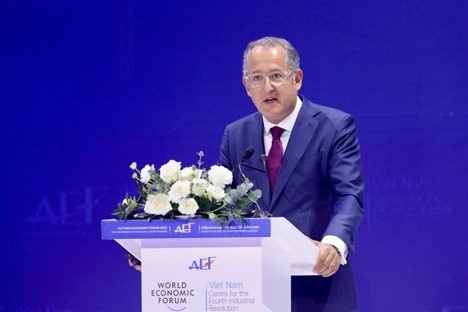
Roland Berger expert Denis Depoux outlined strategies for mobilizing capital to fuel economic growth in Vietnam during the Autumn Economic Forum 2026. Foreign direct investment (FDI) flows are shifting across Asia due to three key trends: diversification of production locations, industrial modernization, and supply chain regionalization.
Vietnamese businesses such as BYD, JOS Solar, and Goldwind are not only relocating assembly operations to Vietnam but also bringing advanced technologies and production processes from their global networks. US companies like Apple, Qualcomm, and Intel continue to invest in high-value sectors such as semiconductors, AI, and advanced technologies in Vietnam.
The integration of these investment flows is fostering a more interconnected manufacturing ecosystem in ASEAN, as demonstrated by LEGO's $1 billion investment in a carbon-neutral factory. This shift is also evident in Vietnam's export structure, with electronics and machinery now accounting for nearly 60% of exports to the US and Europe, up from 37% in 2016, while apparel and footwear have experienced a decline.
However, the complexity of supply chains also increases the demand for financing. Vietnamese companies often face challenges in managing currency exchange, wages, and payment periods when dealing with foreign suppliers. Financial centers can help by offering specialized services to address these challenges. Depoux emphasized that Vietnam needs to focus on boosting productivity, efficiency, and operational performance through innovation and supply chain modernization.
This transition from assembly to advanced manufacturing requires substantial, long-term capital to improve operational efficiency over an extended period. Vietnam's credit-to-GDP ratio is currently around 146%, indicating a significant banking system involvement in financing the economy. While foreign direct investment in Vietnamese factories has reached high levels, foreign investors are net sellers of Vietnamese shares, highlighting the need for additional investment in the financial markets, particularly through the development of a robust corporate bond market.
Depoux recommended making the achievement of an investment-grade credit rating a national objective to attract stable, long-term capital from pension funds and institutional investment funds. Accelerating industrial modernization, strengthening infrastructure connectivity, and leveraging the convergence of the physical and digital economies are essential for Vietnam's growth.
Written by urgent.news from Vietnam Investment Review's reporting — not their text. Machine-written — may contain errors; check the original before relying on it.