Red light for robot thieves as lights vandalised
Joburg Roads Agency says more than 300 traffic lights have been vandalised and stripped of equipment across Johannesburg.
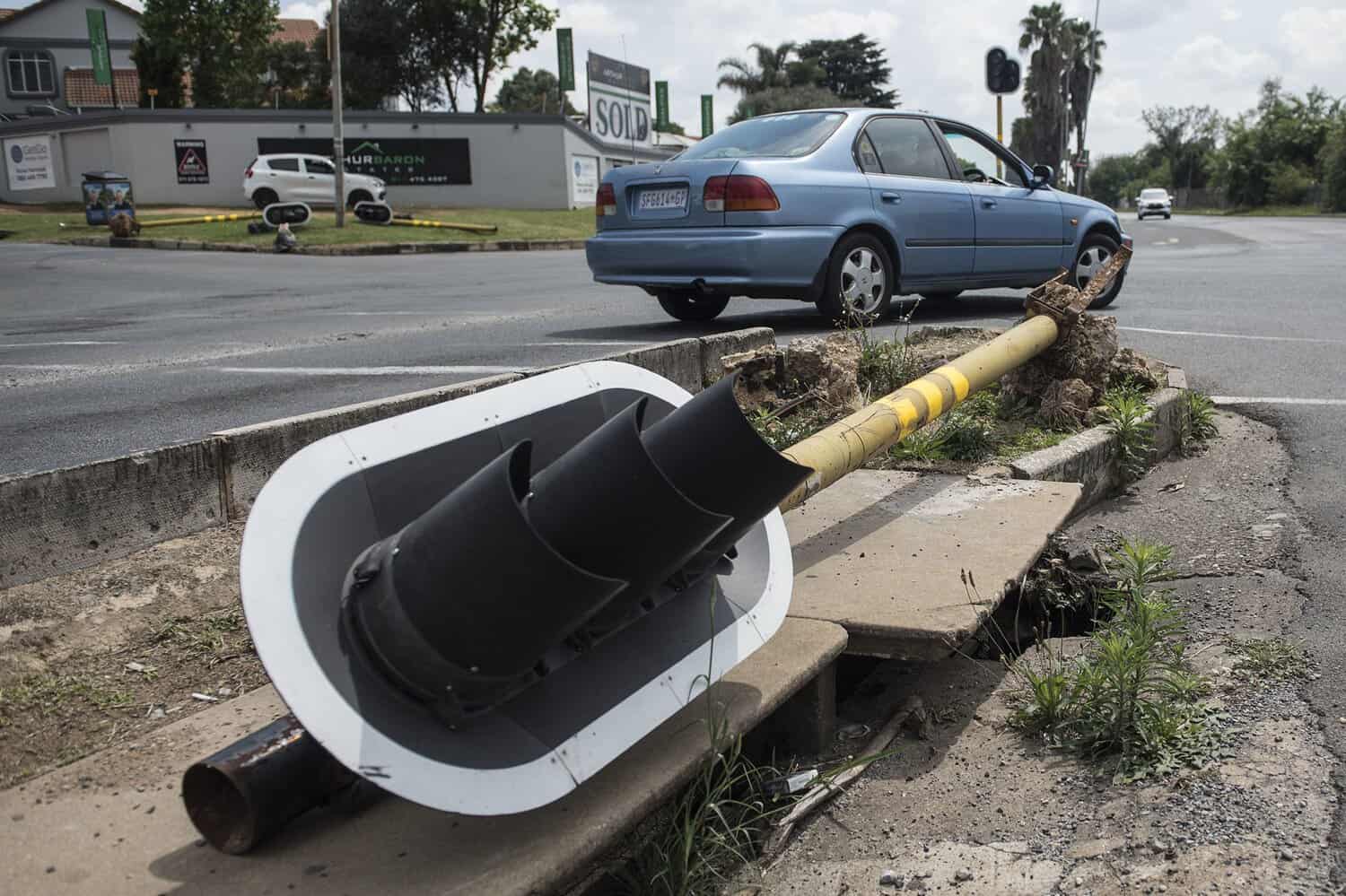
In July, a businessman named Jevon Dyer from Kariega (formerly Uitenhage) loaded five broken traffic lights onto a trailer and left them outside the Nelson Mandela Bay municipality’s customer care office. The lights had been out for months and Dyer had witnessed numerous accidents and near-misses at the intersection. He referred to himself as "Mr Robot" due to his actions.
He was not the only one taking matters into his own hands. In other South African cities, residents have faced significant delays and safety concerns due to malfunctioning traffic lights.
In Pietermaritzburg, residents had to wait nearly an hour during peak afternoon traffic when key routes had broken lights. In Wynberg, Johannesburg, the lights at the corner of Chadwick Avenue and 5th Street had been out for over a year, despite a request for a repair date going unanswered. The Sandton Chronicle reported that the intersection was rated "priority four" and that over 300 traffic lights in Johannesburg had been vandalised and stripped of equipment by thieves.
Ekurhuleni spent approximately R120 million on repairs in a single financial year before opting to replace lights at high-risk intersections with stop signs. The Automobile Association expressed concern over the issue, stating that pedestrians are the most vulnerable at dead intersections, as drivers may wait for hours while pedestrians must take risks.
Mobility expert Lebogang Tiego Legodi emphasized that people who walk home in the dark are governed by a two-tiered standard where driving community members have access to streetlights, while pedestrians do not.
Following Dyer's actions, Nelson Mandela Bay's head of roads and transport, Yolisa Pali-Jongilanga, acknowledged the city's inability to continuously repair the same traffic lights due to repeated acts of vandalism. National Treasury warned that the repeated spending would be flagged in the audit, noting that replacing stolen controllers without securing them would result in paying for the same controller twice.
In Joburg, vandals targeted the same intersection 14 times before the city replaced it with stop signs, with each replacement costing around R300,000.
Several councils have opted to stop repairing traffic lights due to the ongoing vandalism. Ekurhuleni plans to keep some of its new stop signs permanently, while Centurion has downgraded a signalised intersection to a three-way stop. In Cape Town, the city has piloted submersible chambers to secure wiring and components, with some problematic intersections running smoothly since the installation.
A proposal was made in September to recover the cost of crash-damaged traffic lights from negligent drivers or their insurers, though it is unclear if this measure has been implemented. In Gauteng, the roads department is responsible for 547 of the province's over 4,500 signalised intersections, with the remaining ones managed by other authorities. A driver at a dead robot cannot determine whose responsibility it is, nor when it will be repaired.
The reporter suggested three actions to address the issue: first, publish a register of non-functional traffic and street lights, including the responsible authority, fault reference, repair date, and update it weekly; second, treat traffic signal controllers like banks handle cash by keeping spares, securing cabinets, and tracking every unit; and third, prioritize repairing critical routes such as schools, streets used by shift workers during early mornings and evenings, and polling stations ahead of the local government elections.
Written by urgent.news from The Citizen's reporting — not their text. Machine-written — may contain errors; check the original before relying on it.