Rare 4.1-billion-year-old Martian meteorite reveals clues to planet's ancient past
Scientists at the University of New Mexico have played a key role in identifying a rare, 4.1-billion-year-old Martian meteorite that provides new evidence that the red planet may have once had a wetter, Earth-like environment.

Scientists at the University of New Mexico (UNM) have identified a rare 4.1-billion-year-old Martian meteorite that reveals new clues about the red planet's ancient past. Titled "A Martian meteorite that formed ≳4.1 billion years ago samples Mars' early crust and mantle" and published in the journal Science, the discovery provides unprecedented insight into Mars' earliest geological history.
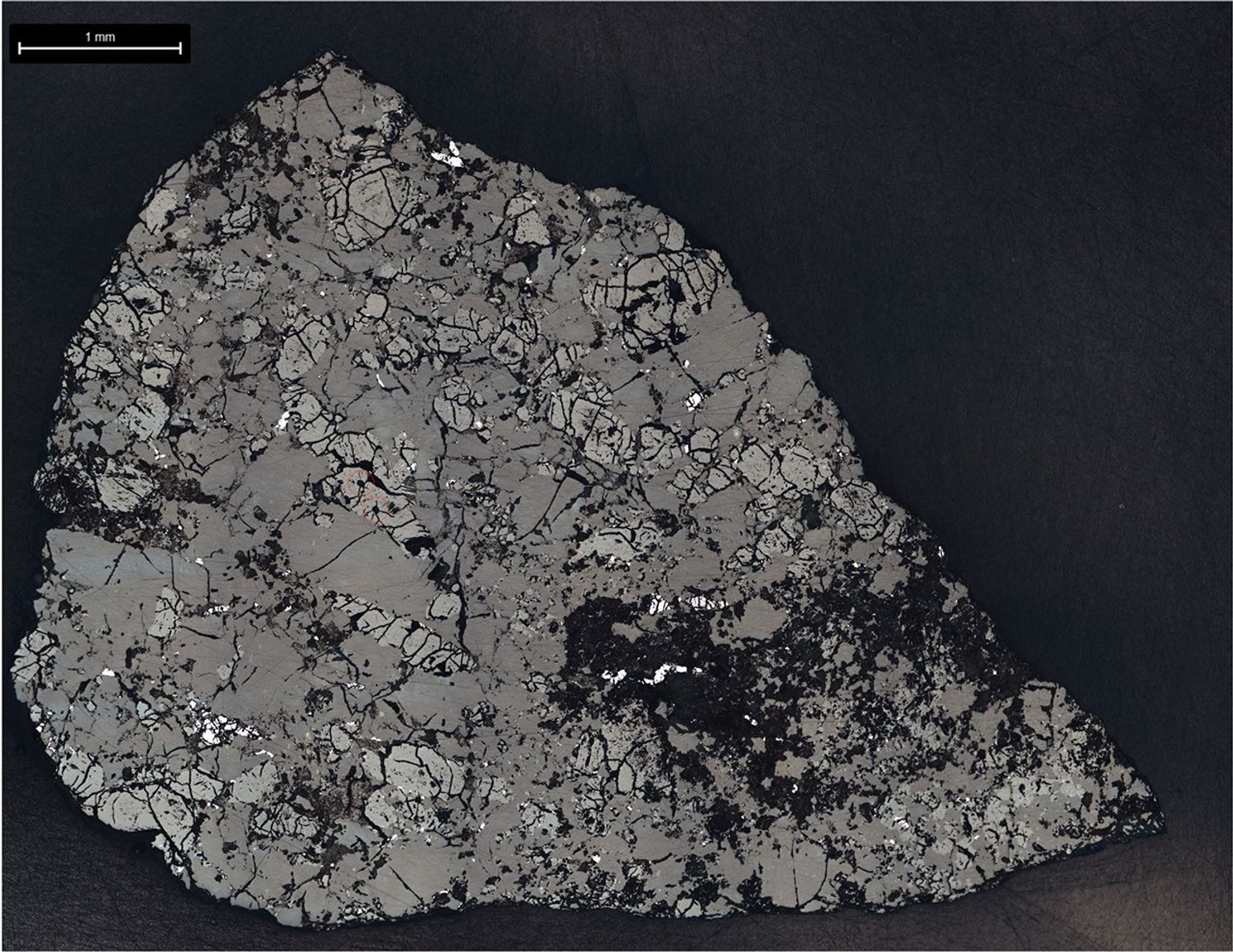
The meteorite, named Teghaza 001 (Teg 001), was discovered in the Sahara Desert and exhibits unusual textural, mineralogical and compositional features not typically seen in Martian meteorites. These characteristics, including high levels of manganese oxide, suggest the presence of fluids and water on early Mars, a stark contrast to today's cold, dry environment.
The meteorite's age, dating back to the Pre-Noachian period, makes it the oldest known Martian lava rock, offering a rare glimpse into the planet's formative stages. The findings support theories that Mars once had a warmer, wetter and more geologically dynamic environment, potentially providing habitats for early life. This discovery opens new avenues for investigating environments that may have once supported life on Mars.
Written by urgent.news from Phys.org's reporting — not their text. Machine-written — may contain errors; check the original before relying on it.