On this day in space! Oct. 29, 1991: NASA's Galileo spacecraft flies by asteroid Gaspra and snaps amazing photos while flying at 18,000 mph
On Oct. 29, 1991, the Galileo spacecraft flew by the asteroid Gaspra on its way to Jupiter. Here's why it mattered.
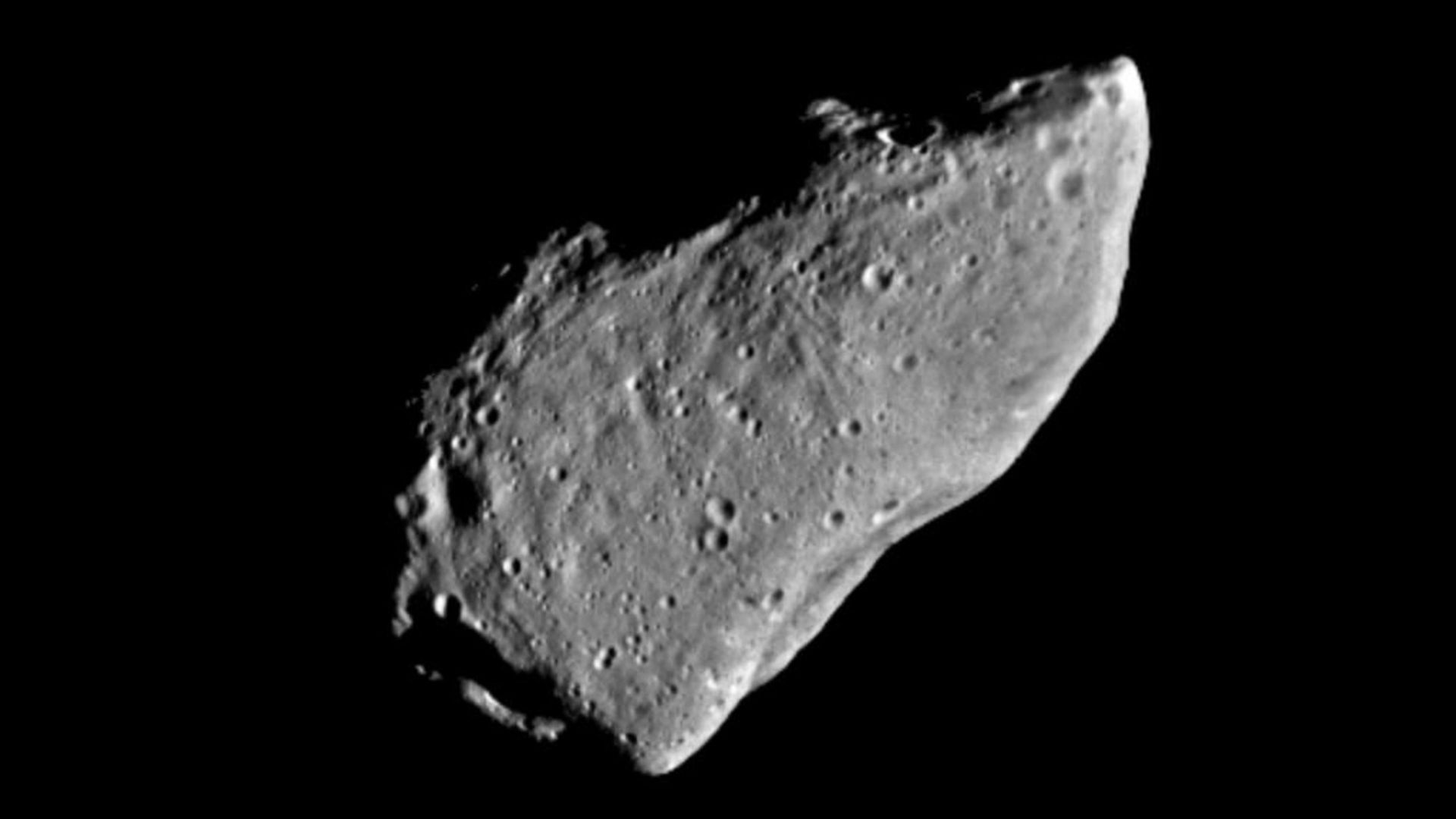
On October 29, 1991, NASA's Galileo spacecraft made a historic flyby of asteroid Gaspra. This marked the first time a spacecraft had ever visited an asteroid. Gaspra, located near the inner edge of the asteroid belt, had been orbiting the sun for some time before Galileo's encounter. At the time of the flyby, Galileo was located about 990 miles from Gaspra and moving at a relative speed of 5 miles per second.
The spacecraft captured multiple images of the asteroid and utilized its Near-Infrared Mapping Spectrometer to analyze the asteroid's chemical makeup and physical characteristics. Galileo discovered that Gaspra was an irregularly shaped, elongated body measuring approximately 12 miles long and 7 miles wide. The spacecraft also noted that Gaspra was dotted with numerous craters.
However, due to the distance between the two celestial bodies, Galileo was unable to measure Gaspra's mass. The flyby was significant as it was the first asteroid flyby in history, providing valuable insights into the composition and history of these celestial bodies. Joseph Veverka, a Galileo imaging team member, noted that Gaspra appeared to be a survivor of multiple catastrophic collisions in its past.
This flyby was part of Galileo's 6-year journey to Jupiter, which began in October 1989. After visiting Gaspra, the spacecraft would go on to make a second flyby of Earth in 1992, another close encounter with Earth in 1993, and eventually arrive at Jupiter in 1995. Throughout its journey, Galileo would also witness the dramatic fragmentation of Comet Shoemaker-Levy 9 as it collided with Jupiter in 1994.
Since then, NASA and other space agencies have continued to explore asteroids, including landing on them, collecting samples, and even crashing probes into them to study their effects.
Written by urgent.news from Space.com's reporting — not their text. Machine-written — may contain errors; check the original before relying on it.
This story
This is one outlet's version. Read the fullest account.


