New York’s Socrates Sculpture Park rebuilds for resilience and expands
The popular art space on the Astoria waterfront is adding a one-acre area that will feature three large-scale works by founding artist Mark di Suvero
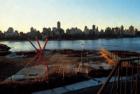
In 2012, Superstorm Sandy devastated New York City, including Socrates Sculpture Park on the Queens riverfront. The park, originally a former landfill and illegal dumping ground, saw its sea level rise by four feet, causing water to overflow into surrounding areas. Fourteen years later, the New York City Department of Parks & Recreation began reconstructing the park's seawall, with much of the five-acre campus remaining closed until completion next spring.
Funded by Federal Emergency Management Agency grants, the project necessitates the park's closure until next spring.
Formerly a green space supporting artists in creating and presenting public art, Socrates Sculpture Park was established in 1986 by a coalition of artists and community members. The park's founding story, described by executive director Shaun Leonardo, is "a radical act of land transformation." Leonardo emphasizes that Socrates's art serves a dual purpose, benefiting both the community and the land.
Last October, Socrates unveiled the transformation of a largely abandoned storage area on the park's southern edge into a revitalized landscape featuring a long-term installation of three monumental sculptures by founding artist Mark di Suvero. Titled The Point, this one-acre expansion connects the park's future to its founding story on its 40th anniversary. Despite residing primarily on the West Coast since 1995, di Suvero created two of the three sculptures on-site between 1995 and 2017.
The sculptures, made primarily of steel I-beams, are designed to be engaged with, featuring interactive elements such as a swing and a spinning titanium element. Leonardo highlights that di Suvero's work feels like "drawing in space," emphasizing his consideration of the environment's interaction with the art. The park's workforce development program, which hired residents of the nearby Astoria Houses public housing complex to clear the land and assist artists, has been relaunched this year with a Ford Foundation and Urban Upbound-supported pilot edition.
Written by urgent.news from The Art Newspaper's reporting — not their text. Machine-written — may contain errors; check the original before relying on it.