NATO Allied Training And A Bet On Ukrainian Technology: Europe Builds A New Defense System
Europe is rethinking its approach to its own security. NATO countries are conducting large-scale exercises, preparing for joint operations, and increasing defense spending. Against this backdrop, Ukraine's role is also changing. A state that has resisted full-scale Russian invasion for nearly five years now is not only receiving military aid, but also offering allies its own technology and combat…
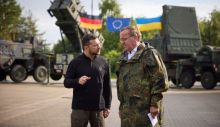
Europe is reevaluating its security measures as NATO nations engage in large-scale drills, bolster defense budgets, and increasingly look to Ukraine for both military aid and technology. Ukraine, which has successfully resisted a full-scale Russian invasion for over five years, is not only receiving Western support but also contributing its own defense systems and battle experience. This dual role is taking center stage at a meeting of defense ministers from five key countries in Paris.
German Chancellor Friedrich Merz has cautioned that Russia's threats to European democracies extend beyond the ongoing conflict in Ukraine. He emphasizes the need for Europe to bolster its defense capabilities, lessen reliance on the United States, while continuing to aid Ukraine. Meanwhile, Europe is confronting a range of security challenges, including cyberattacks, drone threats, attempts on critical infrastructure, and efforts to undermine democratic institutions.
In addition to Ukraine's growing defense capabilities, Europe is also enhancing its own security infrastructure. For instance, Germany is set to purchase Ukrainian-designed "Bars" missiles for its own forces, marking a significant shift as the country moves from being a recipient of aid to a supplier of defense technology. Germany plans to test a small batch of these missiles, with the potential to order several hundred units if successful.
This aligns with broader efforts to enhance European deterrence against Russia by expanding its arsenal of long-range strike weapons.
Joint military exercises are another cornerstone of Europe's new defense strategy. In the Baltic Sea, NATO minesweepers recently conducted drills using underwater drones to safeguard vital cables and pipelines, which are crucial for communication and energy distribution. These exercises aim to protect vital infrastructure and promote security across NATO's eastern flank. The Baltic Sea protection reflects the shared priority of ensuring the integrity of critical underwater networks.
In Latvia, a massive multinational brigade exercise, Resolute Reforger 2026, commenced on November 1, with 3,000 servicemembers and 1,000 pieces of allied equipment participating in logistics, field command, and control scenarios. These maneuvers underscore the evolving nature of warfare, including the integration of unmanned aerial vehicles and electronic warfare capabilities.
The alliance continues to prepare for possible Russian aggression, with exercises designed to test the readiness of member states to act cohesively in the face of potential threats.
Written by urgent.news from UATV English's reporting — not their text. Machine-written — may contain errors; check the original before relying on it.