“I don’t think the world needs a new GitHub”: What GitHub’s leaders really think about their new rivals
At its annual Universe ’26 conference in San Francisco this week, GitHub took to the question of the platform’s stability The post “I don’t think the world needs a new GitHub”: What GitHub’s leaders really think about their new rivals appeared first on The New Stack .
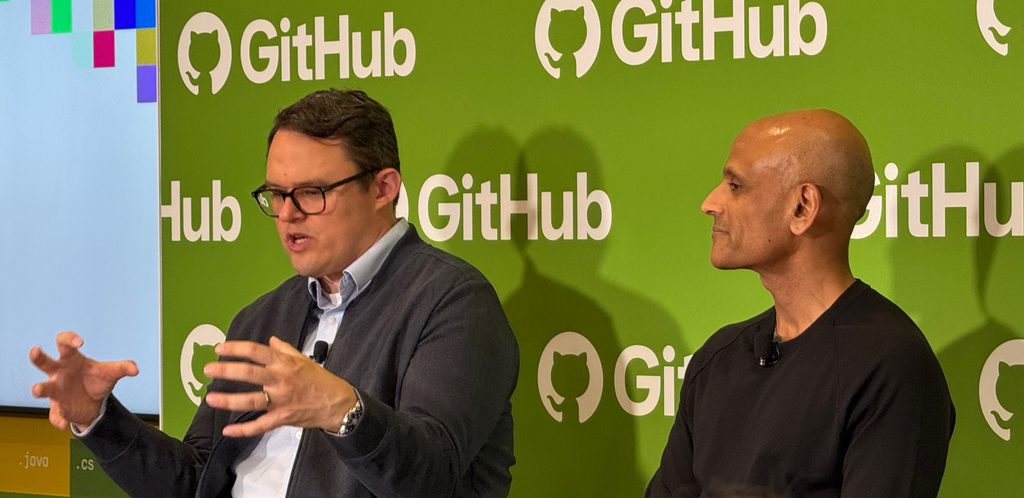
At GitHub's annual Universe '26 conference in San Francisco, the company addressed the question of its stability and future. The event featured a keynote highlighting investments, including adding 4 million cores, 160 petabytes of storage, and rearchitecting its backend infrastructure. Following the keynote, during a press conference and interviews with The New Stack, GitHub's leadership, including Jay Parikh (executive VP of CoreAI at Microsoft) and GitHub COO Kyle Daigle, discussed the company's role in the evolving developer landscape and their views on competitors.
Former GitHub CEO Thomas Dohmke announced a new alternative to GitHub, Entire, shortly before the conference. In response, Daigle diplomatically noted that Microsoft often invests in tools that compete with the broader Microsoft product estate, stating that this is a positive thing. Daigle emphasized GitHub's global reach and its commitment to continuous improvement for developers. He reiterated that the company does not believe the world needs a new GitHub, stating, "I don’t think the world needs a new GitHub."
Daigle stressed GitHub's role in the software development ecosystem, including individual developers, open-source projects, and large enterprises. He argued that the conversation about new version control systems often focuses too narrowly on the economic aspects of these platforms, missing the broader problem. He pointed out that GitHub is unique in hosting all developers together at scale, rather than focusing only on enterprises or open-source communities.
Parikh emphasized the importance of GitHub's user community and the platform it offers, highlighting the power of the community in shaping the future of software development. He drew a distinction between individual development tools and the platform that supports them, stating that GitHub and Microsoft have always been platform companies.
He noted that the focus should be on offering a complete development workflow and allowing developers to choose the components they need, vowing that GitHub will provide both the full flow and the necessary primitives.
Written by urgent.news from The New Stack's reporting — not their text. Machine-written — may contain errors; check the original before relying on it.