How macOS Adapts Its Controls for Touch on the New MacBook Pro
Apple announced a new MacBook Pro with PROLED XDR Display on Wednesday. It's Apple's first Mac with a screen that supports touch, and demonstrations Apple gave to the media show how macOS reshapes its controls for finger input. Menu bar items expand under a fingertip, window controls get bigger, and the Dynamic Island pulls down into a floating widget, amongst other changes. Back in 2016,…
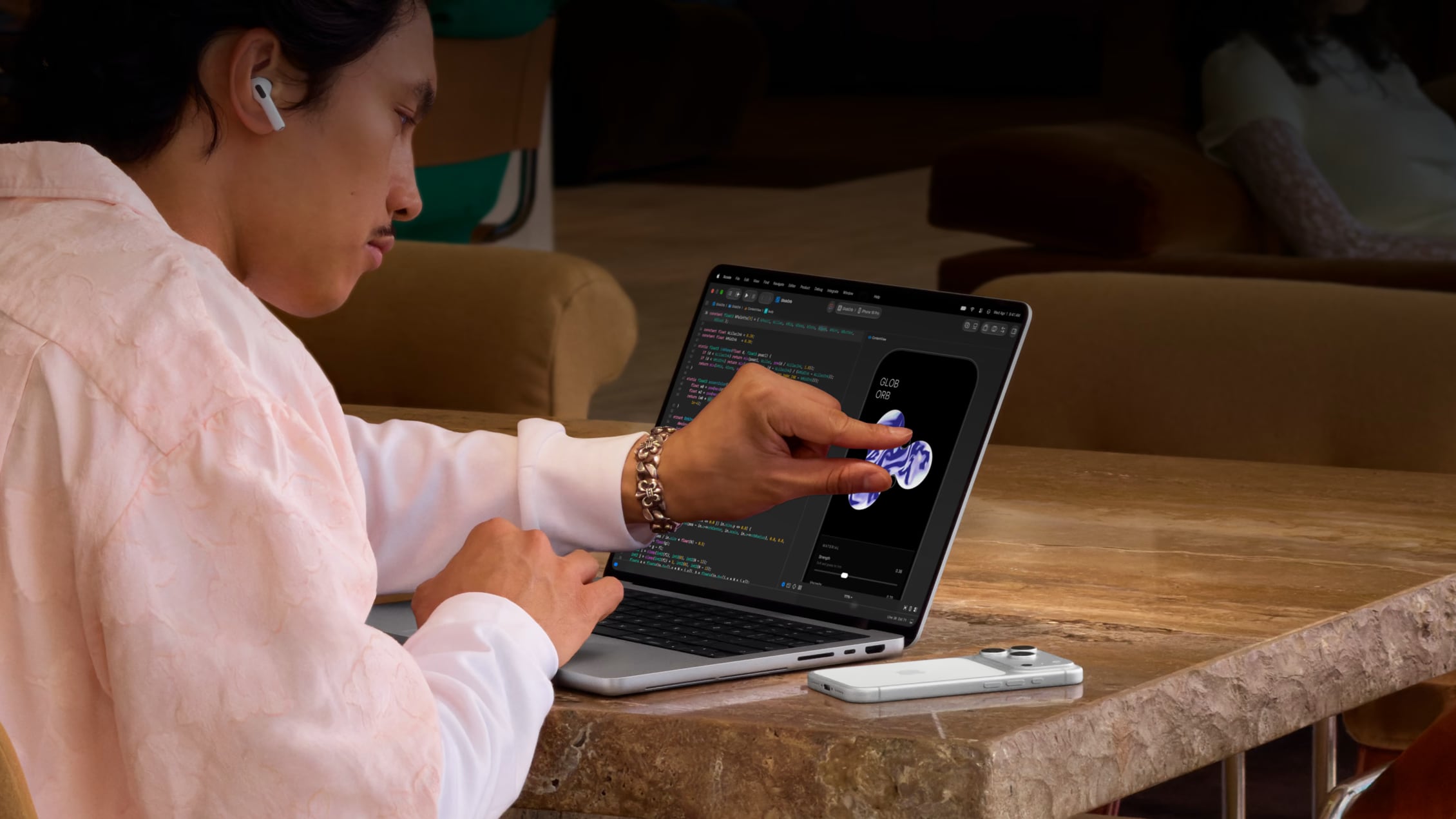
Apple unveiled a new MacBook Pro on Wednesday, marking its first Mac to feature a touch-enabled PROLED XDR Display. Demonstrations at the media event showcased how macOS adjusts its controls to accommodate finger input. Items in the menu bar expand upon contact, window controls become larger, and the Dynamic Island gracefully pulls down into a floating widget, among other modifications.
In 2016, Apple's senior VP of marketing, Phil Schiller, had previously argued that adding touch to a Mac display would necessitate a complete redesign of the menu bar for fingers, a move he believed would conflict with traditional pointer devices. Apple's solution, however, is more understated. The menu bar remains unchanged, but when a finger glides over a menu item, it enlarges for more precise selections.
This concept extends throughout the macOS interface. For instance, traffic-light buttons that control window size and position enlarge when touched, enabling selection through a single tap. Users can also swipe upward from the bottom of the screen to unveil a concealed Dock. The MacBook Pro replaces the notch with a Dynamic Island, where Spotlight, Live Activities, and Siri AI reside.
By pulling down on the Dynamic Island, users can access a floating widget that reveals Siri responses and Spotlight search. Apple asserts that macOS automatically translates touch into clicks, allowing numerous existing applications to function with touch input without developers needing to update their software. Many of these interactions, such as swiping to scroll a webpage, pinching to zoom on a photo, dragging and dropping slides between presentations, and double-tapping a window to fill the screen, have been present in macOS for months.
Features like iPhone-style pull-to-refresh gestures in Safari, Mail, and Calendar, as well as touch-specific gesture recognition in Safari, Notes, Photos, and Quick Look, were introduced in macOS 27.2. While the effectiveness of these touch interactions in everyday use remains to be seen, the new MacBook Pro is currently available for pre-order at starting prices of $2,899 for the 14-inch model and $3,399 for the 16-inch model. The official launch of the devices is scheduled for November 6.
Written by urgent.news from MacRumors's reporting — not their text. Machine-written — may contain errors; check the original before relying on it.