Google supplier Biwin, GPU leader Moore Threads see stocks plunge despite revenue surge
Shares of Chinese semiconductor suppliers Biwin Storage Technology and Moore Threads tumbled on Thursday alongside a broader rout in mainland technology stocks, despite blockbuster third-quarter revenue driven by strong artificial intelligence demand. Both stocks plunged more than 10 per cent during Thursday morning trading, reversing Wednesday’s rallies of 8.4 per cent for Biwin and 5.8 per cent…
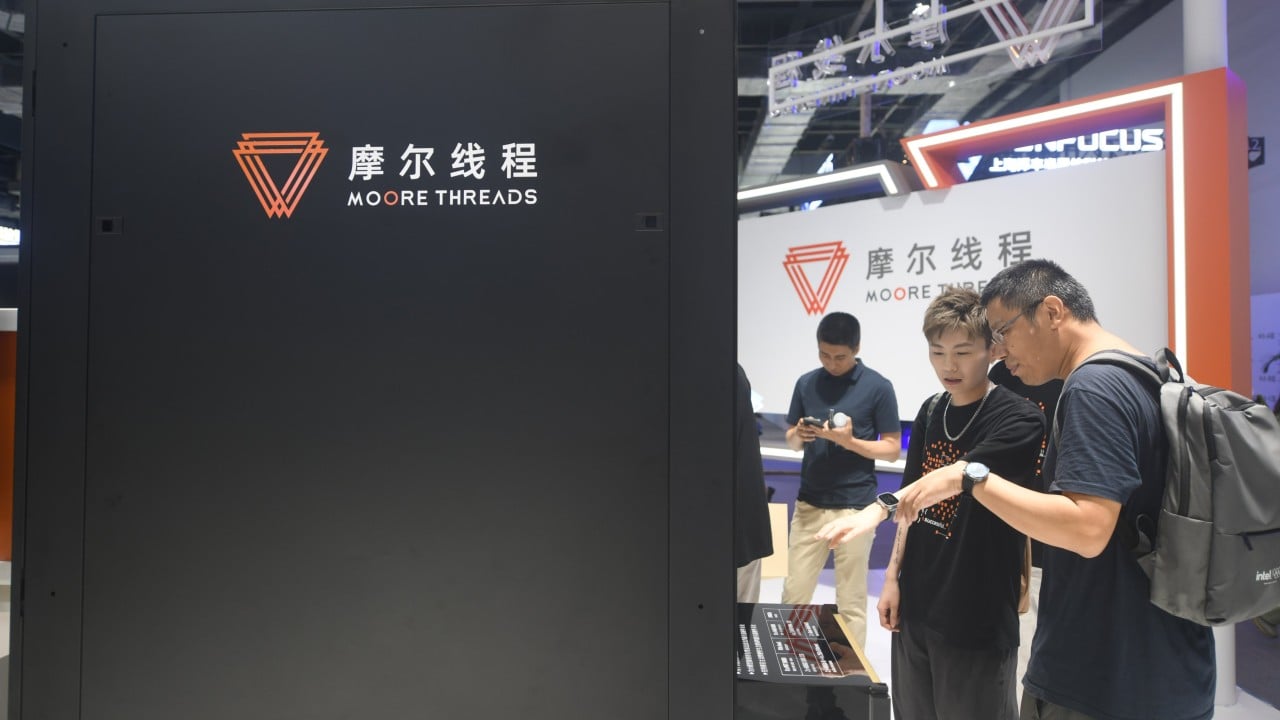
Chinese semiconductor suppliers Biwin Storage Technology and Moore Threads saw their stocks plummet on Thursday, despite a surge in third-quarter revenue driven by high demand for artificial intelligence. Both stocks dropped over 10 percent in early trading, reversing Wednesday's gains of 8.4 percent for Biwin and 5.8 percent for Moore Threads. The tech-heavy Star 50 index in Shanghai also fell more than 4 percent, deepening a decline that had already cut the bourse's value by more than 40 percent from a July peak.
The market sell-off overshadowed impressive earnings from both companies, as investors weighed short-term margin pressures and cash burn against long-term AI prospects. Moore Threads, a leading GPU maker in China, reported an astonishing 1,774 percent jump in revenue to 1.55 billion yuan (US$232.4 million) in the quarter. Its net profit reached 49.3 million yuan (US$7.3 million), excluding non-recurring items.
However, the company still posted a staggering adjusted net loss of 130.7 million yuan (US$19.5 million) for the first nine months, with research and development expenses soaring 55 percent to 1.34 billion yuan, consuming nearly 41 percent of total revenue.
Meanwhile, Shenzhen-based Biwin reported a net profit of 1.6 billion yuan (US$238.4 million) for the quarter, a 525 percent increase year-on-year, while revenue more than doubled to 6.14 billion yuan (US$915.2 million). The flash memory module maker credited its strong performance to robust demand for AI computing, a booming memory market, and an improved product mix.
Storage products for emerging AI devices accounted for 4.82 billion yuan (US$719.4 million) in sales during the first nine months, up nearly 390 percent year-on-year, serving tech giants like Google and Meta Platforms.
Despite the market turmoil, institutional analysts remain optimistic about the broader semiconductor cycle. Nomura projected that memory supply shortages could persist through at least 2028, citing the significant demand for AI and the earnings potential it generates across the value chain. However, they warned that sustained reductions in computing commitments or significant delays in funded projects could undermine their outlook.
Written by urgent.news from South China Morning Post's reporting — not their text. Machine-written — may contain errors; check the original before relying on it.