Germany does not want China decoupling but must defend its interests, president warns
Germany is not seeking to decouple from China, but must defend its economic interests, visiting German President Frank-Walter Steinmeier said in Beijing on Thursday, echoing the line taken by Chancellor Friedrich Merz during his tour of neighbouring countries. Speaking at Peking University, Steinmeier insisted that Europe’s goal was not to sever ties with the world’s second-largest economy, but…
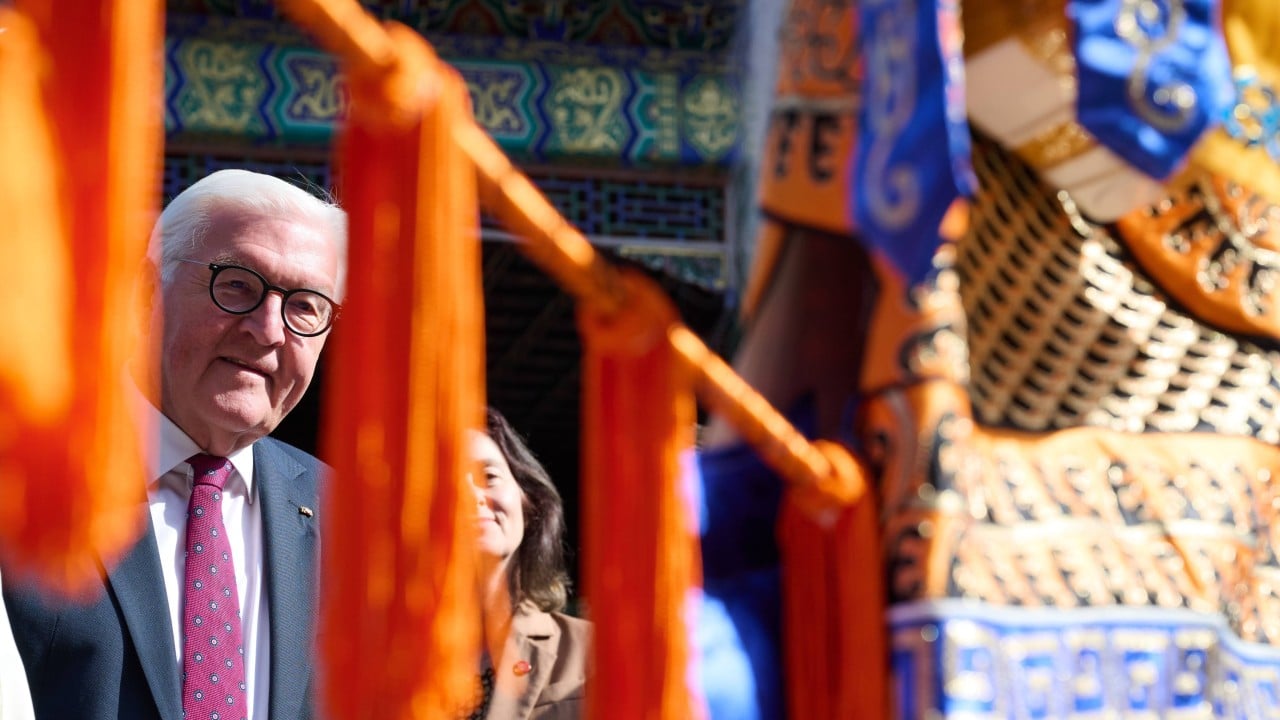
German President Frank-Walter Steinmeier warned Beijing on Thursday that while Germany does not wish to see a decoupling from China, it must protect its own economic interests. In remarks at Peking University, Steinmeier echoed the stance taken by Chancellor Friedrich Merz during his recent tour of neighboring countries. The German leader emphasized that Europe's aim was not to sever ties with China, but to reshape the relationship on a fairer basis, stating, "We do not want decoupling from China. We want to shape trade so that it continues to bring benefits to both sides."
Steinmeier argued that a balanced partnership benefits both parties, stressing that "win-win must not turn into win-lose." He reminded the audience that European nations are not seeking to harm China, but instead seeking to avoid an "unhealthy, one-sided dependency." Two years ago, the EU imposed tariffs on Chinese electric vehicles due to concerns about state subsidies. Beijing retaliated with tariffs on European goods such as brandy, pork, and dairy products, as well as restrictions on critical minerals.
This month, a deal between Beijing and Brussels aimed at cutting Chinese exports of hybrid cars by more than half was hailed as a significant step towards rebalancing trade relations. Steinmeier expressed optimism that dialogue could help ease tensions, adding, "The agreement proves that solutions are possible."
The German president also highlighted Germany's shift in direction in response to a growing trade deficit with China. Two years ago, Germany had voted against tariffs on Chinese EVs to safeguard its automotive industry's investments and market share in China. However, the EU's trade deficit with China now stands at over €370 billion ($412 billion) last year and is projected to exceed €400 billion ($444 billion) this year, which European Commission President Ursula von der Leyen has described as "unsustainable."
Steinmeier emphasized that Europe cannot afford to lose its industrial base and urged China to recognize this, noting that China, too, built its rise on industrialization. The push for more stringent measures is gaining traction across Europe, with EU ministers calling for additional limits on Chinese imports and exploring new trade defense mechanisms, such as import quotas on plastics.
Steinmeier reiterated that Germany does not want the world to fracture into blocks, stating, "We do not fear China rising," but emphasized that one country's rise does not necessarily mean another's decline. The issues extend beyond trade, with the German leader urging Beijing to leverage its diplomatic influence to help Russia cease its attacks on Ukraine and engage in serious peace negotiations.
This comes ahead of the upcoming Asia-Pacific Economic Cooperation summit in Shenzhen, which could feature three-way talks involving China, Russia, and the United States to address conflicts in Ukraine and the Middle East.
Written by urgent.news from Reuters Business via SCMP's reporting — not their text. Machine-written — may contain errors; check the original before relying on it.