Experts warn of capacity gaps in Africa’s biodiversity action
NAIROBI,Kenya, Oct 29 — African countries need stronger biodiversity data systems, technical expertise and sustainable financing to translate global conservation commitments into measurable action, regional institutions have warned. The warning…
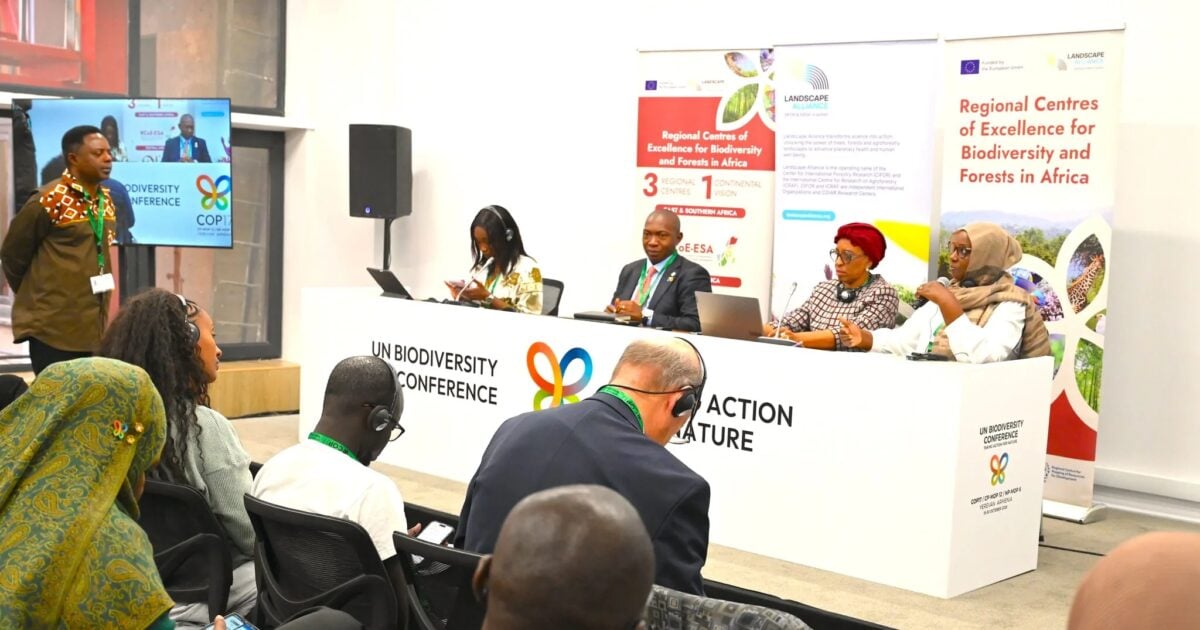
Nairobi, Kenya, October 29 — African nations require enhanced biodiversity data systems, specialized knowledge, and ongoing financial support to transform global conservation pledges into tangible action, according to regional institutions. This warning came during the UN Biodiversity Conference (COP17), where African regional organizations highlighted deficiencies in biodiversity monitoring, data exchange, and institutional capacity that could impede the implementation of the Global Biodiversity Framework.
Hosted by the Landscape Alliance (CIFOR-ICRAF) through an EU-funded project supporting Regional Centres of Excellence for Biodiversity and Forests in Africa, the discussions emphasized the need to bolster the technical infrastructure required for implementing and reporting on biodiversity commitments. Dr. Peter Minang, Africa Director at Landscape Alliance, stressed that while Africa has made biodiversity commitments, the critical question remains whether the necessary systems, institutions, expertise, and resources exist to execute these commitments on a large scale.
The meeting gathered representatives from three regional centers mandated to facilitate technical and scientific cooperation under the Convention on Biological Diversity: the Regional Centre for Mapping of Resources for Development (RCMRD) for Eastern and Southern Africa, the Centre de Suivi Écologique (CSE) for West Africa, and the Central African Forest Commission (COMIFAC) for Central Africa.
These centers provide a range of services, from geospatial data and biodiversity monitoring to regional assessments and technical guidance for national implementation. A major hurdle identified was the lack of usability in biodiversity data, which is often fragmented across institutions, gathered through varying methods, or necessitates validation before it can inform policy decisions and national reports.
Jackline Karimi, a Policy Engagement Specialist at RCMRD, emphasized the importance of utilizing geospatial tools to identify discrepancies, compare new datasets with existing records, and validate information for reporting. She stressed that accurate, validated, and accessible data is essential for guiding biodiversity actions and reporting.
However, mere technological availability is insufficient; countries also require trained personnel and robust systems capable of maintaining data platforms and applying the acquired knowledge to conservation planning. RCMRD is working to enhance these technical skills among governmental agencies, universities, and other stakeholders.
Marième Diallo, Technical Director at CSE, underscored the necessity of reliable data, expertise to utilize it, and sufficient funding to transition from commitments to action. She called for improved systems to harmonize, validate, and share biodiversity information across institutions and national boundaries. "Our goal is to enhance the sharing and utilization of biodiversity information, ensuring countries have dependable data to inform decision-making and execution," Diallo stated.
Valérie Tchuante, a Monitoring and Evaluation Specialist at COMIFAC, emphasized the importance of forging stronger connections between regional institutions and academic entities to sustain technical assistance to countries. "It is imperative to strengthen regional institutions and Technical Support Centres to meet countries' technical requirements," she noted, adding that this necessitates robust partnerships and enduring institutional and financial frameworks.
Participants highlighted the need for sustained funding to sustain data platforms, update biodiversity information, and retain technical expertise beyond the duration of individual projects. Dr. Minang stressed that addressing the financial challenge would require collaboration among governments, civil society, the private sector, and other stakeholders to bolster the institutions and capabilities essential for delivering biodiversity action.
"We must unite all actors, including governments, civil society, the private sector, and others, to tackle the financing challenge and devise sustainable funding mechanisms for the institutions and capacities required to implement biodiversity commitments," he concluded. These discussions were organized under an EU-funded initiative led by Landscape Alliance to enhance regional technical support for biodiversity and forest management across Africa.
Written by urgent.news from Capital FM Kenya's reporting — not their text. Machine-written — may contain errors; check the original before relying on it.