Decapitated man buried near fort in Roman-era Scotland gets a new virtual face
See the new facial reconstruction of a man from Roman-era Scotland who was decapitated after his death and buried near a Roman fort.
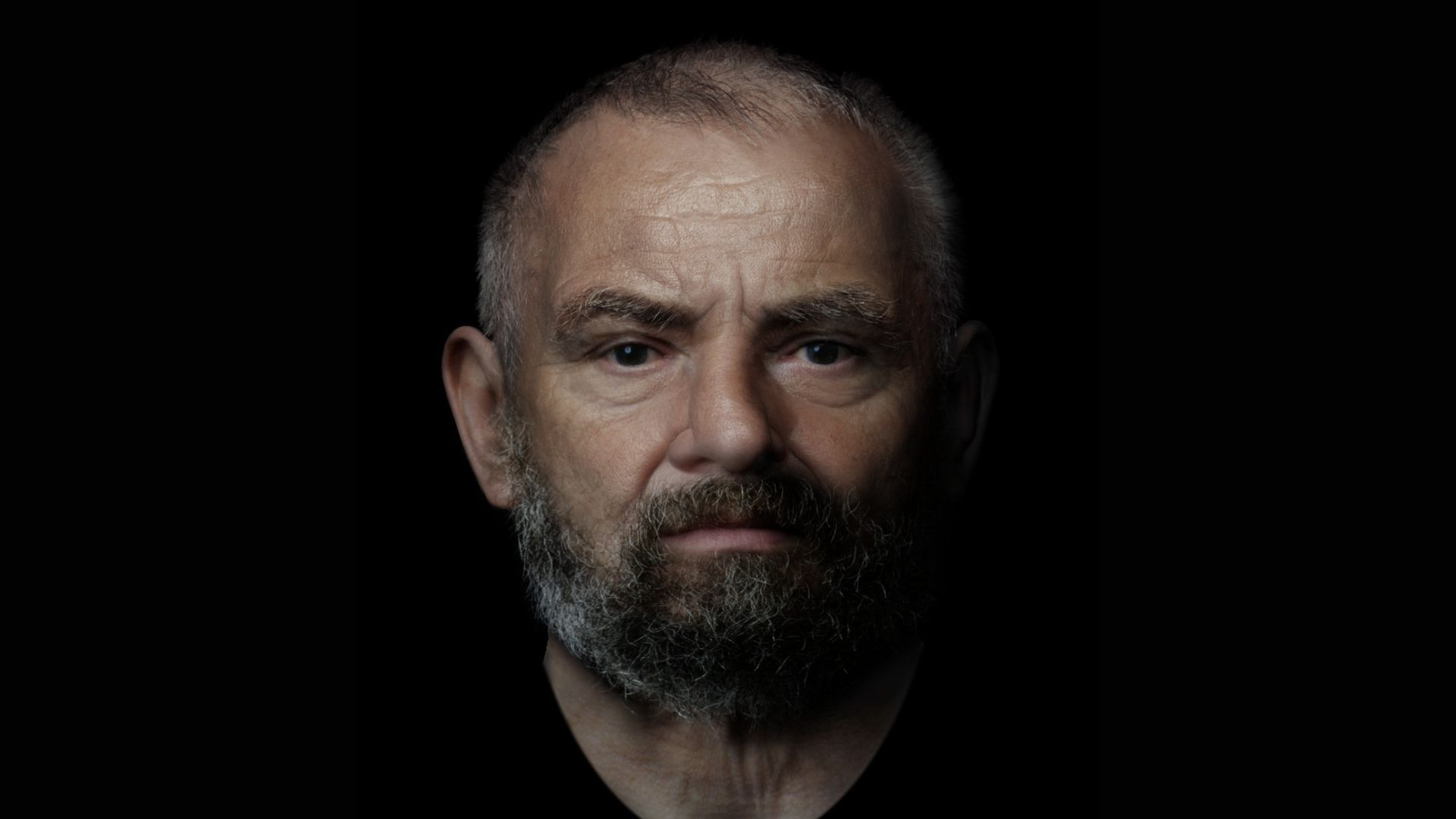
A man who was beheaded nearly 2,000 years ago has been virtually reconstructed with a face by researchers in Scotland. The individual, likely aged around 50 when he died between A.D. 142 and 165, was discovered buried near a Roman military fort at Inveresk on Scotland's east coast. The man's remains suggest he grew up in southern Britain, which may explain the unusual burial rite of his decapitation.
Chemical analysis of his remains indicates he lived an active life despite a disability in his right arm, which limited his ability to wield a sword. This has led researchers to believe he may not have been a soldier but rather a non-combatant in the Roman army, such as a clerk. The fort at Inveresk served as a command-and-supply center for Roman forts along the Antonine Wall, an ambitious frontier the Romans constructed to secure control over southern Scotland.
However, their efforts were unsuccessful and the fort was abandoned by A.D. 162. The discovery of this well-preserved Roman-era burial is rare due to Scotland's acidic soil, which typically does not preserve human remains. The facial reconstruction was created by researchers at National Museums Scotland and forensic anthropologist Christopher Rynn, using the man's skull.
Written by urgent.news from Live Science's reporting — not their text. Machine-written — may contain errors; check the original before relying on it.