Críticas en tromba contra el relato del "error humano" del Gobierno
Maquinistas, ingenieros, sindicatos y partidos cargan contra la búsqueda de un chivo expiatorio por parte del Ejecutivo cuando es el sistema ferroviario el que falla por falta de inversión y mantenimiento. Leer
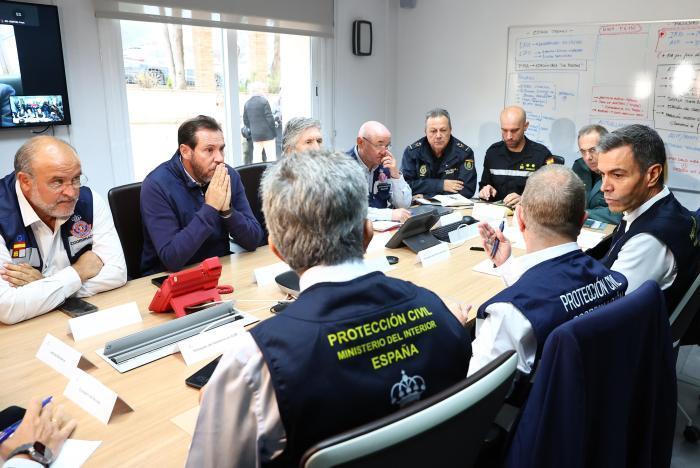
Critics are rising against the government's account of the "human error" in the Urda rail disaster in Toledo. Rail operators, engineers, unions and parties are united in their condemnation of the executive's search for a scapegoat when it is the railway system itself that is lacking in investment and maintenance. The government's strategy and its controversial Transport Minister Óscar Puente to identify a scapegoat and blame "human error" on the Urda rail tragedy have collapsed like a house of cards.
Opposition parties and parliamentary allies have refused to join this bandwagon... Nor do engineers, unions, train drivers, or experts in railway matters. All of them voiced their strong disagreement on Thursday, criticizing the government for attempting to place the blame on the last link in the chain, an employee of the Adif control center in Atocha, while shirking political responsibility for the deteriorated condition of railway infrastructure due to neglect and lack of modernization.
José Trigueros, the president of the Association of Engineers of Highways, Canals and Ports and of Civil Engineering, stated on Thursday that "the LZB system does not fail because it is obsolete, but because it is not sufficiently maintained or tested". The issue, according to the expert, "is not a human error, but a lack of conservation and maintenance, due to insufficient funds dedicated to supervision or surveillance of all safety systems".
These shortcomings have been highlighted by engineers for a long time. Even more severe was the former Adif president Isabel Pardo de Vera: "The government cannot talk about human error after what it has done with maintenance and safety", she said in an interview with El Mundo, referring to the lack of investments and the management of rail traffic by the current Adif, allowing so many trains to run when the LZB system was already showing signs of wear.
This is why Pardo de Vera stresses that "you cannot blame a person for responsibility when everything else has failed to function properly". And in a context where Adif personnel complain about insufficient personnel and fatigue, "the blame does not prevent accidents; it is the causes and determining the causes that matter", said Diego Martín, the general secretary of the Railway Train Drivers' Union (Semaf), expressing the collective's disgust with the political class and labeling the dissemination of biased audio content as an "alarming" and irresponsible attempt to blame the tragedy on a single train operator.
This outrage over the search for a scapegoat extended far beyond train drivers, engineers, and other experts, spreading like wildfire among trade unions and political forces. The CCOO union denounced the "public accusation" of the Adif employee based on "hasty conclusions", calling it "deplorable" and demanding Óscar Puente's resignation, while UGT criticized the leaks of audio recordings.
Other formations such as Podemos, Sumar or ERC also condemned the government's attempt to divert the focus by accusing the disaster to a "human error" and demanded explanations from Puente, who will appear before the Permanent Deputation of the Congress on Tuesday. Despite growing calls for Puente's dismissal, Pedro Sánchez, the prime minister, conveyed to him on Thursday that he still has his support, according to sources in Moncloa.
Written by urgent.news from Expansion ES's reporting — not their text. Machine-written — may contain errors; check the original before relying on it.
This story
This is one outlet's version. Read the fullest account.